 How-to
How to Manage Dental Care for ADHD Patients
Last Updated: October 29, 2026
Quick Summary
Dental care for ADHD patients works best when you lower the bar until the habit sticks, then raise it. Stage your sink the night before, anchor brushing to an existing habit, and use a loud timer, because a two-minute brush you actually do beats a five-minute routine you abandon.
- ADHD affects executive function, making brushing a boring, twice-daily, multi-step task with no immediate reward.
- Sensory sensitivities to toothpaste texture, bristles, and mint flavor make many people avoid brushing.
- A visual schedule with six simple step pictures and a two-minute timer turns brushing into a game for children.
- Set a phone alarm for the same time each night and treat it as a hard stop, not a suggestion.
- Ask for a quiet time slot, a pre-visit tour, and a pause signal to reduce sensory overload at appointments.
Table of Contents
- Why ADHD Makes Daily Dental Care Harder
- Helping a Child With ADHD Brush Their Teeth
- A Step-by-Step Daily Plan for Adults With ADHD
- Understanding Dental Anxiety and ADHD
- How Sensory-Friendly Dental Care Helps
- Preparing a Child With ADHD for a Dental Appointment
- Booking Your First Visit at Pearly Curve Dentistry
- Frequently Asked Questions
Why ADHD Makes Daily Dental Care Harder
Dental care for ADHD patients starts with one fact: the barrier is not laziness, and dental care for ADHD patients depends on understanding that.
Many adults and children who care about their teeth still struggle to hold a routine together. Shame often follows, and it should not.
Below, we explain why the routine breaks down, how to rebuild it, and how to make dental visits easier. The plan works for children and adults alike, with small changes for each.
How ADHD Symptoms Show Up at the Sink
Three symptoms do most of the damage:
- Inattention: you start brushing, get distracted, and stop after ten seconds.
- Impulsivity: you skip flossing to get out the door faster.
- Time blindness: you mean to brush before bed, then look up and it is midnight.
Sensory sensitivities add another layer. Toothpaste texture, brush bristles, and mint flavor can all feel wrong. Many people avoid brushing because the feeling is unpleasant, not because they forgot.
The Higher Risk of Cavities and Gum Problems
Skipped brushing lets plaque build up. Plaque leads to cavities and gum inflammation, and both are far easier to prevent than to treat. The Canadian Dental Association's oral health resources explain how plaque forms and why daily removal matters.
The good news: a routine that fits your brain beats a perfect routine you abandon. That is the throughline of everything below.
Helping a Child With ADHD Brush Their Teeth
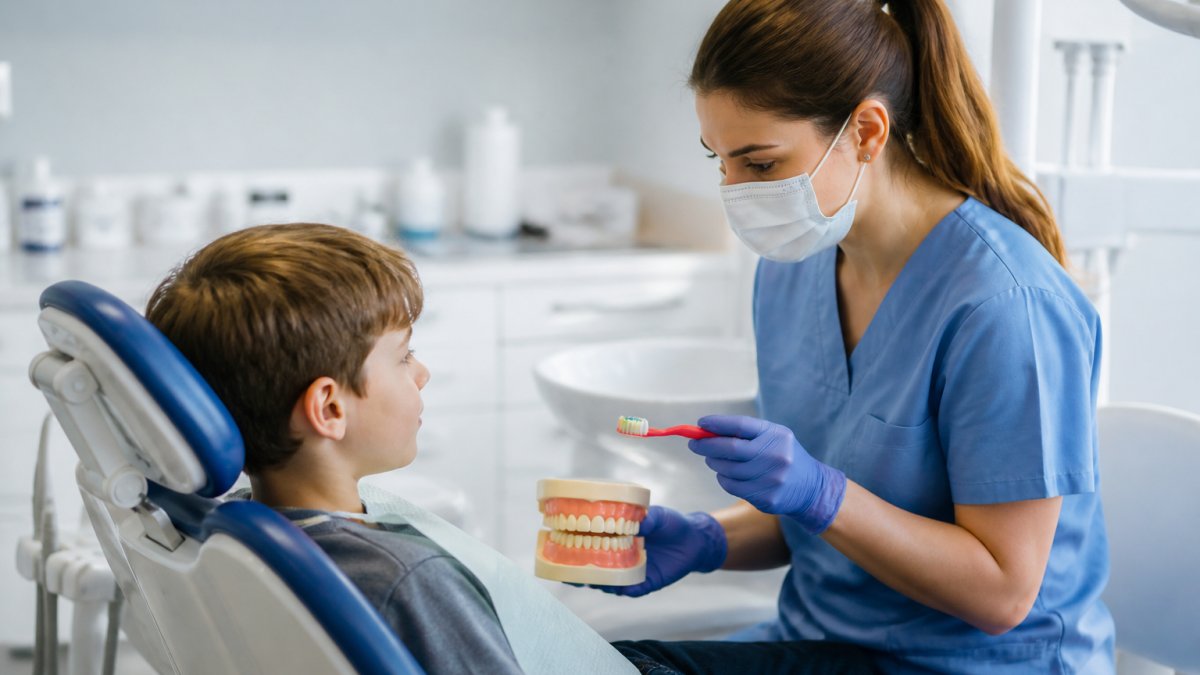
Helping a child with ADHD brush their teeth works best when brushing stops being a chore and becomes a predictable, rewarding game. Children with ADHD respond to structure, timers, and praise far more than to reminders to "just do it."
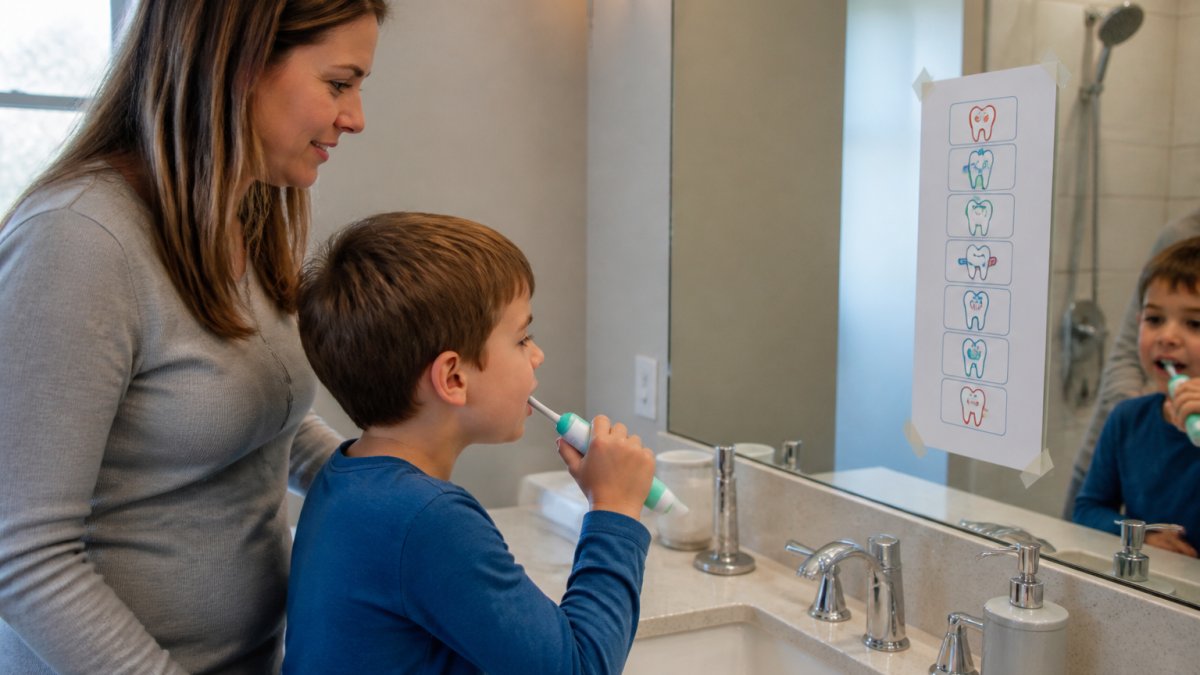
Turn Brushing Into a Game With a Visual Schedule
A visual schedule is a picture sequence that shows each step of a routine in order. For brushing, it might show: get brush, add paste, brush top, brush bottom, spit, rinse, done.
Here is how to set one up:
- Print or draw six simple pictures of the steps.
- Tape the schedule at the child's eye level beside the sink.
- Let the child move a marker or sticker along the pictures as they go.
- Use a two-minute timer or a song so brushing has a clear end.
- Praise the effort out loud, every time.
Positive reinforcement does the heavy lifting. Praise the attempt, not just the result.
A Step-by-Step Daily Plan for Adults With ADHD
Oral care advice often assumes a routine that runs on autopilot. For adults with ADHD, the plan has to survive bad days, not just good ones. The rule we recommend: lower the bar until the habit sticks, then raise it. A two-minute brush you actually do beats a five-minute routine you abandon by Thursday.
The Two-Minute Morning
- Stage the sink the night before. Brush, paste, and floss picks sit on the counter, not in a drawer. Every extra step is a place the routine can die.
- Anchor brushing to something you already do. Brush while the kettle boils or while you wait for coffee. The existing habit carries the new one.
- Use a timer with a sound you cannot ignore. A phone alarm labeled "brush" works; a silent notification does not.
- Brush first, scroll second. If you check your phone before brushing, ten seconds becomes ten minutes of something else.
The Three-Minute Evening
- Set a phone alarm for the same time each night and treat it as a hard stop, not a suggestion.
- Brush before your wind-down routine, not "before bed." By the time you are tired, the task is gone.
- Keep floss picks or a water flosser within reach. If string floss stalls you, the pick is the version that happens.
- Use a single-tasking rule. Brushing is the only thing you are doing for those two minutes; music or a podcast can carry the boredom.
When You Miss a Day (You Will)
A missed routine is not a failed routine. The recovery step matters more than the streak:
- Do a 30-second brush. Half a brush still removes plaque; skipping entirely does not.
- Use a dry brush or a rinse if you cannot face the full routine. Something beats nothing.
- Restart at the next anchor, not "tomorrow." The next kettle boil is the next chance.
- Do not add penance. Doubling up the next day makes the task feel punishing and harder to start.
The Weekly Reset
- Check supplies every Sunday. Running out of paste is one of the most common reasons routines die.
- Restock in bulk so a single empty tube does not break the chain.
- Review what stalled you, was it the time, the sensory feel, or the forgetting? Fix that one thing.
For a deeper routine built for how ADHD brains work, read our guide on maintaining dental hygiene with ADHD.
Understanding Dental Anxiety and ADHD
Dental anxiety and ADHD often arrive together. Past bad experiences, fear of judgment, and sensory overload in the chair can all make appointments feel impossible.
If anxiety is the main barrier, a guide to managing dental anxiety for adults can walk you through what helps before, during, and after a visit.
A few things make a real difference:
- Book a quiet time of day.
- Ask for a signal, like a raised hand, to pause treatment.
- Bring headphones and calming music.
- Tell the team you have ADHD. You will not be judged.
How Sensory-Friendly Dental Care Helps
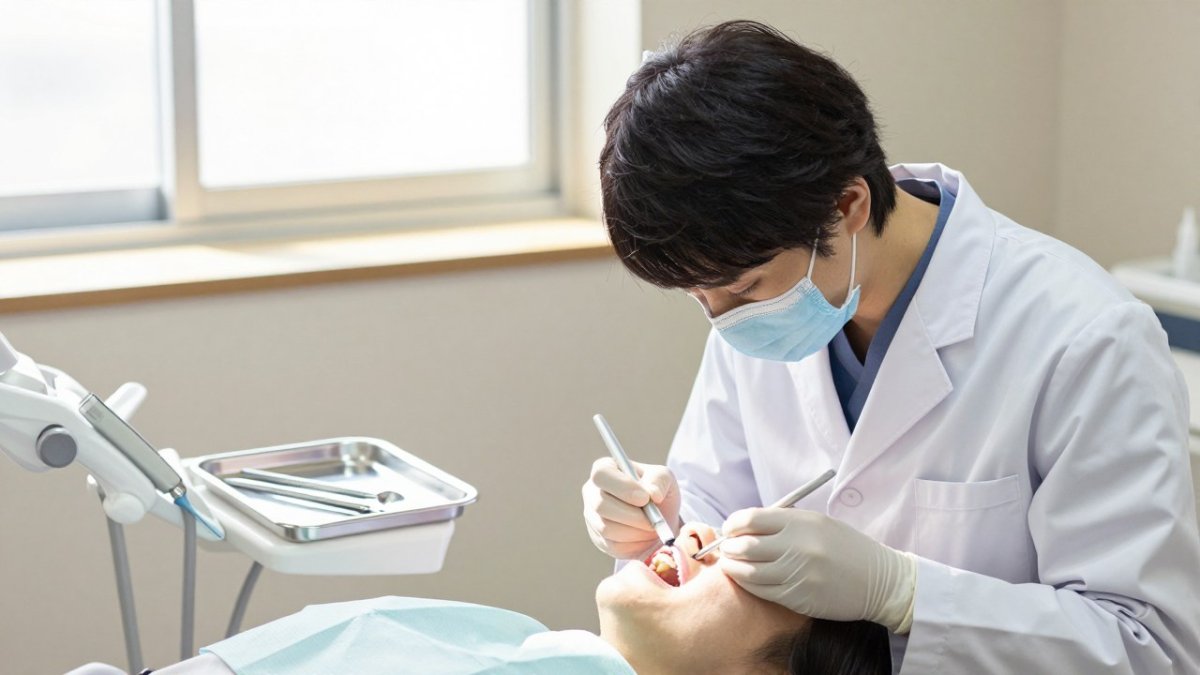
Sensory-friendly dental care adjusts the clinic environment and the appointment itself to reduce overload. That can mean softer lighting, fewer loud noises, clear step-by-step communication, and breaks whenever you need them. Inclusive care is not a special favor. It is good care. Ask your dental team what inclusive dental care means and what to expect.
The practical part is knowing what to ask for before you sit in the chair. Use this pre-visit checklist for yourself or your child.
Pre-Visit Accommodation Checklist
Before the appointment:
- Ask for a quiet time slot. Early morning or right after lunch is often calmer than end-of-day.
- Request a pre-visit tour. Seeing the room, chair, and light before treatment removes the surprise factor.
- Send a short note about needs. A sentence or two about ADHD, sensory sensitivities, or anxiety helps the team prepare.
- Confirm the first appointment is a meet-and-greet if a full exam feels like too much.
In the chair:
- Agree on a pause signal, a raised hand, a squeeze, or a word, so you can stop treatment at any point.
- Ask for step-by-step narration. "I am going to count your teeth now" is easier to tolerate than silence and a mirror.
- Request breaks. A 30-second sit-up between steps is a reasonable ask.
- Bring headphones, sunglasses, or a comfort item. Reducing sound and light is often the single biggest change.
- Ask for the bib and chair position to be adjusted if either feels restrictive.
After the visit:
- Ask for a written summary of what was done and what comes next. Memory for verbal instructions fades fast.
- Book the next appointment before you leave so the reminder lands while the visit is fresh.
What to Say When You Ask
You do not need a diagnosis letter to request accommodations. A short, direct ask works: "I have ADHD and sensory sensitivities. I would like a quiet room, a pause signal, and step-by-step explanations. Can we arrange that?" Most teams will say yes; if one will not, that is useful information about fit.
| Challenge | What Helps | Who It Suits |
|---|---|---|
| Sensory overload | Headphones, dimmed lighting, breaks | Children and adults |
| Anxiety | Pause signal, step-by-step explanations | Adults with past bad visits |
| Forgetfulness | Written plan, text reminders | Adults with ADHD |
| Short attention span | Shorter, earlier appointments | Children especially |
Preparing a Child With ADHD for a Dental Appointment
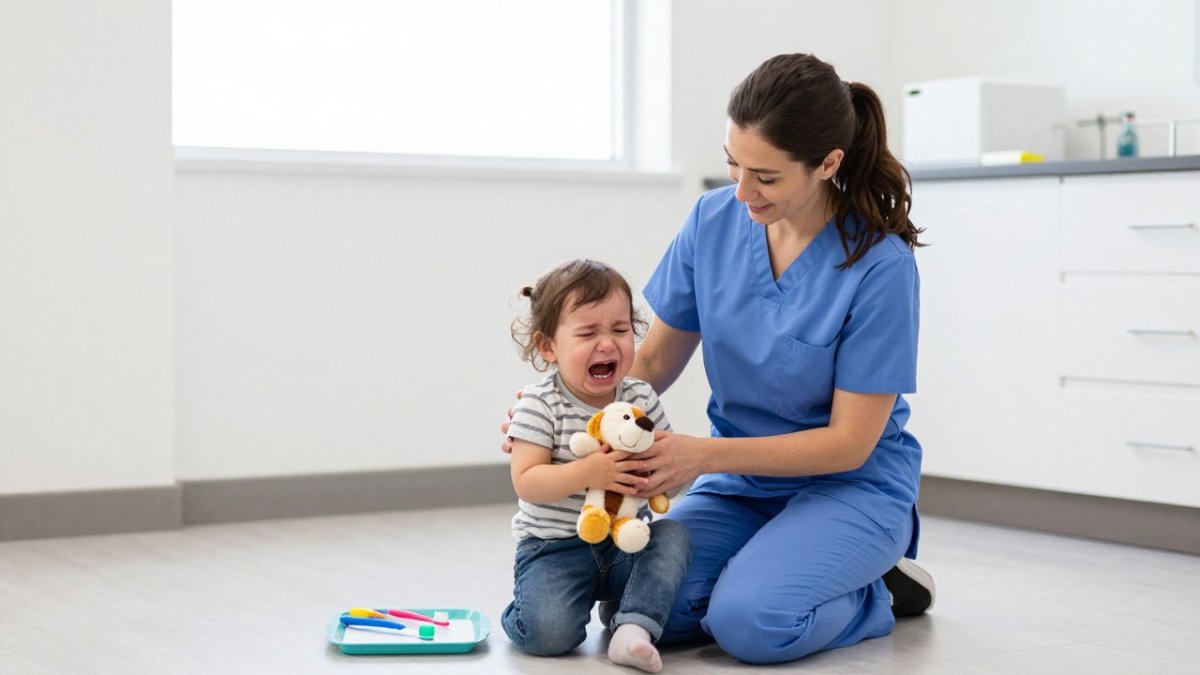
Preparing a child with ADHD for a dental appointment starts days before the visit. Surprises are the enemy. Predictability is the tool.
Try this routine:
- Talk it through. Explain each step: the chair, the light, the mirror, the count of teeth.
- Visit ahead. Ask if your child can see the room before the appointment.
- Pack comfort items. A favorite toy, headphones, or a small blanket.
- Book smart. Choose a time when your child is usually calm and fed.
- Plan a reward. Something small and immediate after the visit.
Clear communication between you and the dental team matters most. Tell them what your child finds hard.
Booking Your First Visit at Pearly Curve Dentistry
The first visit sets the tone. Pearly Curve Dentistry offers modern treatments, expert support, and a comfortable environment.
Before you come in, it can help to learn what to expect from dental care for ADHD adults. When you are ready, book an appointment and tell us about your routine, your anxiety, or your child's needs.
A common mistake is waiting until something hurts. Early prevention is generally easier than treatment, and regular checkups can catch problems while they are small.
Frequently Asked Questions
Are children with ADHD more likely to have cavities?
Children with ADHD face a higher risk of cavities and tooth decay for reasons that go beyond diet. Inattention makes it easy to skip brushing or rush through it, and impulsivity can mean more sugary snacks between meals. Some ADHD medications also reduce saliva, which leaves teeth less protected. That does not mean cavities are inevitable. A predictable routine, short and supervised brushing sessions, and regular checkups let a dental team catch small problems before they become fillings.
How does ADHD affect dental health in adults?
Adults with ADHD often struggle with consistent habits rather than knowledge. They know to brush and floss, but executive function challenges make it hard to start and repeat the task daily. Dry mouth from some medications adds another risk factor for plaque and gum problems. Building cues into an existing routine, keeping floss visible on the counter, and booking checkups well in advance all help. Tell your dental team about your ADHD so they can adjust reminders and appointment pacing to suit you.
What should I tell the dentist before my child's appointment?
Share what helps your child feel calm and what does not. Mention sensory sensitivities such as loud drills, bright lights, or strong tastes, and any past dental anxiety. Explain how your child communicates when overwhelmed and whether a parent should stay close by. Ask about a quieter appointment time, headphones, or a step-by-step explanation of each tool. A dental team trained in behavior guidance can then plan the visit around your child rather than rushing through it.
How can a dentist help a patient with ADHD feel more comfortable?
Sensory-friendly dental care can make a real difference for many patients. Clear explanations of each step before it happens, and a clear signal for taking a break, can help patients feel more in control. For adults, a team that listens without judgment about missed flossing can help build trust. Ask at booking what accommodations are available, and mention dental anxiety and ADHD upfront so the visit is planned around your needs.
ADHD makes dental care harder, but not impossible. The right routine, the right supports, and a dental team that listens change the outcome. Pearly Curve Dentistry offers modern treatments, expert support, and comfortable care built around each patient. Get started with Pearly Curve Dentistry and build a routine that finally sticks.