 how-to
Dental Care for ADHD Adults: A Practical Guide
Table of Contents
- Why Dental Care for ADHD Adults Requires a Different Approach
- The Link Between ADHD and Oral Health Challenges
- Oral Hygiene Tips for Executive Dysfunction
- Managing Sensory Overwhelm in the Dental Chair
- Dental Anxiety Management for Adults with ADHD
- How to Talk to Your Dentist About ADHD
- Building a Preventative Care Routine That Sticks
- Frequently Asked Questions
Last Updated: August 30, 2026
Why Dental Care for ADHD Adults Requires a Different Approach
Dental care for ADHD adults isn't just about brushing twice a day and flossing. Executive dysfunction makes routine maintenance feel impossible. Sensory sensitivities can turn a dental chair into an overwhelming experience. Impulsivity and time blindness derail even the best intentions. At Pearly Curve Dentistry, we understand that patients may feel ashamed about their oral health because they've struggled to maintain routines that neurotypical people find straightforward.
The reality is that your brain works differently. That's not a moral failing, it's neurology. When your dentist doesn't understand ADHD, they often interpret missed appointments or poor oral hygiene as neglect or lack of motivation. The result is a cycle of avoidance, guilt, and deteriorating dental health.
This guide covers what actually works for adults with ADHD. We'll walk through the specific ways ADHD affects your teeth and gums, then move into strategies that align with how your brain functions rather than fighting against it. The goal isn't perfection, it's sustainable habits that fit your life.
The Link Between ADHD and Oral Health Challenges
The connection between ADHD and dental problems isn't coincidental. ADHD affects the executive function systems that manage routine behaviors, impulse control, and attention to detail, the exact systems required to maintain consistent oral hygiene and keep dental appointments.
Executive Dysfunction and Missed Appointments
Executive dysfunction makes planning and follow-through difficult. You might intend to schedule a dental appointment, but the task sits in your mental queue indefinitely. When you do schedule one, the appointment date drifts out of working memory. You miss it. Then shame kicks in, making it harder to call and reschedule. The longer the gap, the worse you expect your teeth to look, so avoidance increases.
Missed appointments compound dental problems. What could have been caught during a routine cleaning becomes a more serious issue requiring emergency care. The fix isn't willpower, it's external structure. Calendar reminders, automated appointment confirmations, or having someone else schedule for you can break this cycle entirely.
Medication Side Effects on Dental Health
Many stimulant medications used to treat ADHD reduce saliva production, a condition called xerostomia or dry mouth (peer-reviewed research). Saliva neutralizes acids, prevents bacterial growth, and protects tooth enamel (the American Dental Association). Without adequate saliva, you're at higher risk for dental decay and gum disease.
Some people also experience teeth grinding (bruxism) as an ADHD symptom or medication side effect (peer-reviewed research). Grinding wears down enamel and can cause jaw pain. These effects are manageable, a night guard can protect your teeth, but they need to be on your dentist's radar.
Oral Hygiene Tips for Executive Dysfunction
The standard advice to brush for two minutes twice daily and floss once daily requires remembering multiple times per day, initiating the behavior without external prompts, and sustaining focus. That's a lot of executive function demand.
Simplifying Your Routine
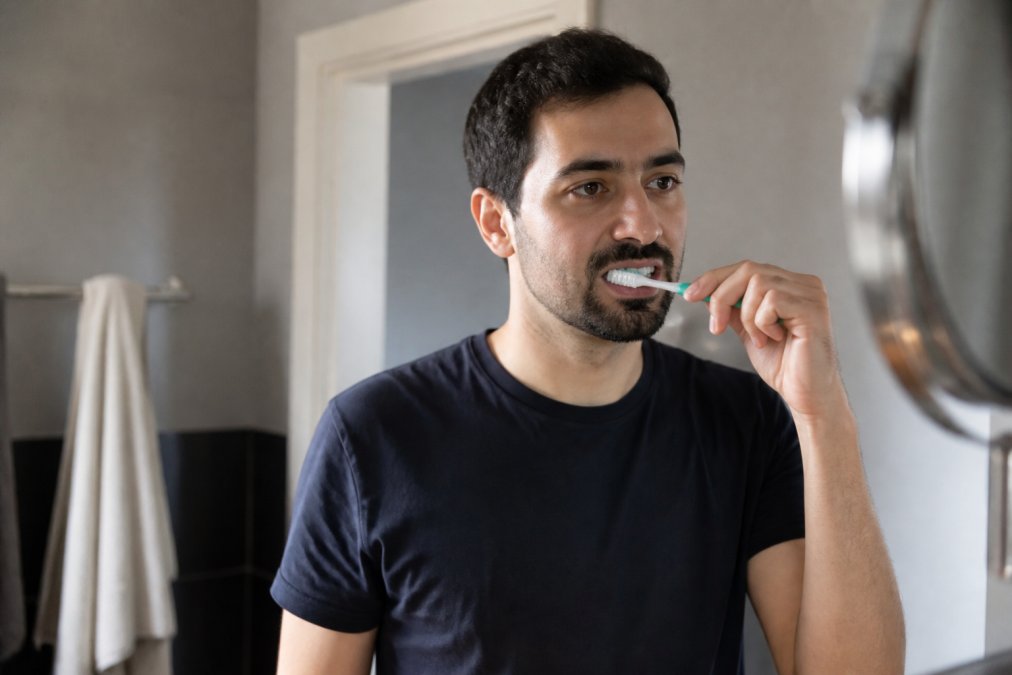
The most effective approach is to reduce the routine to its simplest form and anchor it to an existing habit. Brush immediately after your morning coffee, or right after dinner. The existing habit becomes the reminder, you don't have to remember separately.
Start with one time per day and make it automatic before adding more. Once once-daily brushing is genuinely automatic, you can add a second brushing or introduce flossing. This staged approach works better than attempting the full routine from day one.
The type of toothbrush matters. An electric toothbrush can feel more rewarding and requires less technique. Test what actually gets used rather than what sounds best in theory.
Using External Cues and Reminders
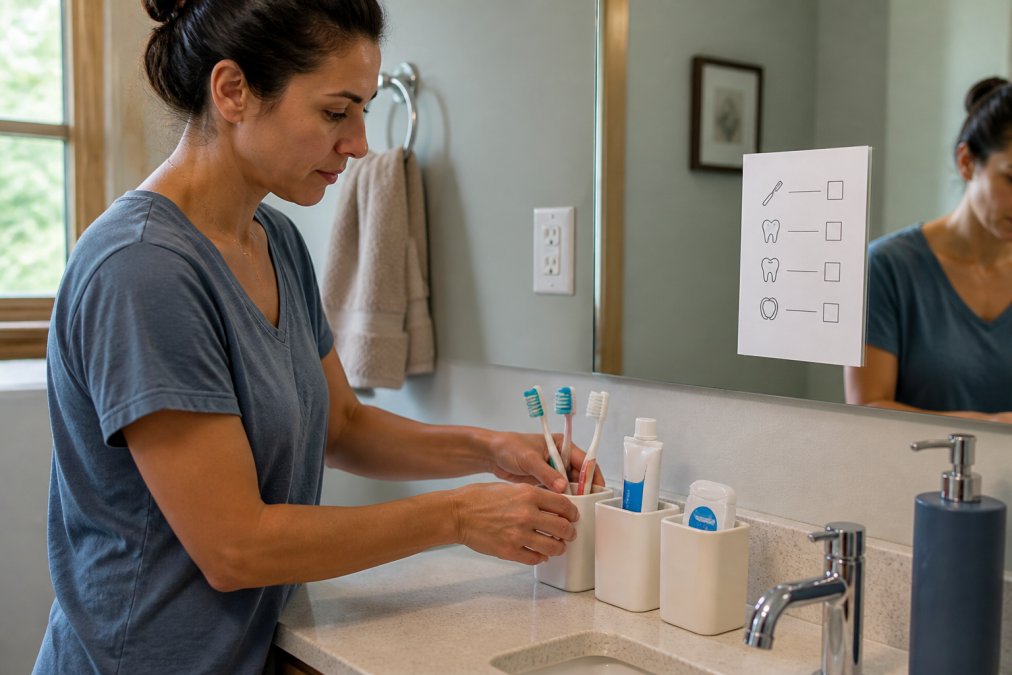
Your brain needs external reminders because working memory doesn't work the same way. Set a specific alarm time, not a vague "morning" but "7:15 AM", and attach it to dental care.
Physical cues work well too. Leaving your toothbrush on your pillow or placing your floss on your nightstand creates a visual reminder that works when internal memory fails. The object itself becomes the prompt.
Choosing ADHD-Friendly Dental Products
An electric toothbrush with a two-minute timer removes the need to estimate time. A water flosser might be easier to use consistently than string floss. Mouthwash can supplement brushing on days when full oral hygiene feels impossible.
Sensory preferences matter. Some people find mint toothpaste overwhelming; a mild or fruity flavor might feel more tolerable. Try different options and stick with what you'll actually use.
| Approach | Best For | Ease of Use |
|---|---|---|
| Electric toothbrush with timer | Reducing technique demands | High |
| Water flosser | Coordination challenges | High |
| Mouthwash supplement | Days with low executive function | High |
| String floss | Fine motor control is strong | Medium |
| Manual toothbrush | Sensory preference for control | Medium |
Managing Sensory Overwhelm in the Dental Chair
For many adults with ADHD, sensory overwhelm in the dental chair is as significant a barrier as executive dysfunction. The high-pitched drill sound, bright overhead light, and unfamiliar tastes and smells create a sensory storm that can be genuinely intolerable.
Communicating Sensory Needs Before Your Appointment
Before your appointment, identify which sensory elements bother you most. Is it the sound? The light? The feeling of the suction tool? Once you know, you can request specific accommodations.
Tell your dentist directly: "I have ADHD and I'm sensitive to loud sounds. Can you give me a signal to pause if I need a break?" A dentist who understands neurodivergence will make these changes without hesitation. If they dismiss your request, that's a sign to find a different dentist.
Some accommodations are simple. Noise-canceling headphones reduce the drill sound. A weighted blanket across your lap provides grounding. Sunglasses can reduce light sensitivity. Requesting a break every few minutes, with a hand signal you control, gives you agency in a situation that can feel powerless.
Tools That Help During Treatment
Fidget tools in your hands, a stress ball or textured object, can help regulate your nervous system during treatment. Grounding techniques work during dental procedures. The 5-4-3-2-1 technique (name 5 things you see, 4 you can touch, 3 you hear, 2 you smell, 1 you taste) redirects attention and can reduce sensory overwhelm.
Asking your dentist to explain what they're doing before they do it reduces the startle response. Knowing "I'm going to use the suction tool now" is very different from suddenly feeling it without warning.
Dental Anxiety Management for Adults with ADHD
Dental anxiety is significantly more common in adults with ADHD. The combination of sensory sensitivity, past negative experiences, and fear of judgment creates a powerful anxiety response that keeps people away from care.
Understanding Your Specific Triggers
Dental anxiety isn't one thing, it's often several specific triggers layered together. You might fear pain, judgment about your oral hygiene, loss of control in the dental chair, or the cost of treatment. Identifying your specific trigger matters because the solution is different for each one.
Write down what specifically frightens you about dental visits. The more specific you can be, the better you can address each concern.
Grounding Techniques During Treatment
During treatment, grounding techniques keep you present and reduce anxiety spiraling. The 5-4-3-2-1 sensory technique works well in the dental chair. You can also use bilateral stimulation, alternating tapping on your legs, which research suggests helps regulate nervous system response.
Have a predetermined signal with your dentist that means "I need a break." Knowing you can pause the procedure at any time reduces the feeling of helplessness and often reduces overall anxiety.
Box breathing (inhale for 4, hold for 4, exhale for 4, hold for 4) is simple enough to do in the dental chair and activates your parasympathetic nervous system, the opposite of the fight-or-flight response that anxiety creates.
How to Talk to Your Dentist About ADHD
Many people with ADHD avoid disclosing their diagnosis to their dentist because they fear judgment. It's actually crucial information that changes how your dentist should approach your care.
What to Disclose and Why It Matters
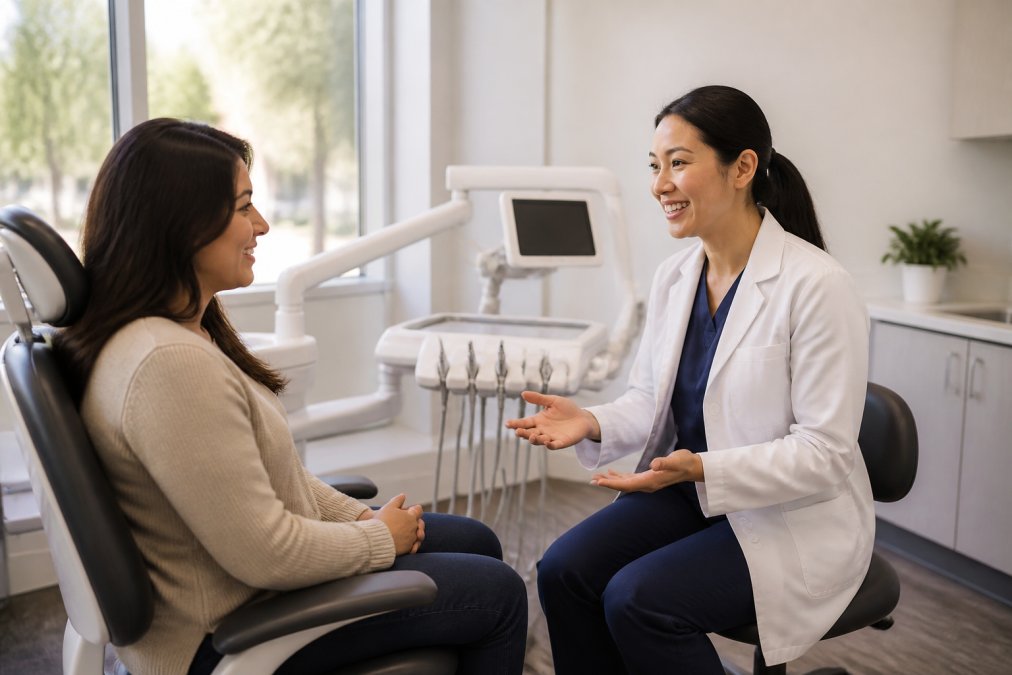
Tell your dentist you have ADHD and describe how it affects you specifically: "I have ADHD and I struggle with routine tasks, so I often miss appointments. I also get overwhelmed by sensory input in the dental chair."
This information helps your dentist understand why you might have missed appointments (it's not negligence, it's executive dysfunction), why your oral hygiene might be inconsistent (it's not lack of care, it's difficulty with routine), and why you might need accommodations during treatment (it's not anxiety, it's sensory processing).
A dentist who understands ADHD will adjust their approach. They might schedule you for shorter, more frequent appointments instead of long ones. They might provide written instructions for home care instead of verbal ones. They might give you a written treatment plan with costs upfront.
Asking for Specific Accommodations
Be specific: "Can you give me a hand signal to pause if I need a break?" or "Can you explain each step before you do it?" or "Can you dim the overhead light?"
Specific requests are easier to fulfill than vague ones. Clear communication about your needs creates a partnership instead of a power dynamic where you're passive and they're in control.
If your dentist refuses reasonable accommodations or makes you feel bad for asking, find a different dentist. You deserve care that works with your neurology, not against it.
Building a Preventative Care Routine That Sticks
Preventative care, regular cleanings and checkups, is the most effective way to avoid expensive emergency dental work. But for adults with ADHD, the routine itself is the barrier.
Professional Cleaning and Checkups
Schedule professional cleanings at intervals that work for your executive function. For some people, every six months is realistic. For others, every three months creates enough external structure that appointments actually happen. Shorter intervals with lower stakes are better than longer intervals where more can go wrong.
Discuss with your dentist what you can realistically maintain at home. If you can't floss daily, say so. Your dentist can adjust their recommendations to match reality instead of setting you up for failure.
Ask your dentist to document your baseline oral health at each visit. This gives you concrete feedback on whether your efforts are working. "Your gum health has improved since last visit" is motivating in a way that vague praise isn't.
Handling Dental Emergencies
Dental emergencies often happen because preventative care was missed. When an emergency occurs, it's not the time to feel shame. It's the time to get treatment.
Have your dentist's emergency contact information easily accessible. If you struggle with phone calls, ask if you can email or text to request an emergency appointment.
After an emergency is resolved, use it as information rather than evidence of failure. What led to the emergency? Understanding the cause helps you adjust your approach to prevent the next one.
Dental care for ADHD adults works best when it's designed around how your brain actually functions, not how you think it should function. The shame and avoidance cycle is real, but it's breakable. At Pearly Curve Dentistry, we are dedicated to your long-term oral health, providing trustworthy and supportive care. Whether you need a dentist who understands sensory sensitivities, who can work with your executive dysfunction, or who simply won't judge your past gaps in care, the right dental partner makes everything easier. Book an appointment and bring your ADHD self, we'll build a plan that works for you.
Frequently Asked Questions
Do people with ADHD have more dental problems?
Yes. Adults with ADHD face higher rates of dental decay, gum disease, and periodontal health issues. This happens because executive dysfunction makes it harder to maintain consistent oral hygiene routines, and stimulant medications can cause dry mouth (xerostomia), which increases cavity risk. Sensory overwhelm and dental anxiety also lead to skipped appointments. Understanding these connections helps you take targeted action rather than blaming yourself.
What strategies help adults with ADHD maintain a consistent brushing routine?
Anchor brushing to an existing habit (like showering), use a timer or electric toothbrush with built-in timing, place your toothbrush in a highly visible spot, and set phone reminders. Keep your routine as simple as possible, two minutes, one brush, done. Some people find success with habit-stacking (brushing right after breakfast) or using a visual checklist. Experiment to find what works for your brain, and be compassionate when you miss days.
How can I manage sensory sensitivities during dental appointments?
Tell your dentist about sensory triggers in advance, whether it's noise, vibration, smells, or the feeling of instruments in your mouth. Ask if you can wear noise-canceling headphones, request breaks during longer procedures, or use a hand signal to pause treatment. Some people benefit from weighted blankets or fidget tools. A dentist experienced with neurodivergent patients will adjust their approach without judgment and can explain each step before doing it.
Should I disclose my ADHD diagnosis to my dentist?
Yes. Telling your dentist about your ADHD helps them understand why you might struggle with appointment attendance, sensory overwhelm, or anxiety. It also explains medication side effects like dry mouth. A supportive dentist will use this information to adapt their communication style, offer accommodations, and help you build a realistic prevention plan. If your dentist dismisses or minimizes ADHD, that's a sign to find one who takes neurodivergence seriously.