 How-to
How Should You Care for Porcelain Veneers Properly?
Last Updated: November 26, 2026
Quick Summary
Care for porcelain veneers properly by brushing gently twice a day with a soft-bristled toothbrush and non-abrasive fluoride toothpaste, flossing daily around each veneer margin, and avoiding hard or staining foods. Keep regular dental checkups and wear a night guard if you grind your teeth.
- Stick to soft foods for the first few days after getting new veneers.
- Brush gently for two minutes, twice a day, and floss once daily.
- Choose a non-abrasive fluoride toothpaste with a low RDA value.
- Avoid hard candy, ice, unpopped popcorn kernels, and bones.
- Contact your dentist if a veneer loosens, chips, or causes ongoing sensitivity.
Table of Contents
- How should you care for porcelain veneers properly?
- Brushing and flossing with veneers
- The best toothpaste for veneers and products to avoid
- Foods to avoid with veneers and habits that damage them
- How long do porcelain veneers last?
- Signs of a problem and when to contact a dentist
- Do's and don'ts at a glance
- Book a Veneer Checkup at Pearly Curve Dentistry
- Frequently Asked Questions
How should you care for porcelain veneers properly?
Caring for porcelain veneers properly means treating them like strong but delicate restorations: brush gently twice a day with a soft-bristled toothbrush and non-abrasive fluoride toothpaste, floss daily around each veneer margin, avoid hard and staining foods, and keep regular dental checkups.
The habits that protect natural teeth mostly protect veneers too. The difference is the margins, the thin edge where veneer meets tooth and gum. That edge is where problems start.
Below, we cover the full care routine, from your first week to long-term maintenance, plus what to do if something goes wrong.
Your first week with new veneers
The first week sets the tone. Your gums may feel tender and your bite may feel slightly different while you adjust.
- Stick to soft foods for the first few days
- Skip very hot or very cold drinks if you notice sensitivity
- Brush gently around the gumline, not hard against it
- Avoid biting into anything with your front teeth
Mild sensitivity is common and usually settles. If gum tenderness or bite discomfort continues past the first week, call your dentist. Gum health matters for veneer longevity, and our guide on managing gum recession before veneers explains why the gumline deserves attention from day one.
Brushing and flossing with veneers
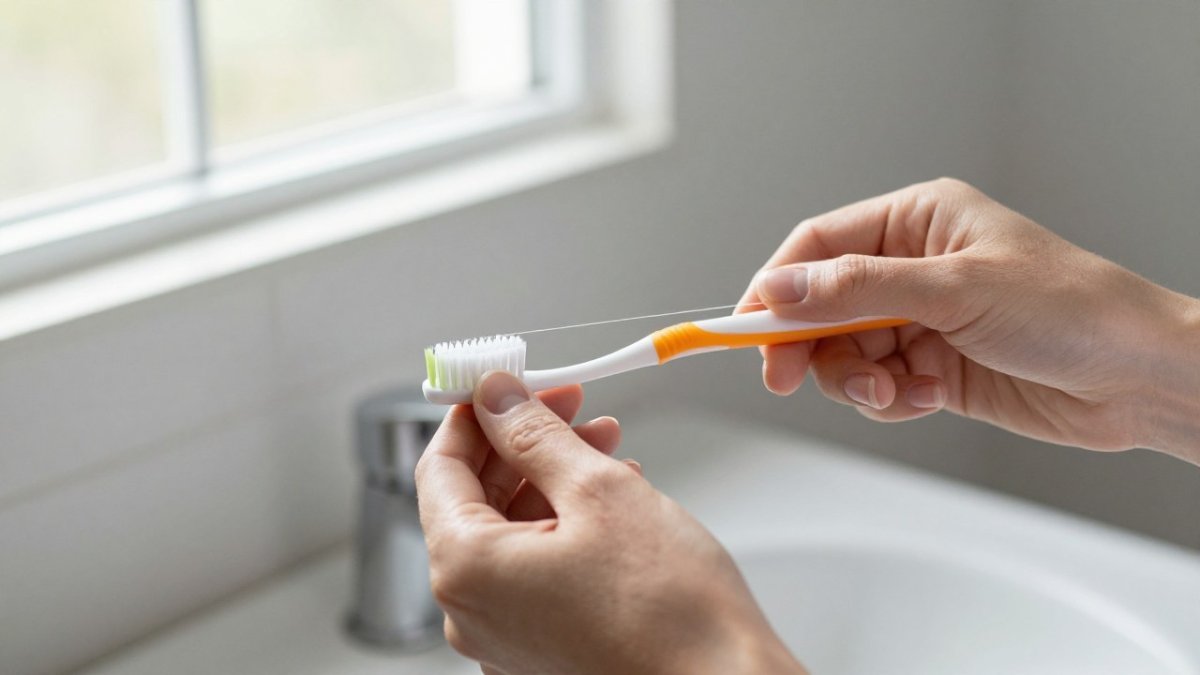
Brushing and flossing with veneers follows the same basics as caring for natural teeth, with one adjustment: less pressure and more attention to the gumline. Hold a soft-bristled brush at a 45-degree angle and use gentle circular motions along each veneer margin.
Electric toothbrushes work well if you use light pressure. Many models signal when you press too hard. That feature helps.
Floss daily, sliding the floss gently between each veneer and its neighbor rather than snapping it down. A common mistake is scrubbing the veneer surface hard and skipping the margin entirely. If you tend to brush hard, learn how to prevent gum recession from aggressive brushing. The margin is where plaque collects.
A daily routine that protects the margins
A simple routine, done consistently, protects veneer margins better than an occasional deep clean. Here is the order we suggest:
- Brush gently for two minutes, twice a day
- Floss once daily, working around each veneer edge
- Rinse with an alcohol-free mouthwash if you like
- Limit staining drinks to mealtimes
- Book a professional cleaning at the interval your dentist recommends
Professional cleanings are generally considered safe for veneers when your hygienist knows they are there. Our article on whether professional dental cleanings are worth it covers what a cleaning actually does for long-term upkeep.
The best toothpaste for veneers and products to avoid
The best toothpaste for veneers is a non-abrasive fluoride toothpaste with a low Relative Dentin Abrasivity (RDA) value. RDA is the standard scale used to score how much a toothpaste wears away tooth structure, and a lower RDA generally means a gentler paste. Fluoride still matters because it protects the natural tooth structure at the margin, which is the part of the tooth a veneer does not cover.
How to identify an abrasive toothpaste on the label:
- Look for the RDA number if the brand publishes it; if it does not, treat a paste marketed as 'whitening,' 'stain removal,' or 'deep clean' as a higher-abrasion risk.
- Check the ingredient list for coarse particles such as hydrated silica in high concentrations, calcium carbonate, sodium bicarbonate (baking soda) as a primary abrasive, and charcoal or activated charcoal.
- Avoid pastes labeled 'whitening' or 'extra whitening' for daily use. They rely on abrasives and, in some cases, low-dose bleaching agents that do not change porcelain shade but can dull the polished surface and irritate the gumline.
What to avoid:
- Whitening toothpastes with coarse particles or charcoal
- Baking soda scrubs used daily
- Hard-bristled toothbrushes; choose soft or extra-soft bristles
- Alcohol-heavy mouthwashes that dry the mouth; an alcohol-free fluoride rinse is the safer default
- Toothpicks or metal tools poked at the margins
- Home whitening trays and strips, which cannot lighten porcelain and can leave the natural tooth edges mismatched
A common mistake is assuming veneers whiten like natural teeth. They do not respond to whitening products. If you want a brighter shade later, talk to your dentist about replacement rather than trying to bleach them at home.
Watch out: an electric toothbrush is fine, but only on a gentle setting with light pressure. Many models have a pressure sensor; if yours does not, you can buy brush heads with soft bristles and let the brush do the work rather than pressing.
Foods to avoid with veneers and habits that damage them
Foods to avoid with veneers are the ones that crack, chip or stain: hard candy, ice, unpopped popcorn kernels, and bones. Crunchy snacks and hard crusts put direct pressure on the front teeth.
Staining drinks matter too. Coffee, tea and red wine can dull the surface over time, especially at the margins. Sipping water after these drinks helps.
Habits cause more damage than food. Nail biting, pen chewing, and opening packaging with your teeth all risk a chip. If you grind your teeth at night, ask your dentist about a night guard (Jaw Clenching and Teeth Grinding (Bruxism)). A guard absorbs bite pressure and protects both veneers and natural teeth.
How long do porcelain veneers last?
Porcelain veneers can last many years with good care, and lifespan varies with individual habits and dental visits. Longevity depends on your oral hygiene, your diet, grinding habits, and regular dental visits.
Composite veneers usually have a shorter lifespan and need more frequent polishing or repair. Porcelain resists staining better and holds its shape longer, which is why many patients choose it for front teeth. Our honest review of whether dental veneers are worth it for front teeth breaks down the trade-offs.
Porcelain vs composite veneer care
Care differs slightly by material:
| Factor | Porcelain veneers | Composite veneers |
|---|---|---|
| Staining | Resists stains well | Stains more easily |
| Repair | Usually replaced | Can often be patched |
| Cleaning | Gentle brush, non-abrasive paste | Same, plus avoid harsh scrubbing |
| Polishing | Occasional professional polish | More frequent polishing |
| Chipping risk | Can chip under hard force | More prone to wear and chips |
Both types need the same daily habits. The difference is how often each may need maintenance.
Signs of a problem and when to contact a dentist
Contact your dentist if you notice a loose veneer, a visible chip, ongoing sensitivity, bleeding gums around a veneer, or a change in your bite. These signs usually have simple fixes when caught early.
Watch out: a small chip at the margin can let bacteria and food in, so do not wait for it to grow.
Other warning signs:
- Rough edges you can feel with your tongue
- Dark lines at the gumline
- Swelling or tenderness in the gum
- Pain when biting down
If you are unsure whether a symptom needs a visit, our guide on the signs you need a dental checkup lists the warning signs worth acting on.
What to do if a veneer chips, loosens, or comes off
Save the piece if it comes off and keep it safe. Do not try to glue it back on with household adhesive. Cover any sharp edge with dental wax if you have it, avoid chewing on that side, and call your dentist promptly for a repair appointment.
Do's and don'ts at a glance
| Do | Don't |
|---|---|
| Brush gently twice daily | Scrub hard along the gumline |
| Floss around each margin | Skip the edges between veneers |
| Use non-abrasive fluoride paste | Use whitening scrubs daily |
| Wear a night guard if you grind | Chew ice or hard candy |
| Book regular checkups | Ignore a loose or chipped veneer |
Book a Veneer Checkup at Pearly Curve Dentistry
Veneers reward consistency. A gentle routine, the right products, and regular visits keep them looking natural for years. If it has been a while since your last checkup, or something feels off around a veneer, we can take a look and talk through your options without pressure.
At Pearly Curve Dentistry, we combine modern treatments with expert support and comfortable care, so every visit feels manageable, even if dental anxiety has kept you away. We take time to explain what we see and what, if anything, needs doing.
Get started with Pearly Curve Dentistry and protect your smile for the long term.
Frequently Asked Questions
Can you use an electric toothbrush with porcelain veneers?
Yes, an electric toothbrush is safe for porcelain veneers as long as you use a soft-bristled head and light pressure. Let the brush do the work rather than pressing hard, and move it slowly along the gumline where the veneer meets the tooth. Avoid stiff brush heads and any setting that feels aggressive. If you are unsure which model suits you, ask your dentist at your next checkup.
What should you do if a porcelain veneer feels loose or breaks?
Keep the veneer if it comes off and do not try to glue it back yourself with household adhesive. Avoid chewing on that side and call your dentist promptly for an assessment. A loose or broken veneer can expose the tooth underneath, so it should be checked quickly. Your dentist can often re-bond a porcelain veneer if it is intact, or discuss a replacement if it is damaged.
Do porcelain veneers need special cleaning?
Porcelain veneers need the same daily care as natural teeth, plus a little extra attention at the margins where the veneer meets the gumline. Brush twice a day with a soft-bristled toothbrush and non-abrasive fluoride toothpaste, floss once daily, and keep regular professional cleanings. Avoiding hard foods and stain-causing drinks helps protect both the veneer and the tooth underneath.
How often should you see a dentist after getting veneers?
Your dentist can recommend a checkup and professional cleaning schedule suited to you, which may differ if you have gum concerns or grind your teeth. Regular visits let your dentist check the veneer margins, look for early signs of plaque buildup or sensitivity, and confirm your bite is wearing evenly. Book a visit if you notice any looseness, chipping, or discomfort between appointments.