 How-to
7 Steps to Find an Emergency Dentist for Children
Last Updated: November 23, 2026
Quick Summary
To find an emergency dentist for children, call your child's regular dental office first, then widen your search to clinics offering same-day and after-hours care. Ask about pediatric experience, confirm the fee before you arrive, and bring your child's health card and insurance details.
- Call a dentist right away for a knocked-out permanent tooth, facial swelling, or bleeding that continues after 10 minutes of firm pressure.
- Handle a knocked-out tooth by the crown, never the root, and aim to have your child seen within an hour.
- Never place a knocked-out baby tooth back in the socket, as it can damage the developing permanent tooth underneath.
- A clinic that cannot clearly answer about today's availability, a dentist on site, and cost is not verified, so keep calling.
- Go to the nearest emergency department for trouble breathing or swallowing, or swelling that is spreading fast.
Table of Contents
- How Do I Find an Emergency Dentist for Children?
- Pediatric Dental Emergency Symptoms: What Counts as Urgent
- What to Do for a Knocked Out Tooth Child: Step by Step
- How to Find and Verify an Emergency Dentist for Children
- After-Hours and On-Call Dentist Options
- Urgent Dental Care for Kids Cost: What to Expect
- Preparing Your Child for the Emergency Visit
- Book an Emergency Appointment with Pearly Curve Dentistry
- Frequently Asked Questions
How Do I Find an Emergency Dentist for Children?
To find an emergency dentist for children, call your child's regular dental office first, then widen your search to clinics that offer same-day and after-hours care.
The first question is always the same: "Is this serious enough to act now?" Below, we walk you through finding an emergency dentist for children in seven clear steps, from spotting urgent symptoms to preparing your child for the visit.
These steps help you decide fast, call the right people, and arrive ready.
Pediatric Dental Emergency Symptoms: What Counts as Urgent
Pediatric dental emergency symptoms are signs a child's mouth needs professional attention quickly: severe pain, swelling, bleeding that won't stop, or a damaged permanent tooth. Not every symptom needs a same-day visit, though.
Signs That Need Care Within Hours
Call a dentist right away if you see any of these:
- A permanent tooth that has been knocked out completely
- A broken or cracked tooth with exposed pink tissue or bleeding
- Facial swelling around the jaw or under the eye
Swelling is the one to watch closely. It can signal an infection that spreads, so treat it as urgent.
When It Can Wait Until Morning
Some problems are uncomfortable but not emergencies. These can usually wait for a regular appointment:
- A small chip on a baby tooth with no pain
- A loose baby tooth that is ready to fall out on its own
- Mild sensitivity to cold drinks
If you are unsure, call and describe what happened. A short phone conversation usually settles whether your child needs to come in now.
What to Do for a Knocked Out Tooth Child: Step by Step
What to do for a knocked out tooth child comes down to one rule: handle the tooth by the crown, never the root, and act within the hour. A permanent tooth has the best chance of being saved when it is replanted or seen by a dentist quickly.
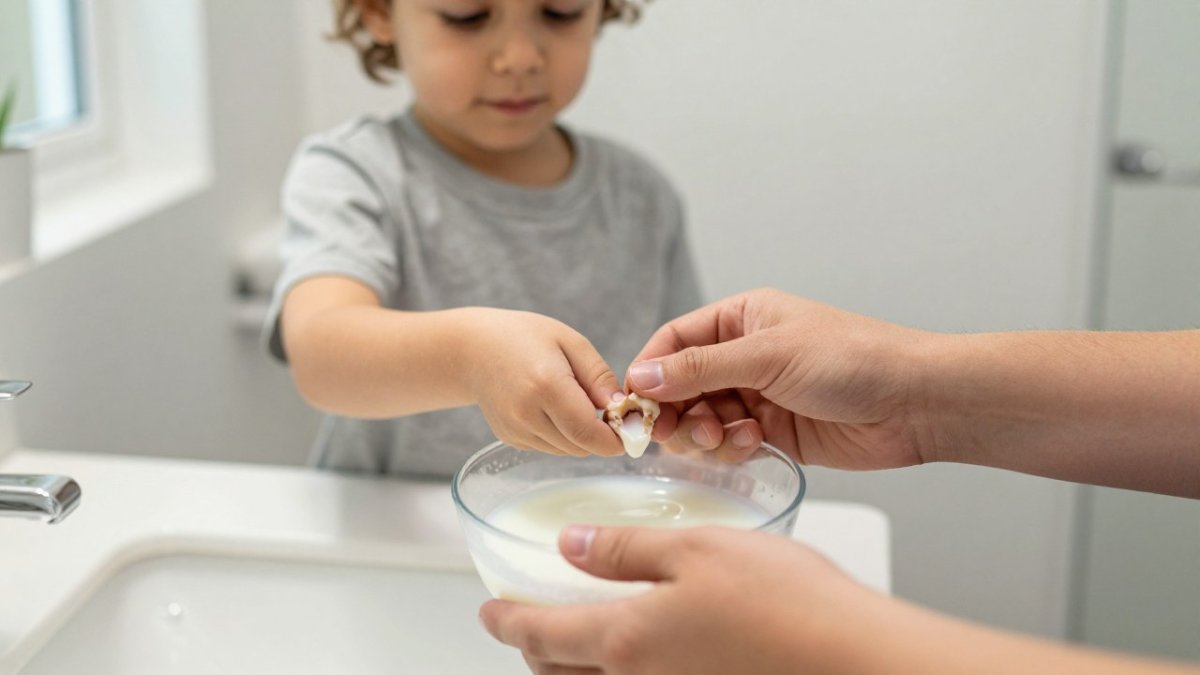
Here is the sequence to follow:
- Stay calm and find the tooth. Pick it up by the white crown, not the root.
- Rinse gently if dirty. Use milk or saline, not water, and do not scrub.
- Try to reinsert it. If your child is old enough and stays calm, place the tooth back in the socket and have them bite gently on a clean cloth.
- If you can't reinsert it, store it in milk. Milk keeps the root cells moist. If milk isn't available, use saline or your child's own saliva.
- Call a dentist immediately. Explain that a permanent tooth was knocked out and how long ago.
- Get there fast. Aim to be seen within an hour if you can.
Watch out: never place a knocked-out baby tooth back in the socket. Reinserting it can damage the developing permanent tooth underneath. Store it and call for advice instead.
How to Find and Verify an Emergency Dentist for Children
Finding an emergency dentist for children is a verification problem, not a search problem. Listings tell you who advertises emergency care, not whether the clinic treats young children routinely, whether a dentist is on site tonight, or whether the fee will be explained before treatment.
Use a three-pass method: source, screen, and confirm.
Pass 1, Source. Build a short list from more than one place so you are not relying on a single ad:
- Your child's regular dental office, including its after-hours voicemail, which often names an on-call number.
- Provincial or territorial dental association member directories, which list dentists by location.
- Public health dental programs, which can point to urgent-care options for children.
Pass 2, Screen. Before you call, rule out listings that cannot meet a child's needs:
- Does the clinic state that it treats children, or does it read as an adult-focused practice?
- Are the posted hours current, and is there any mention of after-hours or on-call coverage?
- Do recent reviews mention children being seen promptly, or do they describe long waits and unclear fees?
Pass 3, Confirm by phone. A listing is only verified when a person answers and gives you specific answers. Use the call checklist below and write down what you are told.
What to Ask When You Call
Ask these questions in order and note the answers:
- Do you see children for emergencies today, and how soon can my child be seen?
- Is there a dentist on site now, or am I speaking with a reception or answering service?
- Does the dentist have experience treating children, and do you accept my child's age?
- What should I do for my child while we wait, and what should I avoid?
- What will the visit cost, is there an after-hours premium, and do you bill my insurance directly or expect payment upfront?
- What should I bring, and where exactly do I go when I arrive?
A clinic that cannot answer questions 1, 2, and 5 clearly is not verified. Keep calling. A short, specific phone conversation is the only reliable way to confirm availability, pediatric comfort, and cost before you travel.
What to Have Ready Before the Call
Keep this information on hand so the call is quick and you do not lose the slot while searching for details:
- Your child's age and main symptoms, described in plain words
- What happened, when, and whether the tooth was a baby tooth or a permanent tooth
- Any allergies, medications, or medical conditions
If you cannot find a verified clinic quickly, widen the search rather than wait: call the nearest hospital emergency department for advice on severe swelling, trauma, or trouble breathing or swallowing, and ask whether they can arrange dental follow-up. The Canadian Dental Association's public resources can help you understand what to expect from a dental visit and how to prepare.
After-Hours and On-Call Dentist Options
After-hours care falls into a few clear options. Your child's regular dentist may offer an on-call number.
Here is how the options compare:
| Option | Best for | What to expect |
|---|---|---|
| Regular dentist's on-call line | Existing patients with urgent pain or injury | Advice and a next-day or same-day slot |
| Clinic with extended hours | Same-day care outside school hours | A booked visit, often the same evening |
| Hospital emergency department | Severe swelling, trauma, trouble breathing or swallowing | Pain and infection control, then a dental referral |
| Walk-in dental clinic | Sudden pain when your dentist is closed | A wait, but often same-day assessment |
If your child has trouble breathing or swallowing, or swelling that is spreading fast, go to the nearest emergency department.
For a closer look at what to do during urgent dental pain outside normal hours, read our guide on emergency dental care for pain.
Urgent Dental Care for Kids Cost: What to Expect
Urgent dental care for kids cost varies by treatment, clinic, and coverage, so no single figure applies. Understand what drives the bill, what public support may apply, and what to confirm before treatment starts.
Costs usually depend on:
- The type of treatment, from a simple exam and X-ray to a reimplant, repair, or extraction
- Whether imaging is needed and how many images
- Whether the visit happens after hours, since some clinics apply an emergency or after-hours premium
Public and Coverage Pathways to Check
Coverage for children's dental care in Canada is layered, and the right pathway depends on your situation:
- Private insurance. Most plans follow a fee guide and cover a percentage of treatment after a deductible. Confirm whether the clinic bills the insurer directly or expects payment at the visit with reimbursement later.
- Public dental programs. Provinces and territories run different programs for children. Eligibility, covered treatments, and age limits vary by jurisdiction, so confirm with your provincial or territorial health ministry or local public health office.
- Federal support for children. Check the official federal program page for current eligibility criteria before your visit.
Questions That Prevent Billing Surprises
Ask these before treatment begins:
- What is the estimated cost for the exam, imaging, and likely treatment?
- Is there an after-hours or emergency premium, and how much is it?
- Do you bill my insurer directly, or do I pay upfront and submit the claim?
Ask for the estimate in writing or have the clinic note it on your file.
Watch out: an estimate given before imaging may change once the dentist sees the full picture. Ask how the clinic handles cost changes mid-visit so you can approve or discuss alternatives before work continues.
If cost is a worry, our article on affording dentistry without insurance covers practical ways to manage the bill.
Preparing Your Child for the Emergency Visit
Preparation makes the visit easier for everyone. Children pick up on adult stress, so keep your voice calm and explain what will happen in simple words.
A few things help:
- Bring a comfort item, like a favorite toy or blanket.
- Feed your child lightly beforehand unless told otherwise.
- Write down what happened and when, so you don't forget details.
- Stay close and let the dental team guide the conversation.
If your child is very anxious, our guide on dentists for patients with anxiety shares approaches that help children feel safe in the chair. Our article on custom mouthguards for young athletes explains when they help.
Book an Emergency Appointment with Pearly Curve Dentistry
When your child needs urgent care, you want a team that treats families with care and answers your questions plainly.
If you are looking for a family dentist in your area, our guide on finding a family dentist locally can help you confirm we serve your neighborhood.
Call us, describe what happened, and we will tell you the fastest way to get your child seen.
A dental emergency with a child is stressful, but you don't have to guess your way through it.
Frequently Asked Questions
Does the provincial health plan cover emergency dental surgery for children?
Coverage varies by province. Some provincial plans cover emergency dental surgery for children when it is performed in a hospital, while routine dental care is usually not included. Because the rules and eligibility differ across the country, check your province's health plan information directly or ask the dental office what they can bill to your plan. Many families also use private insurance or employer benefits to cover part of the cost.
How do I know if my child needs an emergency dentist?
Call an emergency dentist for children right away if your child has uncontrolled bleeding, facial swelling that affects breathing or swallowing, a knocked-out permanent tooth, or severe dental pain that keeps them awake. These pediatric dental emergency symptoms need same-day care. A chipped baby tooth with no pain or a slightly loose tooth can usually wait for the next available appointment. When you are unsure, call the clinic and describe what happened; staff can help you decide.
What should I do if my child knocks out a permanent tooth?
Pick the tooth up by the crown, not the root, and rinse it gently with milk or saline if it is dirty. Try to reinsert it into the socket and have your child bite down on a clean cloth. If you cannot reinsert it, keep the tooth in milk or inside the child's cheek and get to a dentist within 30 minutes if possible. Call ahead so the clinic can prepare for your arrival.
Are emergency dental services available after hours?
Many dental clinics offer after-hours care through an on-call dentist or a recorded message that tells you how to reach someone. Call your regular dental office first and listen to the recording for instructions. If they are closed, search for a clinic that advertises 24-hour emergency service or same-day appointments. Hospital emergency departments can manage severe swelling or trauma, but they usually cannot provide full dental treatment.