 ultimate-guide
Managing Dental Anxiety for Adults: A 2026 Guide
Table of Contents
- Dental Anxiety vs. Dental Phobia: What's the Difference?
- The Modified Dental Anxiety Scale (MDAS): Know Your Level
- How to Tell Your Dentist You Have Anxiety
- Dental Anxiety Breathing Techniques That Actually Work
- Dental Sedation Options for Adults
- Psychotherapeutic and Pharmacological Interventions
- Angles Competitors Miss: Financial Anxiety, Sensory Environments, and the Adult Transition
- Frequently Asked Questions
Last Updated: August 24, 2026
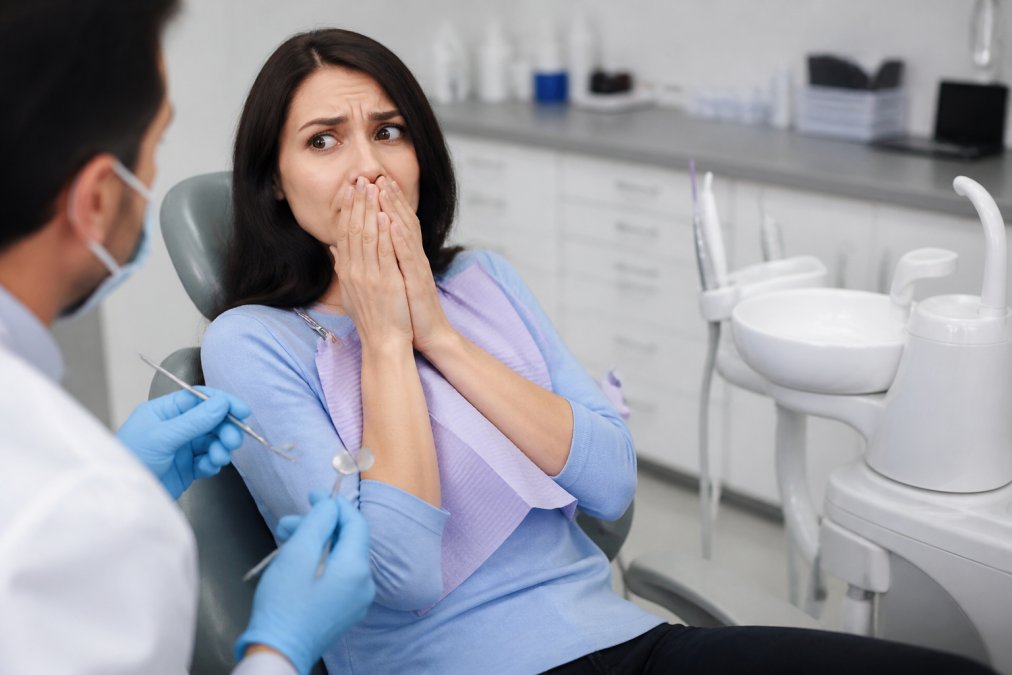
Dental anxiety is one of the most common reasons adults delay or avoid routine oral care. At Pearly Curve Dentistry, we see this pattern regularly: patients who haven't had a cleaning in years, not because they don't care about their teeth, but because the thought of sitting in a dental chair triggers genuine fear. Managing dental anxiety for adults involves understanding your triggers, communicating clearly with your care team, and choosing the right clinical tools to make appointments manageable.
The good news: this is a well-studied area with real, effective solutions. Below, we'll cover everything from how to measure your anxiety level to sedation options, breathing techniques, and the angles most guides skip entirely, including financial stress and what to do when childhood fear follows you into adulthood.
Dental Anxiety vs. Dental Phobia: What's the Difference?
Dental anxiety is apprehension about upcoming dental treatment. Dental phobia, also called dentophobia, is a more severe condition where fear becomes irrational and overwhelming, leading to complete avoidance regardless of consequences.
The practical difference matters. Anxiety responds well to communication strategies, relaxation techniques, and mild sedation. Phobia often requires psychotherapeutic intervention before clinical treatment is possible. Most adults fall somewhere on the spectrum between mild unease and full dentophobia, and knowing where you sit determines which solutions are worth trying first.
Common Causes and Anxiety Triggers
Anxiety triggers vary widely, but a few patterns show up consistently:
- Previous traumatic dental experiences, a painful procedure, a dismissive provider, or a childhood extraction without adequate anesthesia
- Fear of pain or needles, anticipatory anxiety about local anesthesia injections
- Loss of control, lying reclined, unable to speak, with instruments in your mouth
- Sensory overload, the smell of the office, the sound of the drill, the sensation of suction
- Embarrassment, shame about the current state of teeth after years of dental avoidance
Understanding your specific trigger determines which coping mechanisms will actually help.
Recognizing Symptoms: From Unease to Dentophobia
Dental anxiety presents differently depending on severity. Mild anxiety might show up as difficulty sleeping the night before an appointment. More significant anxiety involves physical symptoms: elevated heart rate, sweating, nausea, or difficulty breathing in the waiting room. At the extreme end, dentophobia produces panic attacks and complete avoidance of care.
All of these responses are real physiological stress responses and deserve to be taken seriously by your dental team.
The Modified Dental Anxiety Scale (MDAS): Know Your Level
The Modified Dental Anxiety Scale (MDAS) is a validated clinical screening tool that measures dental anxiety across five scenarios: a general appointment, tooth drilling, scaling, local anesthetic injection, and overall anxiety. Each scenario is scored from 1 (not anxious) to 5 (extremely anxious), for a maximum score of 25.
According to the MDAS clinical guidance published by the British Dental Journal, a score of 19 or above indicates high dental anxiety, while a score of 11 or above suggests clinically significant anxiety worth discussing with your dentist.
The MDAS is useful because it gives both you and your provider a common language. Instead of saying "I'm nervous," you can say "I scored 17 on the MDAS, and my worst trigger is the injection." You can complete the MDAS yourself before your appointment and share the result with your dentist.
| MDAS Score | Anxiety Level | Recommended Starting Point |
|---|---|---|
| 5-10 | Minimal anxiety | Communication strategies, pacing agreement |
| 11-18 | Moderate anxiety | Relaxation techniques, nitrous oxide option |
| 19-25 | High anxiety / dentophobia | Sedation options, consider CBT referral |
How to Tell Your Dentist You Have Anxiety
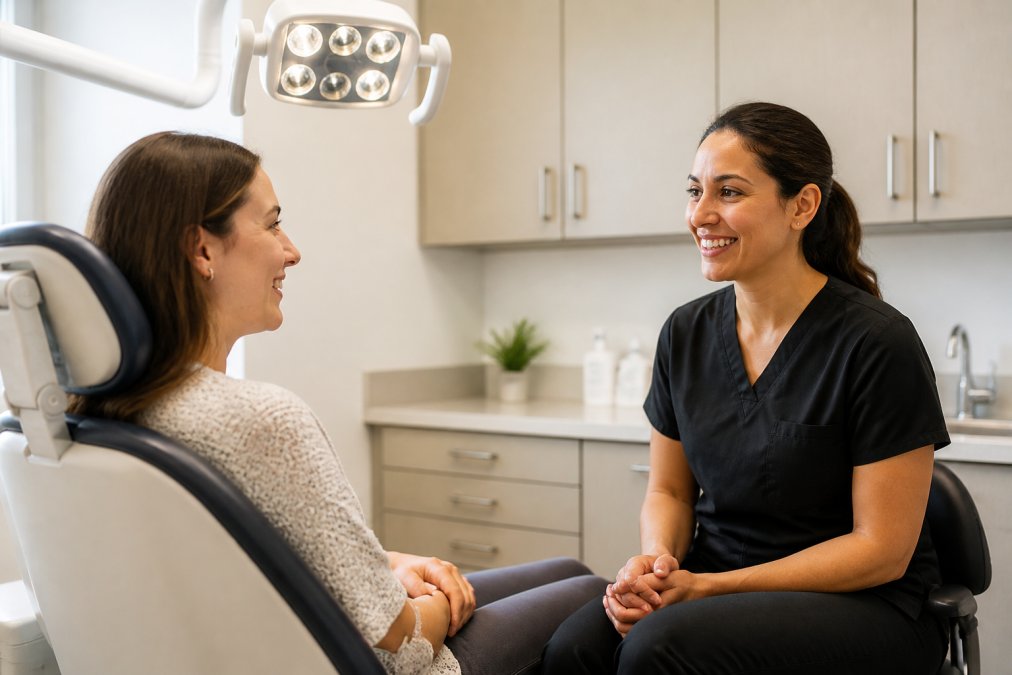
Most patients with dental anxiety say the hardest part isn't the appointment itself, it's admitting to their dentist that they're scared. The fear of being judged or pushed through a procedure too quickly stops many people from saying anything at all.
Say it before you're in the chair. That's the single most important piece of advice here.
What to Say Before Your Appointment
Call ahead or send a message before you arrive. A simple statement works: "I have significant dental anxiety and I'd like a few minutes to talk with the dentist before we start anything."
When you're in the office, try:
- "I've had some bad experiences in the past and I tend to panic when I can't see what's happening. Can you narrate what you're about to do before you do it?"
- "I'm okay with the exam, but I'd like to discuss any treatment options before we move forward."
- "I find the sound of the drill particularly difficult. Is there anything we can do about that?"
A dental team that takes patient comfort seriously will not rush past these requests.
Building a Stop Signal and Pacing Agreement
A stop signal is a pre-agreed hand gesture you can use to pause the procedure at any point. Raising your left hand, for example, signals the dentist to stop immediately. This tool restores a sense of control.
A pacing agreement means you and your dentist agree in advance on the scope of what happens during a given appointment. For highly anxious patients, the first appointment might be nothing more than a conversation and an oral examination. Building trust first makes future appointments possible.
Dental Anxiety Breathing Techniques That Actually Work
Controlled breathing directly interrupts the physiological stress response by activating the parasympathetic nervous system, slowing heart rate and reducing the sensation of panic. It's one of the few coping mechanisms you can use mid-procedure without any equipment.

Focused Breathing and Muscle Relaxation Steps
The most effective dental anxiety breathing technique is diaphragmatic breathing with a controlled exhale:
- Breathe in slowly through your nose for a count of four
- Hold for a count of two
- Exhale slowly through your mouth for a count of six
- Repeat for three to five cycles before the procedure begins
The extended exhale signals safety to the nervous system. Progressive muscle relaxation pairs well with breathing: starting from your feet, consciously tense each muscle group for five seconds, then release. Work upward through your legs, abdomen, hands, and shoulders.
Distraction Techniques and Sensory Coping Tools
Distraction techniques reduce the cognitive bandwidth available for anxiety:
- Music or podcasts through noise-cancelling headphones, which also dampen the sound of dental equipment
- Stress balls or tactile objects held in the hand during treatment
- Counting backwards from 100 during the procedure
- Guided meditation apps used in the waiting room before the appointment
Sensory overload is a real barrier for many anxious patients. Asking for sunglasses to reduce glare, or requesting a blanket if cold environments increase your discomfort, are entirely reasonable requests.
Dental Sedation Options for Adults
Dental sedation options for adults range from mild inhalation sedation to deeper pharmacological management, depending on the severity of anxiety and the complexity of the procedure.
Nitrous Oxide and Oral Sedation
Nitrous oxide (laughing gas) is the most widely used sedation option for dental anxiety. It's delivered through a small mask placed over the nose, takes effect within a few minutes, and wears off quickly after removal. Patients remain fully conscious and responsive.
Oral sedation involves taking a prescribed medication, typically a benzodiazepine, before the appointment. It produces deeper relaxation than nitrous oxide and can cause drowsiness lasting several hours. Patients need someone to drive them home.
Both options are appropriate for moderate dental anxiety.
Conscious Sedation and Local Anesthesia
Conscious sedation is a medically managed state where the patient is relaxed and may have limited memory of the procedure, but remains responsive. It requires additional training and monitoring and is typically offered for more complex procedures or severe anxiety.
Local anesthesia is not a sedation option, but it's worth addressing directly: many patients fear the injection more than the procedure. Topical anesthetics applied to the gum before the injection significantly reduce sensation. Slow, careful injection technique also makes a substantial difference.
According to the Canadian Dental Association's patient resources on sedation, patients should always discuss their full medical history, current medications, and anxiety level before any sedation is administered.
Psychotherapeutic and Pharmacological Interventions
For patients whose dental anxiety is severe enough to prevent treatment entirely, the clinical pathway often starts outside the dental office.
Cognitive Behavioral Therapy and Systematic Desensitization
Cognitive behavioral therapy (CBT) is the most evidence-supported psychotherapeutic intervention for dental phobia. It works by identifying and restructuring the thought patterns that drive avoidance. As documented in research published by the Canadian Journal of Psychiatry, CBT produces durable reductions in anxiety that generalize across dental settings.
Systematic desensitization is a specific CBT technique that exposes the patient to anxiety triggers in a graduated, controlled way. It might start with simply visiting the office without any treatment, then progress to sitting in the chair, then tolerating an examination, then a cleaning. Each step is only taken when the previous one no longer produces significant anxiety.
These approaches take time, but for patients with dentophobia, they are often the only path to sustainable routine oral care.
Angles Competitors Miss: Financial Anxiety, Sensory Environments, and the Adult Transition
Most guides on managing dental anxiety focus on the chair. They miss the factors that prevent people from even booking an appointment.
Financial Anxiety and the Cost of Dental Avoidance
Financial anxiety is a genuine and underreported driver of dental avoidance. Without employer-sponsored coverage, dental care costs can feel unpredictable, and many adults delay care because they're afraid of what the bill will be.
The cruel irony: dental avoidance makes costs higher, not lower. A small cavity becomes a root canal or extraction after years of avoidance. Gum disease progresses to the point where more invasive treatment is required.
If cost is a real concern, ask your dental office directly about what to expect before treatment begins. A transparent practice will give you a clear breakdown before any work is done.
Sensory-Friendly Dental Environments
Sensory-friendly dental environments are a growing area of focus in clinical practice. For patients with sensory processing differences, including many adults with ADHD, autism spectrum conditions, or anxiety disorders, standard dental offices can be overwhelming.
Features that make a clinical environment more manageable include dimmed or adjustable lighting, reduced ambient noise, unscented or low-scent products, weighted blankets, and the option to take breaks during treatment. If sensory overload is a significant part of your dental anxiety, ask specifically about these accommodations when you contact a practice.
When Childhood Fear Follows You Into Adulthood
Many adults with significant dental anxiety can trace it directly to childhood experiences: a dentist who didn't explain what they were doing, a procedure that was more painful than expected, or a parent who communicated their own anxiety in the waiting room.
Childhood coping strategies often don't scale. A child who survived appointments by dissociating grows into an adult who avoids care entirely because the old strategies stopped working.
Recognizing this pattern reframes dental anxiety not as a personality flaw but as a learned stress response, one that can be unlearned with the right support and a clinical environment that prioritizes patient comfort.
Managing Anxiety After the Appointment
Post-appointment anxiety management is often overlooked. For many patients, the anxiety doesn't end when they leave the chair. Adrenaline takes time to clear, and some patients experience emotional exhaustion or heightened sensitivity in the hours after treatment.
A few practices that help:
- Plan a low-demand activity for the rest of the day
- Debrief with yourself: what went well, what was harder than expected, what you'd ask for differently next time
- Acknowledge the appointment as a genuine accomplishment
According to the Centre for Addiction and Mental Health's anxiety resources, post-event processing supports long-term stress regulation by reviewing a stressful event constructively rather than ruminating on what went wrong.
Managing dental anxiety is a process, not a single appointment. The combination of clear communication, appropriate sedation, evidence-based relaxation techniques, and a dental team that prioritizes patient comfort makes a measurable difference. At Pearly Curve Dentistry, our approach to comfortable, personalized care is built around exactly this: modern treatments delivered with expert support, at a pace that works for you. Book an appointment and take the first step toward routine oral care that doesn't have to feel like a test of endurance.
Frequently Asked Questions
What is the difference between dental anxiety and dental phobia?
Dental anxiety is a general sense of worry or unease before or during dental visits, it's common and manageable. Dental phobia, sometimes called dentophobia, is more intense: it can cause people to avoid care entirely, even when they're in pain. The Modified Dental Anxiety Scale (MDAS) is a clinically used tool that helps dentists gauge where a patient sits on this spectrum. If avoidance is affecting your oral health, it's worth discussing with your dentist so the right support can be put in place.
Are there sedation options available for anxious dental patients?
Yes. Dental sedation options for adults range from nitrous oxide (laughing gas), which wears off quickly and lets you drive home, to oral sedation taken before your appointment, to conscious sedation administered in-chair. Local anesthesia is also used to ensure you feel no pain during procedures. The right choice depends on your anxiety level, the procedure involved, and your medical history. Ask your dentist to walk you through each option so you can make an informed decision together.
Can breathing exercises actually help during a dental procedure?
Dental anxiety breathing techniques are one of the most accessible coping mechanisms available because they require no equipment and work immediately. Slow, diaphragmatic breathing lowers your heart rate and reduces the physical stress response. A common approach is the 4-7-8 method: inhale for four counts, hold for seven, exhale for eight. Practiced before and during your appointment, focused breathing can meaningfully reduce sensory overload and help you stay calm through routine oral care like cleanings or oral debridement.
How do I tell my dentist I have anxiety without feeling embarrassed?
Dental anxiety is one of the most common reasons adults delay or avoid care, so a good dental team will not be surprised. You can mention it when booking, simply say you experience anxiety at dental appointments and ask what accommodations are available. In the chair, agree on a stop signal (like raising your hand) so you feel in control at all times. Patient-dentist communication built on honesty from the start makes every visit easier and allows your dentist to adjust their pace and technique to suit your comfort.
What therapies work for severe dental phobia beyond sedation?
For patients whose dental avoidance is rooted in past dental trauma or deep-seated fear, psychotherapeutic interventions can be highly effective. Cognitive behavioral therapy (CBT) helps you identify and reframe the thought patterns that drive avoidance. Systematic desensitization gradually exposes you to dental settings in a controlled way until the fear response reduces. These approaches are often used alongside pharmacological management rather than instead of it. A referral from your dentist or family doctor can connect you with a registered psychologist experienced in treating dental phobia.
How does financial worry make dental anxiety worse, and what can I do about it?
For many adults, fear of the bill amplifies fear of the chair. Uncertainty about costs can make dental avoidance feel financially rational, even when it leads to more expensive problems later. Asking your dental office for a clear treatment plan with itemized costs before any procedure begins puts you in control. If you don't have insurance, ask whether a payment plan is available. Routine preventative care, cleanings, exams, typically costs far less than restorative work needed after years of avoidance.