 Comparison
Are Dental Veneers Worth It for Front Teeth? An Honest Review
Last Updated: November 16, 2026
Quick Summary
Dental veneers are worth it for front teeth when your goal is cosmetic: they mask stains, chips, gaps and uneven edges that whitening cannot fix. They are not worth it for structural problems, active decay, gum disease or heavy grinding, and the enamel removal is irreversible.
- Veneers are a cosmetic treatment, not a repair, and do not strengthen or reinforce teeth.
- Porcelain veneers commonly last around 10 to 15 years with good care; composite needs replacing sooner.
- Bonding is the most reversible alternative because it typically requires little or no enamel removal.
- Treat active decay and gum disease first, since veneers over a compromised foundation may fail.
- Brush twice daily with a soft brush and non-abrasive toothpaste, and wear a night guard if you grind.
Table of Contents
- The Real Question Behind Dental Veneers for Front Teeth
- What Dental Veneers Can and Cannot Fix on Front Teeth
- Porcelain vs Composite Veneers Cost and Trade-Offs
- How Long Do Veneers Last and What Shortens Their Life
- Veneers vs Bonding, Crowns, Whitening and Orthodontics
- Dental Veneer Maintenance Tips for Long-Term Value
- Who Is a Good Candidate and Who Should Wait
- Book a Veneer Consultation at Pearly Curve Dentistry
- Frequently Asked Questions
The Real Question Behind Dental Veneers for Front Teeth
Most people asking whether dental veneers are worth it for front teeth have already decided they want a better smile. The real question is whether the cost, the enamel removal, and the lifetime commitment justify the result. A good consultation walks patients through that decision honestly, including when waiting may be the better choice. Our dental veneers consultation process explained covers what to expect before committing.
Dental veneers are thin custom-made shells that bond to the front surface of teeth to change their shape, color, or alignment. They are a cosmetic treatment, not a repair. That distinction matters more than any price tag, because it shapes what veneers can realistically deliver. Below, we break down the trade-offs section by section so you can judge whether they suit your front teeth.
What Dental Veneers Can and Cannot Fix on Front Teeth
Veneers are excellent at masking cosmetic flaws and poor at fixing structural problems. That single sentence should guide your decision.
On the cosmetic side, veneers can conceal stained teeth that whitening cannot lift, close small gaps, smooth chips and cracks, even out uneven edges, and create a more uniform tooth shape. Many patients choose them for the six to ten visible front teeth that make up a smile line.
What they cannot do is strengthen a weak tooth or replace lost structure. As the Cleveland Clinic guide to dental veneers explains, veneers are cosmetic and do not necessarily repair or reinforce teeth. A tooth with significant decay, a large old filling, or heavy grinding damage needs a different plan.
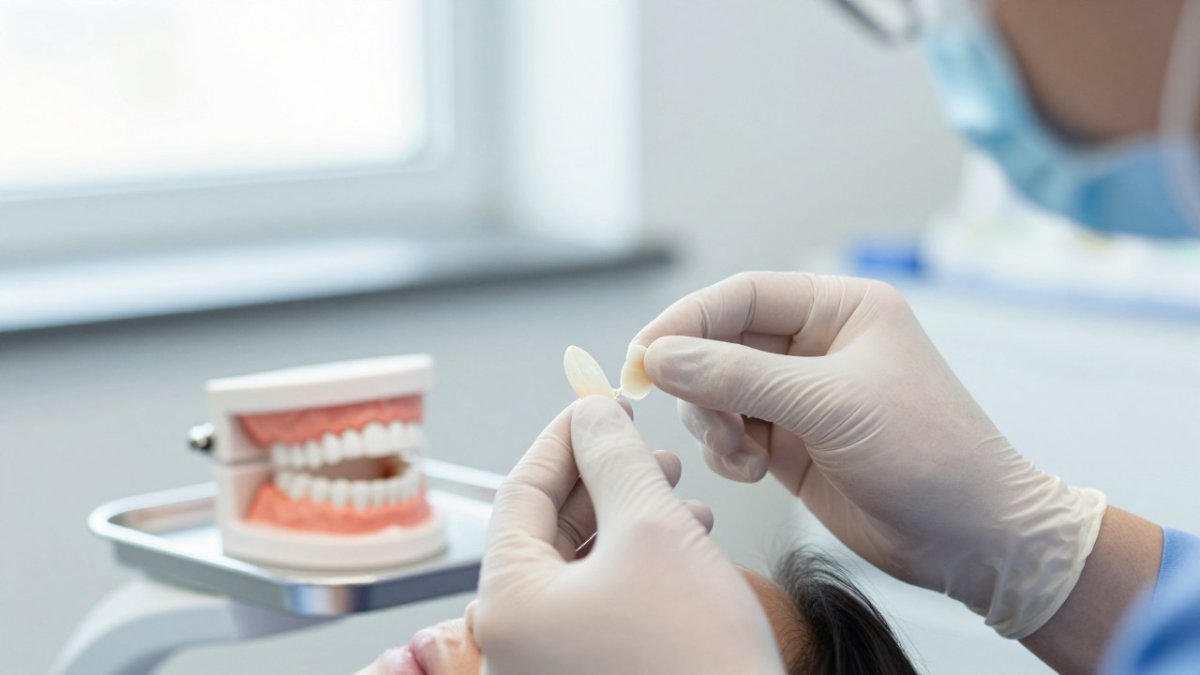
For a deeper look at what veneers can realistically correct on front teeth, our cosmetic veneers guide covers the options in more detail.
Porcelain vs Composite Veneers Cost and Trade-Offs
Porcelain and composite differ mainly in upfront cost, durability, and how much tooth structure each requires. Porcelain generally costs more upfront but tends to last longer and hold its color well. Composite usually costs less upfront and can often be completed in one visit, but it may stain more readily and wear faster.
Here is the practical comparison we use in consultations:
| Factor | Porcelain Veneers | Composite Veneers |
|---|---|---|
| Upfront cost | Higher | Lower |
| Durability | Longer-lasting | Shorter lifespan |
| Aesthetics | More lifelike, stain-resistant | Good, but stains over time |
| Visits | Usually two or more | Often same-day |
| Repairability | Harder to repair | Easier to add to |
| Enamel removal | Usually more | Usually less |
We do not publish fixed prices because every case differs by tooth count, material, and lab work. For a full cost breakdown, read our honest review of veneer costs.
How Long Do Veneers Last and What Shortens Their Life
Porcelain veneers commonly last around 10 to 15 years with good care, according to Dental Arts of Atlantis on veneers for chipped teeth, while composite veneers generally need replacing sooner. The range is wide because habits matter as much as material.
The biggest lifespan shorteners are grinding and clenching, biting nails or hard objects, and skipping oral hygiene. Tooth sensitivity and gum health also affect how long a veneer stays comfortable and secure. A night guard protects the investment if you grind.
Veneers vs Bonding, Crowns, Whitening and Orthodontics
The right alternative depends on the concern you are trying to solve, the condition of the tooth underneath, and how much enamel you are willing to give up. For front teeth specifically, the choice is rarely about which treatment is "best" in the abstract, it is about matching the fix to the flaw.
Dental bonding is the closest like-for-like swap for small cosmetic defects. A tooth-colored composite resin is applied directly to the front surface, shaped, and cured, usually in a single visit. Bonding suits small chips, minor gaps, and slight edge irregularities, and it is the most reversible option because it typically requires little or no enamel removal.
Crowns are the right call when the tooth needs structural support, not just a cosmetic cover. A crown caps the entire tooth and is commonly used after root canal treatment, for a tooth with a large failing filling, or where there is significant loss of tooth structure. For front teeth, crowns can look excellent, but they require more aggressive tooth reduction than veneers.
Teeth whitening handles simple discoloration and nothing else. If the front teeth are healthy, well-shaped, and well-aligned but have surface or intrinsic stains, whitening is far less invasive and far less expensive than veneers. Whitening will not change the shape of a tooth, close a gap, or mask a chip, and it will not lighten a restoration such as a crown or a filling.
Orthodontics is the appropriate route for misalignment, crowding, or bite problems (Canadian Dental Association). Veneers can create the appearance of straighter front teeth, but they do not move teeth or correct a bite. If the underlying issue is position rather than surface appearance, orthodontic treatment, including clear aligner options, addresses the cause rather than masking it, and it preserves enamel.
| Concern | Veneers | Bonding | Crowns | Whitening | Orthodontics |
|---|---|---|---|---|---|
| Surface stains | Yes | Limited | Yes | Yes | No |
| Chips and cracks | Yes | Yes, for small defects | Yes | No | No |
| Small gaps | Yes | Yes, for small gaps | No | No | Yes |
| Misalignment | Cosmetic only | No | No | No | Yes |
| Structural damage | No | No | Yes | No | No |
| Enamel removal | Usually some | Minimal | Usually more | None | None |
| Reversible | No | Yes | No | Yes | Yes |
A practical way to think about it: whitening and orthodontics change the tooth you already have, bonding adds to it, veneers resurface it, and crowns replace its outer layer. The further you move along that spectrum, the more committed and the less reversible the treatment becomes. For front teeth, most practitioners will try to stay as far left on that spectrum as the cosmetic concern allows.
If crowns are part of your comparison, our crowns and bridges treatment page explains how they work.
Dental Veneer Maintenance Tips for Long-Term Value
Veneer maintenance is simple but not optional. Brush twice daily with a soft brush and non-abrasive toothpaste, floss carefully around the margins, and keep regular checkups so we can catch edge wear early. Avoid biting into hard foods with the front teeth.
Watch out: abrasive whitening toothpaste and frequent polishing can dull the surface over time, and a chipped veneer may require repair or replacement.
Who Is a Good Candidate and Who Should Wait
Good candidates for front-teeth veneers share a few practical traits: healthy teeth and gums, a stable bite, enough remaining enamel to bond to, and cosmetic concerns that a surface restoration can actually address. Candidacy is less about wanting a better smile and more about whether the teeth underneath can support the result long term.
Active decay or gum disease should be treated first. Veneers bond to the outside of the tooth, so placing them over untreated decay or inflamed gums traps the problem underneath. Treatment is generally not advised until decay is restored and gum health is stable, because a veneer placed over a compromised foundation may fail.
Heavy grinding or clenching is a major consideration. Porcelain is strong but brittle, and repeated clenching forces can chip or debond front veneers. If you grind, a night guard is usually part of the plan, and in some cases a dentist will recommend treating the bite or addressing the grinding habit before committing to veneers.
Bite problems and misalignment matter. If the front teeth do not meet correctly, veneers can be placed under uneven loading and may fail early. Significant misalignment is often better addressed with orthodontics first, then veneers if cosmetic refinement is still needed.
Existing restorations change the plan. A front tooth with a large old filling, a previous crown, or a history of root canal treatment may not be a good veneer candidate. In those cases a crown is often the more predictable option because it covers and protects the whole tooth rather than bonding to a weakened surface.
Enamel quantity is a limiting factor. Veneers require a small amount of enamel removal to create space for the shell. Patients with worn enamel, erosion, or prior heavy preparation may have too little left for a conservative veneer case, which is one reason an in-person assessment matters more than an online quiz.
Age and tooth stability. Younger patients whose teeth and bite are still settling may be advised to wait, and anyone considering orthodontics should generally complete that first so the veneers are designed around the final tooth position.
Veneers are effectively irreversible, because enamel removal does not grow back. That is the single biggest reason to be certain before you commit, and it is why the candidacy conversation should happen before any treatment is booked.
Book a Veneer Consultation at Pearly Curve Dentistry
The honest answer to whether veneers are worth it depends on your teeth, your goals, and your budget. We will tell you when a simpler option fits better, and we will explain the trade-offs before anything is booked. Pearly Curve Dentistry offers modern dental care with a focus on comfort and personalized support.
Ready to talk it through? Book a veneer consultation with us and get a clear, no-pressure assessment.
We know cosmetic dentistry can feel pushy, so we start with a conversation, not a sales pitch. Our team explains what veneers can and cannot do for your front teeth, then helps you weigh the alternatives. Get started with Pearly Curve Dentistry and make a decision you feel confident about.
Frequently Asked Questions
How much do dental veneers cost in Canada?
Pricing for dental veneers varies by material, the number of teeth treated, and the clinic, so there is no single national figure. Porcelain veneers usually cost more upfront than composite because they are custom-made in a lab and typically last longer. Composite veneers cost less initially but may need earlier replacement. Ask your dental provider for a written estimate before committing.
How long do veneers last on front teeth?
Porcelain veneers commonly last around 10 to 15 years with good care, while composite veneers tend to have a shorter lifespan and may need repair or replacement sooner. Longevity depends on your bite, grinding habits, oral hygiene, and whether you attend regular checkups. Front teeth take more biting force than many people realize, so wearing a night guard if you grind can noticeably extend how long veneers last.
Do veneers ruin your natural teeth?
Veneers do not automatically ruin natural teeth, but porcelain veneers usually require some enamel removal to make room for the shell, and that change is permanent. Composite veneers often need less or no enamel removal. The health of the underlying tooth depends on the preparation done, your gum health, and your hygiene afterward. A thorough consultation should explain exactly how much tooth structure will be altered before you agree.
Can you get veneers if you have gum disease?
Active gum disease is usually treated before veneers are placed, because inflamed or receding gums can affect how the veneers sit and how long they last. Your dentist will assess gum health, tooth decay, and bite stability first. If gum disease is caught early and treated, veneers may still be an option afterward. This is why a candidacy assessment matters more than choosing a veneer material first.
What is the difference between porcelain and composite veneers?
Porcelain veneers are lab-made shells that resist staining well and typically last longer, at a higher upfront cost and with more enamel removal. Composite veneers are applied directly by the dentist, often in one visit, cost less initially, and are easier to repair, but they stain more easily and wear faster. The right choice depends on your budget, how much tooth structure you want to preserve, and how long you expect the result to last.