 how-to
Manage Gum Recession Before Veneers: 2026 Guide
Table of Contents
- Why Gum Recession Affects Your Veneer Candidacy
- Signs Your Gums Aren't Ready for Porcelain Veneers
- How a Periodontal Assessment for Veneers Works
- Non-Surgical Steps to Manage Gum Recession Before Veneers
- Gum Grafting Recovery Time and the Veneer Timeline
- Best Practices for Gum Health Before Cosmetic Work
- What Happens If You Skip Gum Treatment and Get Veneers Anyway
- Frequently Asked Questions
Last Updated: October 3, 2026
Why Gum Recession Affects Your Veneer Candidacy
Gum recession veneers planning starts with one hard truth: your gums are the foundation, and veneers are the house. At Pearly Curve Dentistry, patients often want a smile makeover but need gum care first.
Gum recession is gum tissue pulling back from the tooth surface, exposing the root and weakening the seal around the tooth.
When gums recede, three things go wrong for veneers:
- The gum line keeps moving, so the veneer edge can become exposed
- Exposed roots raise the risk of tooth sensitivity and decay
- Active gum disease can damage the tissue the veneer depends on
The Canadian Dental Association's oral health resources notes that gum disease is one of the most common oral health problems among adults.
Signs Your Gums Aren't Ready for Porcelain Veneers
The warning signs of unhealthy gums build slowly, so most patients notice the cosmetic problem, not the cause.
Watch for these red flags:
- Gums that bleed when you brush or floss
- Gum recession, where teeth look longer than before
- Red, swollen, or tender gum tissue
A common mistake is treating bleeding gums as normal. Bleeding is usually the first sign of gingivitis, reversible with good oral hygiene and a dental cleaning.
If you see these signs, get a dental exam before booking cosmetic work. Veneers over unhealthy gums can trap bacteria and speed tissue loss.
How a Periodontal Assessment for Veneers Works
A periodontal assessment for veneers is a focused exam of the gums and bone supporting your teeth. It tells your dentist whether your mouth can handle veneers now, or whether treatment comes first.
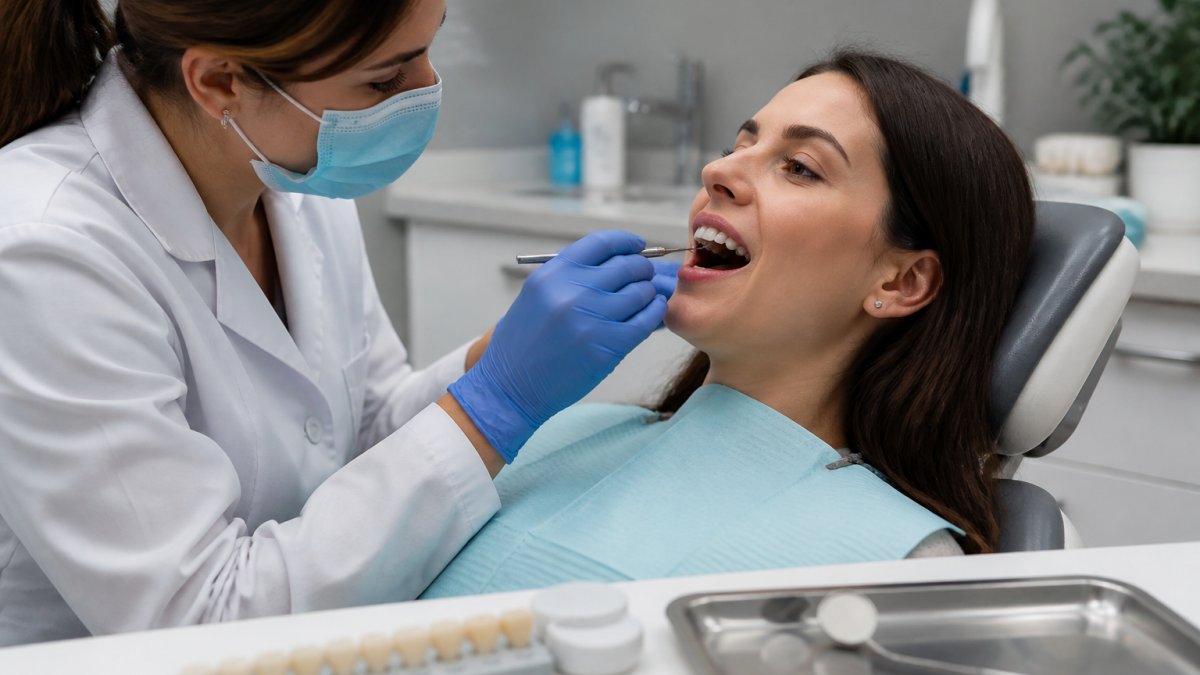
At Pearly Curve Dentistry, this assessment is a normal part of cosmetic planning. We would rather delay a veneer than place one that fails.
What Gets Measured at the Exam
The exam checks your gum tissue and the bone beneath it, measuring:
- Pocket depth: the space between the gum and tooth, measured with a probe
- Gum recession: how far the gum line has moved from its original position
- Gum inflammation: redness, swelling, and bleeding on probing
Your dentist also records tooth sensitivity and gum line shape, which feed into the treatment plan.
When a Periodontist Referral Is Needed
A periodontist specializes in gums and supporting bone. You may be referred if you have:
- Deep pockets or clear bone loss
- Advanced gum recession
- Gum disease that has not responded to basic treatment
The Canadian Dental Association advises regular dental visits so problems are caught early. For cosmetic work, that early catch is what protects your result.
Non-Surgical Steps to Manage Gum Recession Before Veneers
Most early gum problems improve without surgery. The goal is to calm inflammation and stop recession worsening before any veneer is placed. Start at home:
- Brush twice a day with a soft-bristled brush
- Floss or use interdental cleaning tools daily
- Use an antiseptic mouthwash if your dentist recommends one
Then add professional care. A dental cleaning removes plaque and calculus you cannot reach at home. This alone can reduce gum inflammation in many patients.
Scaling, Root Planing and Periodontal Therapy
Scaling and root planing is a deep cleaning below the gum line. Scaling removes plaque and calculus from tooth and root surfaces; root planing smooths the root so gum tissue can reattach. It often reduces pocket depth and inflammation, making it the first step before cosmetic work. Your dentist re-checks your gums weeks later to confirm the tissue has settled.
Gum Contouring and Its Limits
Gum contouring reshapes the gum line for a more even smile when gums sit too high or too low, but it does not fix active disease or replace lost tissue. With gum recession, contouring may make things worse if the tissue is not healthy first.
Gum Grafting Recovery Time and the Veneer Timeline
Gum grafting recovery time is the question we hear most from patients who need tissue added back before veneers.
What most guides skip is the waiting window. A graft is not ready for veneer prep when the stitches come out, the tissue must mature, the gum line must stop moving, and the margin must sit at a final, predictable height.
The Healing Phases, and What Each One Means for Veneers
| Phase | Typical Timeframe | What's Happening | Veneer Implication |
|---|---|---|---|
| Inflammatory | Days 1-3 | Clot forms, mild soreness, soft diet, avoid brushing the site | No cosmetic work; keep the graft undisturbed |
| Proliferative | Weeks 1-2 | New tissue forms, stitches dissolve or are removed | Still no prep; gum line is actively changing |
| Maturation | Weeks 3-6 | Graft firms up and blends with surrounding gums | Gum line is settling but not yet final |
| Remodeling | Months 2-3 | Collagen reorganizes, tissue reaches final contour | Earliest realistic window for veneer prep |
| Stable margin | Months 3-6 | Gum line holds steady under normal function | Preferred window for final impressions and cementation |
A realistic timeline is often three to six months from graft to veneer prep, longer with multiple graft sites, smoking, or uncontrolled diabetes. Your dentist re-measures pocket depths and recession at each follow-up; the gum line is stable when two consecutive measurements, at least a month apart, show no change.
Why the Waiting Window Is Not Optional
Veneers are bonded to the visible tooth and finished at the gum line. If the gum line is still migrating when the veneer is made, three things go wrong:
- The margin shows. A veneer made to a gum line that later recedes leaves a visible edge of natural tooth or root.
- The seal breaks. The bond between veneer, tooth, and gum depends on a stable, healthy margin. A moving gum line breaks that seal.
- The veneer has to be remade. Removing and remaking a veneer means new impressions, new lab work, and a second round of prep on a tooth that has already been reduced.
What Can Happen During the Waiting Window
You are not idle for three to six months. During the healing window, your dental team can:
- Complete any remaining periodontal therapy, such as scaling and root planing on other sites
- Re-check pocket depths and recession at follow-up visits
- Plan the veneer case in detail, including shade, shape, and smile design
If you have gum disease along with recession, it must be treated and controlled before grafting, a graft on inflamed tissue will not take.
When Grafting Is Not Needed
Not every receding gum line needs a graft before veneers. If recession is mild, tissue is healthy, and the gum line has been stable for months, your dentist may proceed after a cleaning and short observation. The decision comes down to two questions: is the tissue healthy, and is the gum line stable? If both are yes, you may not need surgery.
A Note on Coverage
Gum grafting is usually classified as periodontal, not cosmetic, when done to treat recession or disease. Many Canadian dental plans cover a portion when deemed medically necessary, while veneers are almost always cosmetic and paid out of pocket. Ask your dental office for a pre-treatment estimate before committing to the sequence.
Best Practices for Gum Health Before Cosmetic Work
Good daily habits do more for your veneer result than any single treatment, and this is where most patients improve fastest.
The Daily Routine That Actually Supports Gum Repair
Build these into your routine, and focus on the how, not just the what:
- Brush with a soft-bristled brush at a 45-degree angle to the gum line, using short, gentle strokes. This cleans the sulcus, the shallow groove between gum and tooth, where plaque starts.
- Use an electric brush with a pressure sensor if you tend to brush hard. Overbrushing is a leading cause of recession, and a sensor gives you feedback your hand will not.
- Clean between teeth every day with floss, interdental brushes, or a water flosser. Interdental brushes can be effective for people with recession, as they clean the exposed root surface.
Diet, Lifestyle and Soft Tissue Regeneration
What you eat and how you live affect how well gum tissue heals, and it is something you can act on today.
Nutrients that support gum repair:
- Vitamin C is required for collagen synthesis, which rebuilds connective tissue in the gums. Citrus, bell peppers, broccoli, and strawberries are common sources. Smokers need more, because smoking depletes vitamin C.
- Vitamin D and calcium support the alveolar bone holding your teeth. Bone loss turns recession into a structural problem, not just a cosmetic one.
- Protein provides amino acids for tissue repair. Most adults need roughly 0.8 grams per kilogram of body weight daily, more during healing.
Lifestyle factors that slow or speed healing:
- Smoking and vaping narrow gum blood vessels, reducing oxygen and nutrient delivery. This slows healing after grafting and raises periodontal disease risk. Quitting, even a few weeks before a graft, improves outcomes.
- Poor sleep and high stress raise cortisol, amplifying the body's inflammatory response. Chronic inflammation undermines a stable gum line.
- Uncontrolled diabetes is one of the strongest risk factors for periodontal disease. If blood sugar is not well managed, gum treatment is less likely to hold.
Techniques That Protect the Gum Line
A few specific habits make a measurable difference:
- Do not brush immediately after acidic food or drink. Wait 30 minutes. Acid softens enamel and dentin, and brushing too soon abrades the exposed root.
- Use a straw for acidic drinks to limit contact with the gum line.
- Do not use toothpicks or metal instruments on the gum line. They can cut tissue and drive bacteria into the sulcus.
Building a Routine That Survives Real Life
If you have ADHD, anxiety, or another condition that makes daily routines hard, tell your dental team. A supportive plan beats shame. Some patients do better with a brush by the kitchen sink, a flosser in the car, and a phone reminder. The best routine is the one you actually do.
What Happens If You Skip Gum Treatment and Get Veneers Anyway
Skipping gum treatment before veneers usually backfires, it is how tissue behaves.
Here is what tends to happen:
- The gum line keeps receding, exposing the veneer margin
- Bacteria collect at the margin, raising the risk of decay and gum inflammation
- The veneer edge shows, which ruins the aesthetic outcome
Marginal integrity, the seal where the veneer meets tooth and gum, protects the work. Unhealthy gums break that seal, which is why we treat gum health as the first step of cosmetic dentistry, not an afterthought.
Gum recession and veneers can work together, but only when the gums come first. We build a treatment plan around your long-term oral health, not a quick fix. Book an appointment with Pearly Curve Dentistry and start with a healthier smile.
Frequently Asked Questions
Can I get veneers if I have gum recession?
Sometimes, but the recession has to be stable and controlled first. A dentist will check pocket depths, gum inflammation and bone loss before recommending porcelain veneers. If active periodontal disease or rapid recession is present, treatment such as scaling and root planing or a periodontist referral usually comes first. Veneers placed on an unstable gum line can sit unevenly, expose margins and shorten the lifespan of the restoration.
Is gum grafting necessary before getting veneers?
Not always. A gum graft is typically recommended when there is not enough attached gum tissue to support the veneer margin, or when root exposure is causing tooth sensitivity. Mild recession may be managed with periodontal therapy, improved oral hygiene and monitoring. Your dentist or periodontist will decide based on the amount of soft tissue, bone support and how stable the gum line has been over time.
What is gum grafting recovery time before veneers can be placed?
Gum grafting recovery time varies by procedure and how quickly the graft site heals, and the veneer timeline depends on your individual healing. Many patients need several weeks to months of soft tissue healing before cosmetic work begins. Your dentist will confirm readiness at follow-up visits and may delay veneer preparation until the gum line is stable. Ask your provider for a timeline specific to your case.
What are the best practices for gum health while waiting for veneers?
Keep plaque buildup low with twice-daily brushing, daily interdental cleaning and an antiseptic mouthwash if your dentist recommends one. Attend dental cleaning appointments as scheduled, avoid smoking, and manage conditions like diabetes that slow tissue healing. A diet rich in vitamin C and protein supports soft tissue repair. If you notice gum inflammation, bleeding or tooth sensitivity, contact your dental professional rather than waiting for your next visit.