 Listicle
Signs You Need a Dental Checkup: 7 Warning Signs
Table of Contents
- 1. Bleeding Gums When Brushing: A Top Sign You Need a Dental Checkup
- 2. Tooth Sensitivity Causes That Warrant a Professional Look
- 3. Persistent Bad Breath and Other Changes in Your Mouth
- 4. When to See a Dentist: Urgent Symptoms vs. Routine Checkup Signs
- 5. What Happens at a Dental Checkup: Step by Step
- 6. How Often Should You Get a Dental Checkup?
- 7. Dental Anxiety and Access Barriers: Getting Care You Can Manage
- Frequently Asked Questions
Last Updated: October 8, 2026
1. Bleeding Gums When Brushing: A Top Sign You Need a Dental Checkup
Bleeding gums when you brush is the most common signal that you need a dental checkup, and it is one most people dismiss as normal. It is not. Healthy gums do not bleed from routine brushing or flossing, so pink in the sink is your mouth's way of asking for attention.
What Bleeding Gums Usually Mean
Bleeding gums most often point to gingivitis, which is inflammation of the gum tissue caused by plaque sitting along the gumline. Plaque is the soft, sticky film of bacteria that forms on teeth within hours of brushing. When it stays put, the gums react by becoming red, puffy, and easy to irritate.
Left alone, plaque hardens into tartar, a crusty deposit that a toothbrush cannot remove. Tartar keeps irritating the gums and can progress toward gum disease, a condition that damages the tissue and bone holding your teeth in place. That progression is usually slow and quiet, which is exactly why a professional examination matters.
A few other culprits can cause bleeding too:
- Brushing too hard with a stiff-bristled brush
- A new flossing routine your gums have not adjusted to yet
- Certain medications that thin the blood or dry the mouth
- Hormonal changes, including pregnancy
- Medical conditions that affect how your body handles inflammation
2. Tooth Sensitivity Causes That Warrant a Professional Look
Tooth sensitivity is a sharp, quick jolt of pain when something hot, cold, sweet, or acidic touches your teeth. The sensation itself is common, but the cause behind it decides whether you can wait or should call a dentist.

When Sensitivity Is a Routine Concern vs. an Urgent One
Routine sensitivity tends to be mild, predictable, and tied to a known trigger. You might feel a brief twinge with ice cream and nothing else. Common everyday causes include:
- Worn enamel from years of brushing too aggressively
- Receding gums that expose the softer root surface
- Acidic drinks and foods that gradually erode enamel
- Teeth whitening products used more often than directed
Urgent sensitivity behaves differently. It lingers, worsens, or shows up without a clear trigger. Pain that continues after the hot or cold item is gone, throbs at night, or comes with swelling points to something deeper, such as a cracked tooth, a cavity reaching the nerve, or an infection. That is not a wait-and-see situation.
3. Persistent Bad Breath and Other Changes in Your Mouth
Bad breath that survives brushing, flossing, and mouthwash is a classic sign you need a dental checkup. Occasional morning breath is normal. Breath that stays bad all day, every day, usually has a source that hygiene alone will not fix.
The most frequent cause is bacteria breaking down food particles and plaque in hard-to-reach spots, including between teeth and at the back of the tongue. Persistent bad breath can also trace back to gum disease, a cavity, a dry mouth, or an infection.
Other changes worth a professional look:
- Mouth sores that have not healed after two weeks
- Lumps or bumps on the gums, tongue, cheek, or roof of the mouth
- Swelling in the jaw or face
- Loose teeth or teeth that have started to shift
- Tooth discoloration that appears suddenly rather than gradually
- Changes in tooth position that affect how your bite feels
Many of these are harmless, but some are early warning signs of conditions that respond best to early detection. A dentist checks the soft tissue of your mouth, not just your teeth, for exactly this reason.
4. When to See a Dentist: Urgent Symptoms vs. Routine Checkup Signs
Knowing when to see a dentist comes down to one question: is this a routine concern or an urgent one? Routine signs can wait for your next scheduled visit. Urgent symptoms need an appointment now.
Urgent symptoms include:
- Severe or throbbing tooth pain
- Facial or jaw swelling
- A broken or knocked-out tooth
- Bleeding that will not stop
- Difficulty swallowing or breathing
- A fever alongside dental pain
Routine signs that still deserve a call include:
- Mild, occasional sensitivity
- Gums that bleed lightly when brushing
- Bad breath that lingers
- A dull ache that comes and goes
- Gradual changes in tooth color
If you are unsure which category you fall into, call and describe what you are feeling. Front-desk teams triage these calls every day and can tell you whether to come in now or book a standard visit.
What to Do While Waiting for an Appointment
While you wait, a few practical steps can keep things from getting worse:
- Rinse gently with warm salt water to reduce irritation.
- Avoid very hot, very cold, and very sweet foods.
- Brush softly with a soft-bristled brush and keep flossing.
- Use an over-the-counter pain reliever as directed on the label if needed.
- Skip chewing on the sore side of your mouth.
- Do not place aspirin directly on your gums. It can burn the tissue.
For swelling, a cold compress on the outside of your cheek for short intervals can ease discomfort. If swelling spreads toward your eye or neck, treat it as urgent and seek care right away.
5. What Happens at a Dental Checkup: Step by Step
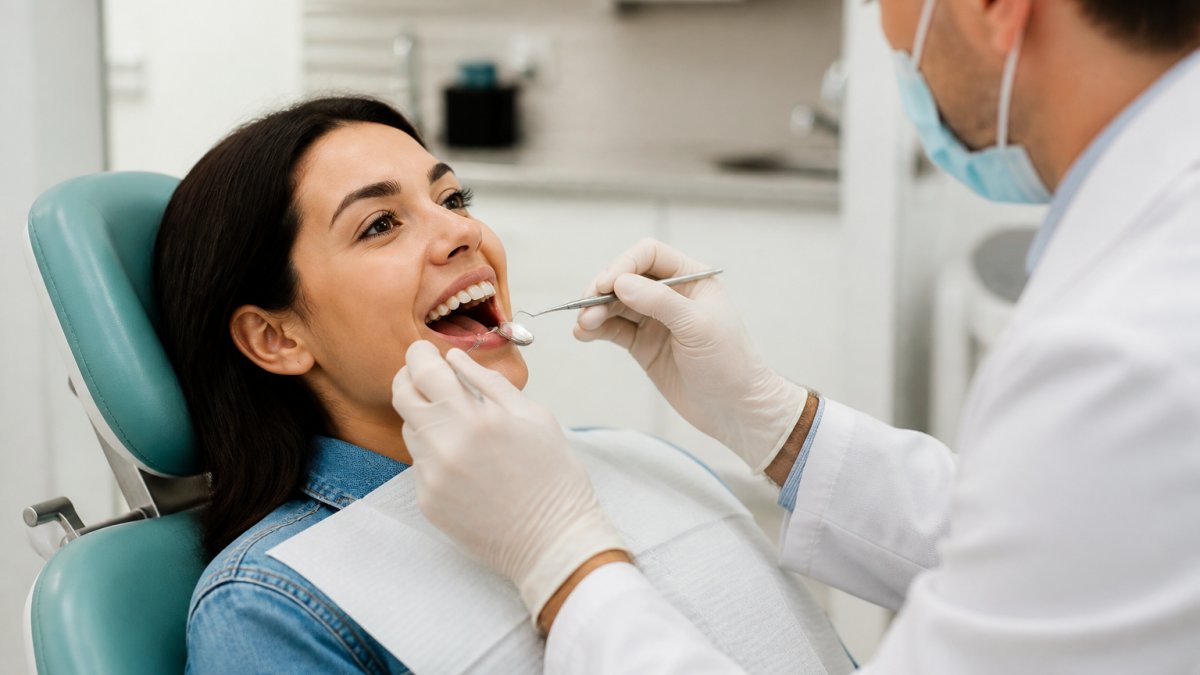
A dental checkup is a structured examination of your teeth, gums, and mouth, followed by a professional cleaning. It usually takes under an hour and follows a predictable sequence.
Here is what happens at a dental checkup:
- Review of your history. Your dentist asks about changes in your health, medications, and any symptoms you have noticed.
- Visual examination. Your teeth, gums, tongue, and soft tissue are checked for decay, inflammation, and abnormalities.
- Measurement of gum pockets. A small probe measures the space between your gums and teeth to track gum health over time.
- X-rays when needed. Imaging reveals problems below the surface, such as decay between teeth or bone loss.
- Professional cleaning. A dental hygienist removes plaque and tartar, then polishes your teeth.
- Fluoride treatment. A protective coating may be applied to strengthen enamel.
- Discussion and plan. Your dentist explains findings and outlines any treatment options.
A face and neck examination often happens as part of the visit, where your dentist checks your jawline and the lymph nodes in your neck for swelling or unusual changes. It takes seconds and can catch issues early.
6. How Often Should You Get a Dental Checkup?
Most people should get a dental checkup every six months, but that interval is a starting point, not a fixed rule. Your ideal frequency depends on your risk factors, your oral hygiene, and your overall health.
A six-month interval suits many adults with healthy teeth and gums. Your dentist may recommend more frequent visits if you have gum disease, a history of cavities, dry mouth, or a condition that affects your immune system. Some patients with very stable oral health may safely stretch to a longer interval, but only a dentist can make that call.
| Your Situation | Suggested Checkup Interval |
|---|---|
| Healthy teeth and gums, no risk factors | Every 6 months |
| History of cavities or gum disease | Every 3-4 months |
| Dry mouth or gum recession | Every 3-6 months |
| Diabetes or a suppressed immune system | Every 3-4 months |
| Smoker or heavy tobacco user | Every 3-4 months |
Symptoms in Children, Older Adults, and People With Health Conditions
Children need early and regular visits to catch decay as it starts and to build comfort with the chair. Older adults face a higher risk of gum disease, root decay, and dry mouth from medications, so they often benefit from shorter intervals. People with diabetes, heart conditions, or weakened immune systems should treat dental care as part of managing their overall health, because oral infections can affect the rest of the body.
If you have a health condition and are unsure how it affects your checkup schedule, ask your dentist and your physician. They can coordinate on what makes sense for you.
7. Dental Anxiety and Access Barriers: Getting Care You Can Manage
Dental anxiety is a real barrier, and it is far more common than most people admit. If fear has kept you away for years, you are not alone, and you are not beyond help.
A few approaches that genuinely help:
- Tell the team up front. A simple note on your booking form lets the office adjust how they work with you.
- Agree on a stop signal. Raising your hand to pause is a small thing that returns a sense of control.
- Book a short first visit. A quick look and a conversation can be enough for visit one.
- Bring headphones or a support person. Distraction and company both help.
- Ask about sedation options. Many practices offer ways to take the edge off for anxious patients.
Access barriers matter too. The Canadian Dental Care Plan is a federal program that helps eligible residents with the cost of dental care, with eligibility and coverage set by the government (Canadian Dental Care Plan).
If shame about your oral hygiene has kept you away, set that down before your appointment. Dentists see every stage of dental health, and the conversation is about what to do next, not about judgment.
Most oral health problems start quietly. Bleeding gums, a twinge of sensitivity, or breath that will not clear are small signals that grow into expensive ones when ignored.
Frequently Asked Questions
What are the signs that you need a dental checkup?
Common signs include bleeding gums when brushing, tooth sensitivity to hot or cold, persistent bad breath, loose or shifting teeth, and visible changes in tooth color. You should also book a dental checkup if it has been more than six months since your last visit, even without symptoms. Regular professional examinations help detect tooth decay and gum disease early, when treatment is simpler and less invasive.
Should you see a dentist if your gums bleed when you brush?
Yes. Bleeding gums when brushing is one of the most common early signs of gum disease, caused by plaque buildup along the gumline. It can also result from brushing too hard or using a worn toothbrush. A dentist or dental hygienist can assess your gums, remove tartar that brushing cannot reach, and recommend changes to your oral hygiene routine. Ignoring bleeding gums allows gum disease to progress.
When should tooth sensitivity be checked by a dentist?
Book a dental checkup if sensitivity to hot, cold, or sweets lasts more than a few days, affects one specific tooth, or comes with pain that lingers after the trigger is gone. Common tooth sensitivity causes include worn enamel, exposed tooth roots, cavities, and cracked teeth. A dentist can identify the cause and recommend treatment, which may range from a desensitizing toothpaste to a filling.
What happens during a dental checkup?
A dental checkup typically includes a review of your health history, a professional examination of your teeth, gums, and mouth, and a dental cleaning by a hygienist to remove plaque and tartar. The dentist checks for tooth decay, gum disease, oral abnormalities, and signs of jaw or bite issues. X-rays may be taken if needed. You will leave with a personalized plan for any treatment or preventive care.
Can you need a dental checkup if you have no pain?
Yes. Many dental problems, including early cavities, gum disease, and oral abnormalities, develop without pain. By the time pain appears, the condition may be more advanced and require complex treatment. Routine dental visits every six months allow your dentist to catch issues early through professional examination and X-rays. Preventive care is almost always simpler and less costly than treating a problem that has progressed.