 how-to
Why Does My Tooth Hurt Only at Night? Causes & Relief
Table of Contents
- Why Does My Tooth Hurt Only at Night? The Short Answer
- What Changes When You Lie Down
- Common Causes of Nighttime Toothache
- How to Stop Tooth Pain Fast at Night
- Signs of a Dental Abscess You Should Not Ignore
- Sleep Position and Medication Safety for Nighttime Pain
- When to See a Dentist for Tooth Pain
- Nighttime Tooth Pain in Children and After Dental Work
- Frequently Asked Questions
Last Updated: September 26, 2026
Why Does My Tooth Hurt Only at Night? The Short Answer
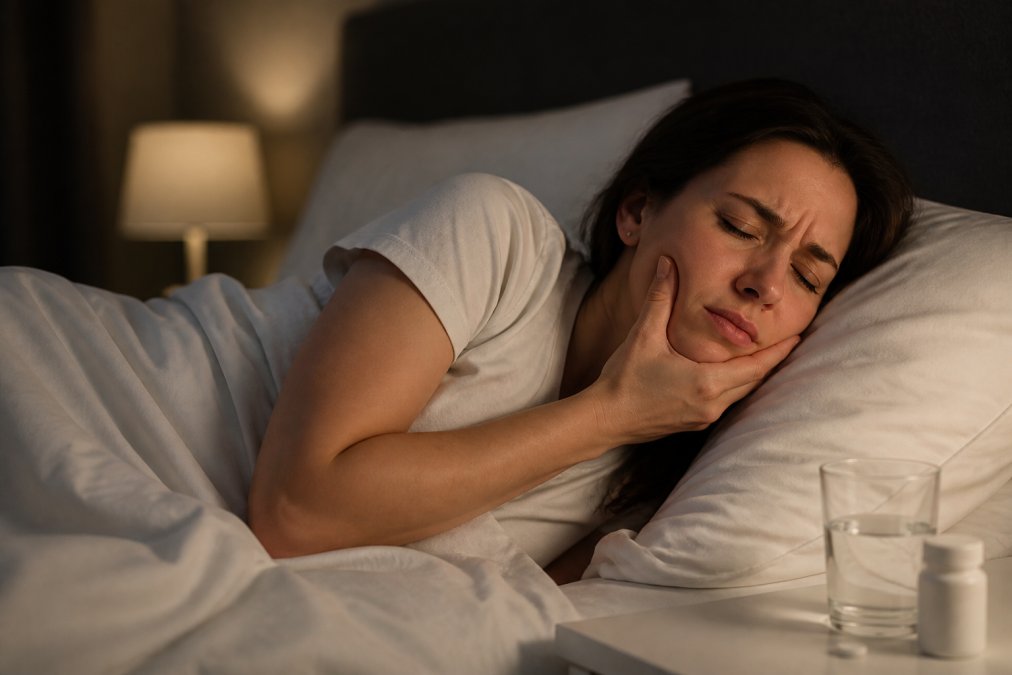
If you're wondering why does my tooth hurt only at night, the answer comes down to your body's position and its clock. Lying down sends blood to your head, and that pressure builds inside inflamed tissue around a tooth. Saliva flow also drops overnight, so your mouth loses its natural rinse.
What Changes When You Lie Down
Lying flat is the trigger, not the tooth itself. Blood that normally pools in your legs shifts toward your head and neck when you're horizontal. In a healthy mouth, you'd never notice.
Common Causes of Nighttime Toothache
The cause behind nocturnal pain is usually one of a handful of problems, each behaving differently and needing a different fix.
Watch for these patterns:
- Sharp pain when you bite down, then it fades
- A constant throb that keeps you awake
- Pain that spreads to your jaw, ear, or temple
- Sensitivity to cold or hot drinks
- A bad taste or swelling near one tooth
Deep Decay and Cavities
A deep cavity is the most common culprit. Once decay eats through enamel, it reaches the softer dentin and can irritate the nerve at the center of the tooth.
Gum Infections and Abscesses
Gum disease starts as gingivitis, tender, bleeding gums, and can progress to periodontitis, where the tissue and bone holding your teeth pull away.
Teeth Grinding (Bruxism) and Cracked Teeth
Bruxism is clenching or grinding your teeth, mostly during sleep, and the force can be many times stronger than normal chewing.
How to Stop Tooth Pain Fast at Night
Quick relief is possible, but it buys time, not a cure. Try these in order, and stop if anything makes the pain sharper.
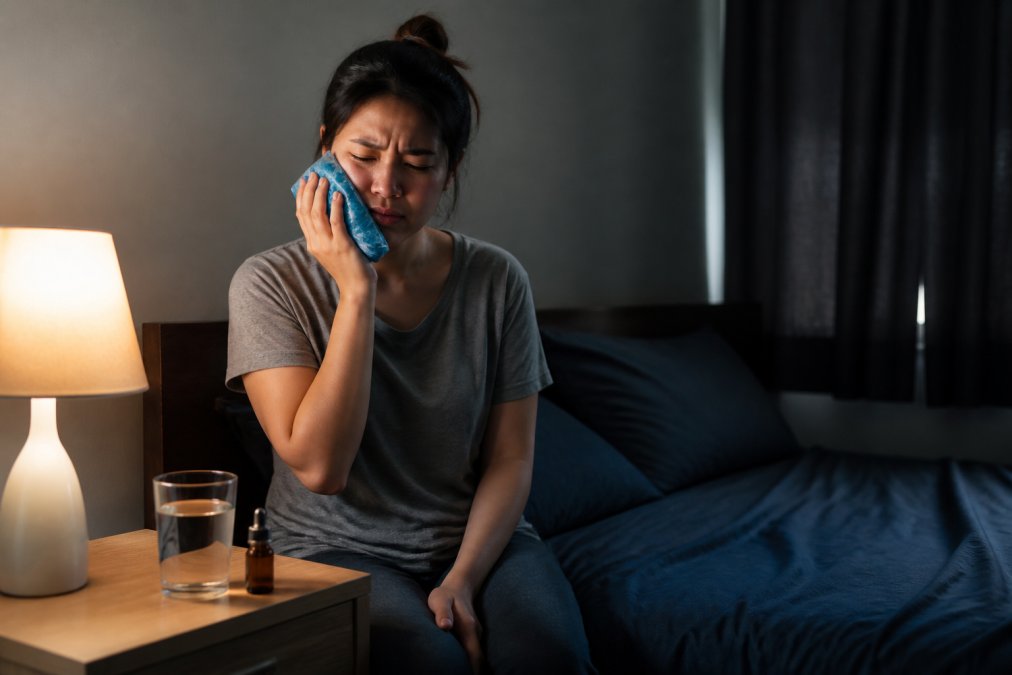
Home remedies that help:
- Cold compress: wrap an ice pack in a cloth and hold it against your cheek for 15 minutes. Never put ice directly on the gum.
- Salt water rinse: mix half a teaspoon of salt into a glass of warm water and swish gently. This eases swelling and cleans the area.
- Clove oil: dab a little on a cotton ball and hold it near the sore tooth. It numbs the area for a short time.
- Elevate your head: sleep on an extra pillow to reduce the pressure that builds when you lie flat.
- Sleep on the opposite side: keep the sore side up so gravity works in your favor.
Signs of a Dental Abscess You Should Not Ignore
An abscess needs same-day care. It will not clear up on its own, and the infection can spread.
Get help right away if you notice:
- Swelling in your face, jaw, or under your eye
- A fever or feeling generally unwell
- Pus or a bad taste in your mouth
- Trouble swallowing or breathing
- Pain that spreads to your ear or neck
Sleep Position and Medication Safety for Nighttime Pain
Two things most guides skip can make a real difference: how you sleep and how you take medicine. Get these right and you reduce wake-ups tonight; get them wrong and you add a second problem on top of the toothache.
Sleep position: get your head above your heart
The goal is simple: keep your head higher than your chest so blood doesn't pool in the inflamed tissue around the tooth. Gravity does the work, you just set it up.
Pillow stacking that actually holds:
- Use a firm base pillow plus a second pillow on top, angled so your head sits roughly 15 to 30 degrees above the mattress. A single soft pillow flattens overnight and stops helping by 2 a.m.
- A wedge pillow under the base pillow holds the angle better than stacked soft pillows, which slide apart.
- If you have a recliner, sleeping in it at a slight incline is the most reliable option for the first few nights.
- Sleep on your back or on the side opposite the sore tooth. Sleeping on the sore side presses the jaw and gum against the pillow.
- Avoid sleeping flat on your stomach, it turns your head to one side and can press directly on the tender area.
Medication safety: NSAIDs vs. acetaminophen
Two over-the-counter families cover most nighttime tooth pain, and they work differently.
- Ibuprofen (an NSAID) reduces both pain and the inflammation driving it. That makes it a common first choice for a throbbing, swollen tooth. It's usually taken with food to protect the stomach.
- Acetaminophen blocks pain but does not reduce inflammation. It's often the better option if you can't take NSAIDs.
- Naproxen is a longer-acting NSAID, which some people prefer so they aren't waking to redose. It carries the same stomach and kidney cautions as ibuprofen.
Rules that prevent most problems:
- Take painkillers with food, not on an empty stomach.
- Never stack two products with the same active ingredient, check the "Drug Facts" panel, not the brand name.
- Don't exceed the daily maximum printed on the label.
- Ask a pharmacist before combining painkillers with prescription medications, especially blood thinners, steroids, or antidepressants.
- Antibiotics only help if a dentist prescribes them for a confirmed infection, and they are not a substitute for treating the tooth itself.
| Problem | Fast Fix | What It Won't Do |
|---|---|---|
| Deep cavity | Salt rinse, cold compress, elevated sleep | Repair the decay |
| Abscess | Seek same-day care | Drain the infection |
| Bruxism | Head elevation, soft food, night guard from a dentist | Stop the grinding |
| Cracked tooth | Avoid chewing on that side, soft diet | Seal the crack |
When to See a Dentist for Tooth Pain
Book an appointment if the pain lasts more than a day or two or keeps waking you up. Persistent nerve sensitivity almost always points to a problem that needs treatment.
Nighttime Tooth Pain in Children and After Dental Work
Two groups get the least useful advice online: kids, who can't describe what's wrong, and anyone recovering from recent dental work, who can't tell normal soreness from a complication.
Nighttime tooth pain in children
- Chewing only on one side, or refusing crunchy or cold foods
- Fussing at bedtime, or waking up crying and pointing at the jaw or ear
- Drooling more than usual, or avoiding brushing one area
- A swollen cheek or a bad taste in the morning
What parents can do tonight:
- A cold compress against the cheek for short intervals, wrapped in a cloth, never ice directly on the gum.
- A salt water rinse for older children who can swish and spit without swallowing.
- A child-safe painkiller dosed by weight, following the label or a pharmacist's guidance. Do not guess the dose from age alone.
- Keep the head slightly elevated with an extra pillow for older children; for toddlers, a slightly raised mattress end is safer than loose pillows.
Why it matters more in kids: baby teeth guide the permanent teeth into place, and an untreated infection can affect the developing tooth underneath. A child who wakes in pain two nights in a row should see a dentist, not wait for the pain to pass.
Pain after a filling, root canal, or extraction
Some soreness after dental work is expected. The question is whether it's settling or getting worse.
Normal healing pattern:
- A filling can leave the tooth tender for a few days, especially when biting. Sensitivity to cold that fades within a week or two is common.
- A root canal often leaves the surrounding ligament sore for several days. The tooth itself should no longer feel the sharp nerve pain it did before treatment.
- An extraction typically peaks in soreness in the first 24 to 48 hours and improves steadily after that.
When to call the dentist:
- Pain that gets worse after day three instead of better
- New swelling in the face or jaw, or a fever
- A throbbing that returns after a root canal and keeps you awake
- Bleeding from an extraction site that won't stop, or a bad taste and odor that suggests the clot has come loose
- Pain you can't control with the medication you were told to use
Frequently Asked Questions
Why does lying down make a toothache worse?
When you lie flat, blood flow to your head increases, raising pressure inside the tooth and surrounding tissues. If the pulp is inflamed (pulpitis), that extra pressure makes pain sharper. Sinus pressure can also build when you recline, which can feel like an upper toothache. Sleeping with your head propped on an extra pillow often reduces this pressure and eases nocturnal pain.
How can I stop tooth nerve pain at night?
Try a cold compress on the outside of your cheek for 15 minutes, rinse with warm salt water, and keep your head elevated on pillows. Over-the-counter analgesics like acetaminophen or ibuprofen can help if you can take them safely, but follow the label and check with a pharmacist if you take other medications. These steps ease symptoms; they do not treat the cause, so see a dentist if pain returns.
What are the signs of a dental abscess?
Signs include throbbing pain that may wake you at night, a bitter taste, bad breath, swelling in your face or jaw, a tender or raised bump on the gum, and sometimes a fever. Pain may ease briefly if the abscess drains, but the infection remains. A dental abscess will not clear on its own and needs prompt care, so contact a dentist or seek emergency care if swelling affects your breathing or swallowing.
When should I see a dentist for tooth pain?
See a dentist if pain lasts more than a day or two, wakes you at night, or comes with swelling, fever, or a bad taste. Treat those as urgent. If you have trouble breathing or swallowing, or swelling spreads to your eye or neck, go to an emergency department. For milder pain, book a dental appointment soon; early treatment of decay or gum disease is usually simpler and less costly than waiting.
Nighttime tooth pain is your body's way of telling you something needs attention. The good news is that most causes are treatable, and the sooner you're seen, the simpler the fix. Pearly Curve Dentistry offers modern treatments, expert support, and comfortable care for patients of every age, including those who feel anxious about the chair. Book an appointment with Pearly Curve Dentistry and get back to sleeping through the night.