 how-to
How Often Should Adults Get Dental Cleanings?
Table of Contents
- The Standard Answer: Every Six Months, and Why It Is Not Universal
- What Actually Determines Your Dental Cleaning Schedule
- Signs You Need a Dental Cleaning Sooner Than Planned
- What Happens During a Professional Dental Cleaning
- Dental Hygiene and Self-Esteem: The Connection Most People Miss
- The Cost-Benefit Case: Insurance, Out-of-Pocket, and Prevention
- Why Skipping Cleanings Costs More Than You Think
- Frequently Asked Questions
Last Updated: September 23, 2026
The Standard Answer: Every Six Months, and Why It Is Not Universal
Most adults hear the same number at every checkup: come back in six months. That advice is a starting point, not a rule that fits everyone. How often should adults get dental cleanings depends on your gums, your habits, and your health history.
We treat that six-month mark as a baseline that gets adjusted for each patient. Some people thrive on two visits a year.
Where the Six-Month Rule Comes From
The six-month standard grew out of a simple idea: catch problems while they're small. Plaque hardens into tartar within about 24 to 72 hours if it isn't removed. Once tartar forms, only a dental professional can take it off.
Who Can Safely Stretch to 12 Months
Adults with healthy gums, no cavities in recent years, and strong daily habits may only need a cleaning once a year. This group tends to include:
- Non-smokers with no gum disease history
- People who brush twice daily and floss regularly
- Adults with no chronic conditions that affect oral health
- Patients whose last few checkups showed no new problems
What Actually Determines Your Dental Cleaning Schedule
Your schedule comes down to risk factors, not age alone. A dental professional weighs several things before recommending how often you should come in.
The biggest factors include:
- Gum health: A history of gingivitis or periodontal disease raises your risk.
- Plaque and tartar buildup: Some people build tartar faster than others.
- Home care: Daily brushing and flossing lower your risk.
- Medical conditions: Diabetes and other conditions affect gum health.
- Medications: Some drugs cause dry mouth, which speeds up decay.
- Smoking: Tobacco use is a major risk factor for gum disease.
Health and Lifestyle Factors That Raise Your Risk
Certain conditions and habits push you toward more frequent visits. If any of these apply, ask about a shorter interval:
- Diabetes, which slows healing and raises infection risk
- Pregnancy, which can trigger gum inflammation
- Dry mouth from medications or health conditions
- Smoking or vaping
- A diet high in sugar and refined carbs
- A history of gum disease or frequent cavities
Age and Life Stage: From 18 to 80
Your needs change as you age. A healthy 25-year-old may coast on yearly cleanings. A 65-year-old on multiple medications may need closer monitoring.
Older adults face higher risk from:
- Receding gums, which expose roots to decay
- Dry mouth from common prescriptions
- More existing dental work that needs watching
- Slower healing and higher infection risk
Signs You Need a Dental Cleaning Sooner Than Planned
Your mouth usually tells you before your calendar does. Watch for these signs you need a dental cleaning ahead of schedule:
- Bleeding when you brush or floss
- Red, swollen, or tender gums
- Persistent bad breath that won't go away
- Visible tartar near the gumline
- New sensitivity to hot or cold
- A dull ache or pressure in a tooth
- Gums pulling away from your teeth
What Happens During a Professional Dental Cleaning
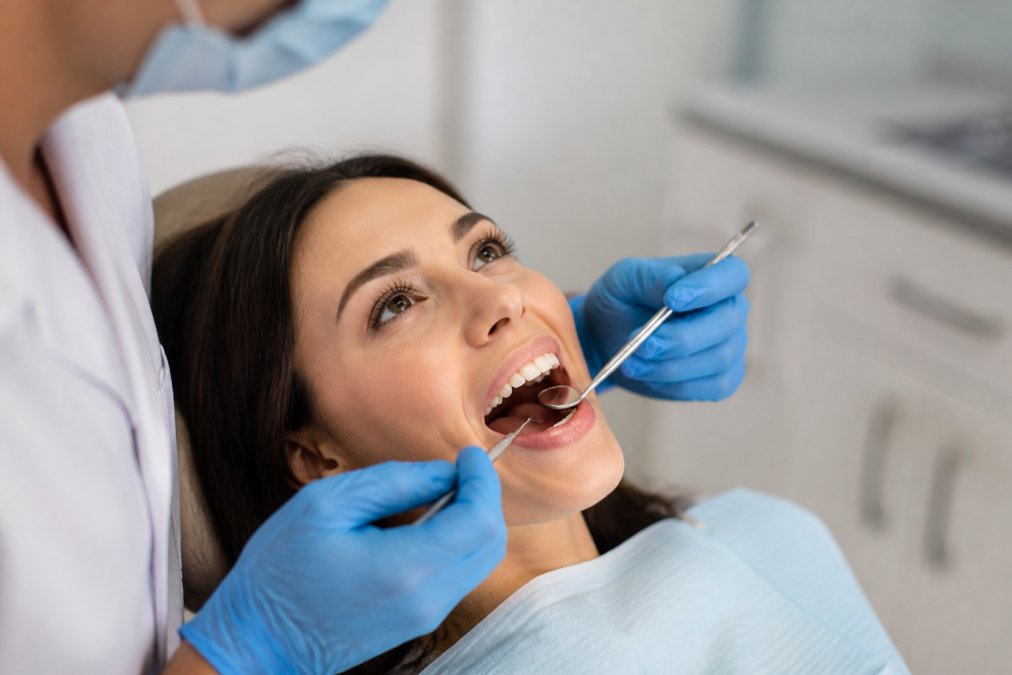
A professional cleaning removes plaque and tartar your toothbrush can't reach, then checks your whole mouth for early problems. It typically takes 30 to 60 minutes.

The Steps, From Assessment to Polish
Most cleanings follow the same sequence:
- Oral assessment. Your hygienist reviews your history and checks your gums and teeth.
- Diagnostic imaging. X-rays may be taken to spot decay or bone loss.
- Scaling. A hand scaler or ultrasonic tool removes tartar above and below the gumline.
- Root planing (if needed). Deeper cleaning smooths root surfaces when gum disease is present.
- Polishing. A gritty paste removes surface stains and leaves teeth smooth.
- Flossing and rinse. Tight spaces get cleaned and debris is rinsed away.
- Review and advice. You get feedback on home care and a recommended return date.
The Canadian Dental Hygienists Association explains that scaling and root planing are standard parts of treating gum disease. If your gums are healthy, you may only need steps one, three, five, and six.
Dental Hygiene and Self-Esteem: The Connection Most People Miss
Clean teeth do more than protect your health. They change how you feel in everyday moments.
The Cost-Benefit Case: Insurance, Out-of-Pocket, and Prevention
Most guides tell you prevention is cheaper than treatment and stop there. That is true, but it does not help you decide whether a third cleaning this year is worth paying for out of pocket. The real question is how coverage rules, annual maximums, and clinical risk interact, and that is where most articles go quiet.
How Coverage Actually Shapes Frequency
Most dental benefit plans in Canada fall into a few common structures, and each one changes the math on how often you should book:
- Annual maximums. Many plans cap total yearly spending (commonly in the range of a few hundred to a couple thousand dollars, depending on the plan). Once you hit the cap, every additional visit is out of pocket.
- Frequency limits. Plans often cover a set number of cleanings or units of scaling per year, frequently two. A third cleaning may be clinically justified but not covered.
- Co-insurance and deductibles. You may pay a percentage of each visit, so the marginal cost of an extra cleaning is lower than the full fee but not zero.
- Fee guides. Provincial dental associations publish suggested fee guides, and actual clinic fees can sit above or below them. That is why the same cleaning can cost noticeably different amounts from one office to the next.
Questions to Ask Before You Decide
When coverage and clinical need diverge, these questions cut through the noise:
- Is the extra visit treating active disease or monitoring a stable mouth?
- Will skipping it likely lead to a procedure that costs more than the cleaning?
- Does the plan reset on a calendar year or a plan year, and how much of the maximum is left?
- Are there payment plans or in-house membership options for uninsured patients?
Public Programs and What They Cover
The Canadian Dental Care Plan helps eligible residents access dental care, including cleanings, and eligibility and coverage details can change over time. Check the official page for current rules rather than relying on secondhand summaries.
The Trade-Off in Plain Terms
Paying for an extra cleaning is a small, predictable cost. Treating periodontitis, replacing a tooth, or managing advanced decay is a large, unpredictable one that often spans multiple visits. The financial case for staying on schedule is strong, but the strongest version of that case is built on your plan's actual limits and your clinic's actual fees, not on a slogan.
Why Skipping Cleanings Costs More Than You Think
Skipping visits doesn't save money. It moves the cost to a later, larger bill.
Here's what happens when cleanings get delayed:
- Plaque hardens into tartar that only a professional can remove
- Gingivitis develops, then can progress to periodontitis
- Cavities grow larger and need bigger fillings
- Gum disease can lead to tooth loss
- Treatment costs climb with every stage
Frequently Asked Questions
How often do you really need dental cleanings?
For most healthy adults, a dental cleaning every six months is the standard recommendation, but it is not universal. Your schedule depends on gum health, plaque and tartar buildup, smoking, diabetes, and how well you manage oral hygiene at home. Adults with gum disease or higher risk factors are often advised to come in every three to four months. A dental professional can assess your periodontium and set a recall interval that fits your situation.
What is the 2-2-2 rule for teeth?
The 2-2-2 rule is a simple home-care reminder: brush twice a day for two minutes, and see a dental professional twice a year for a checkup and cleaning. It is an easy way to remember the basics of oral health maintenance, though it is a starting point rather than a personal prescription. Some adults need cleanings more often than every six months, and some can safely go longer, depending on their risk factors.
Are deep cleanings worth it?
When a dental professional recommends scaling and root planing, it is because periodontal disease has progressed beyond what a routine cleaning can address. Deep cleaning removes plaque and calculus from below the gumline and helps reduce gum inflammation. Skipping it lets periodontitis advance, which can lead to bone loss and tooth loss. If you are unsure whether you need one, ask for a clear explanation of your gum measurements and a copy of the treatment plan before you decide.
Does oral health impact your self-esteem?
Yes. Dental hygiene and self-esteem are closely linked. Bleeding gums, bad breath, stained teeth, or missing teeth can make people avoid smiling, speaking up in meetings, or dating. Research on oral health and quality of life consistently shows that treating gum disease and restoring teeth improves how people feel about their appearance and their confidence in social situations. Regular cleanings are one of the simplest ways to keep that confidence intact.
How often should adults get dental cleanings? For most healthy adults, every six months works well, but your risk factors can move that number up or down. The real goal is a schedule that matches your mouth, not a calendar that ignores it. At Pearly Curve Dentistry, we build that schedule around you, with modern treatments, expert support, and care designed to keep you comfortable from the first visit. Book an appointment with Pearly Curve Dentistry and get a cleaning plan made for your smile.