 how-to
Dentist for Patients With Anxiety: A Practical Guide
Table of Contents
- Understanding Dental Anxiety and Phobia
- Signs Your Dental Fear Needs Professional Support
- Sedation Dentistry Options for Anxious Patients
- How to Talk to Your Dentist About Dental Fear
- Dental Anxiety Management Techniques You Can Use
- What to Look for in a Dentist for Patients With Anxiety
- Building Confidence for Your Next Appointment
- Frequently Asked Questions
Last Updated: August 27, 2026
Understanding Dental Anxiety and Phobia
Dental anxiety is fear or worry before or during dental appointments, ranging from mild nervousness to severe panic. A dentist for patients with anxiety recognizes this as a legitimate challenge requiring specialized approaches.
Anxiety is manageable worry; phobia is intense, irrational fear that leads people to avoid dental care entirely. Both are real and treatable. Dental anxiety often stems from past experiences, loss of control, fear of pain, or the clinical environment itself, the sounds, smells, and sensations can trigger a stress response. A dentist experienced with anxious patients addresses these triggers directly rather than dismissing them.
At Pearly Curve Dentistry, we recognize that anxiety isn't a character flaw. It's a response that needs accommodation through environment, communication style, and appointment pacing.
Signs Your Dental Fear Needs Professional Support
Physical signals include sweating, elevated heart rate, difficulty sleeping before appointments, or lightheadedness in the waiting room. Emotional markers, avoiding scheduling, canceling last-minute, or feeling shame about oral health, are equally telling.
Serious dental phobia shows itself differently: feeling trapped or panicked during routine cleanings, gripping armrests, asking the dentist to stop frequently, or inability to relax despite reassurance. If your fear is affecting your oral health to the point where teeth are deteriorating, seek a dentist trained to work with anxious patients. Waiting longer only makes future dental work more complex and stressful.
Sedation Dentistry Options for Anxious Patients
Nitrous oxide (laughing gas) is the mildest option. You inhale it through a mask, creating relaxation without sleep. You remain conscious, can respond to the dentist, and effects wear off quickly. Many find this takes the edge off without recovery time.
Oral conscious sedation involves taking prescribed medication before your appointment. You'll feel drowsy and relaxed while remaining awake and responsive. A trained dentist monitors vital signs throughout. Recovery takes longer; you'll need a ride home and may feel groggy for hours.
Local anesthesia numbs the specific treatment area. Many anxious patients benefit from combining it with nitrous oxide or oral sedation for both relaxation and pain-free treatment.
A consultation with a sedation-trained dentist determines which option suits your needs. Sedation in dental settings is carefully controlled with oxygen and heart rate monitoring at conservative medication doses. Be transparent about your medical history and current medications.
How to Talk to Your Dentist About Dental Fear
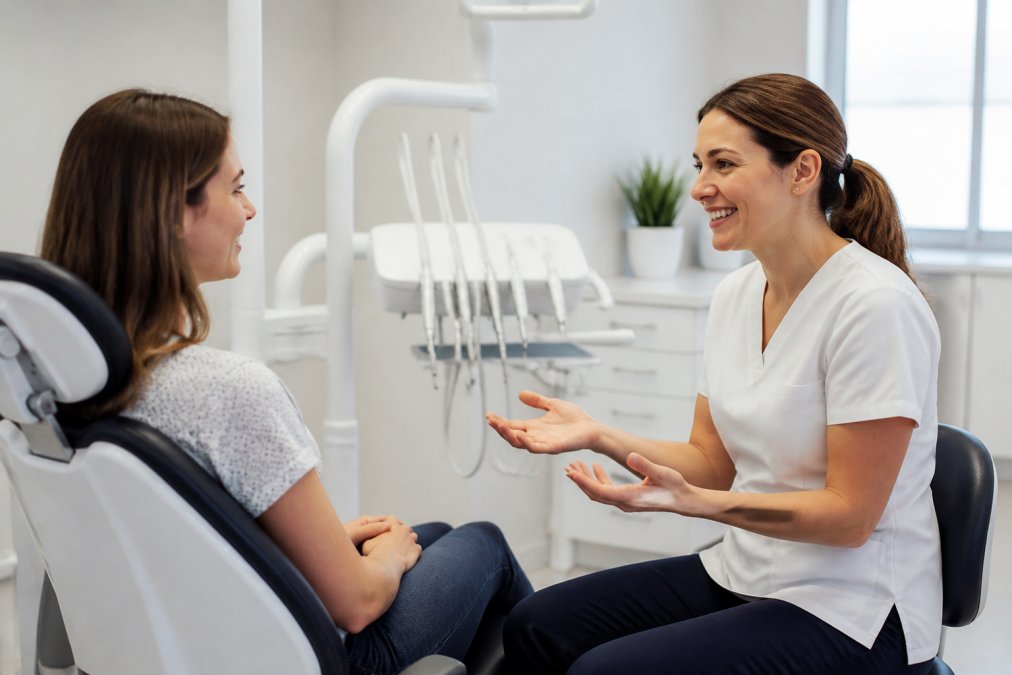
Be direct: "I have significant anxiety about dental appointments and need your help managing this." Avoid minimizing with phrases like "just a little nervous."
Explain what specifically triggers your anxiety, the drill sound, instruments in your mouth, loss of control, or the clinical environment. The more specific you are, the more your dentist can adapt. Ask about sedation options early, not in the chair. Discuss which might work and what the process looks like.
Request a shorter, less invasive first visit if helpful, a consultation or cleaning rather than complex treatment. Building confidence gradually works better than pushing through fear all at once.
At Pearly Curve Dentistry, we encourage open communication about anxiety because your comfort directly affects your willingness to maintain oral health long-term.
Dental Anxiety Management Techniques You Can Use
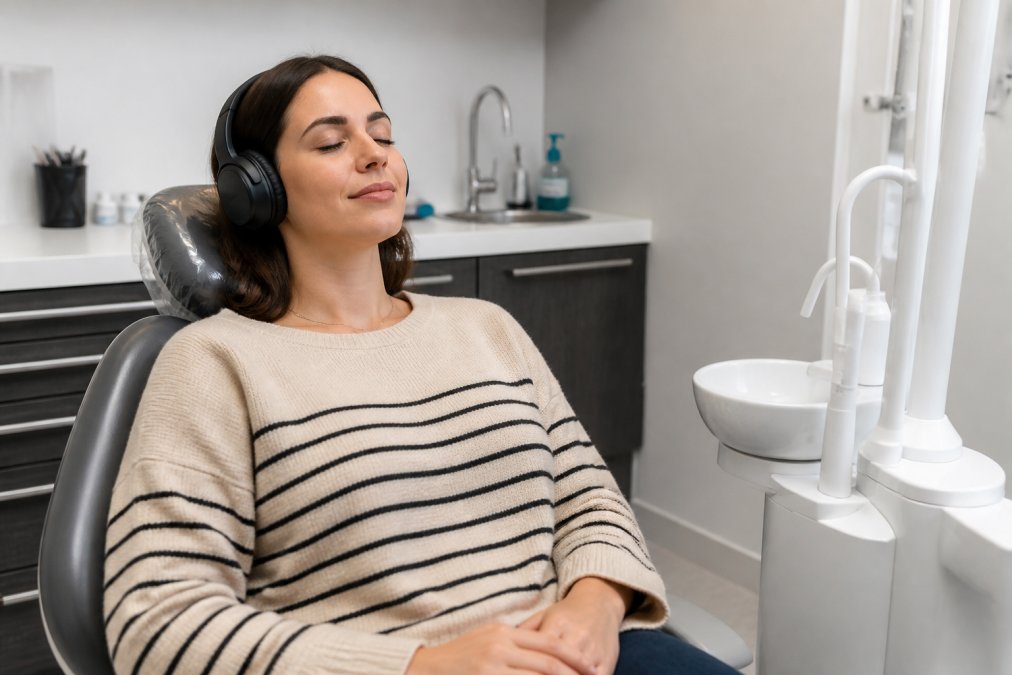
Breathing exercises are foundational. The 4-7-8 technique works: breathe in for four counts, hold for seven, exhale for eight. This activates your parasympathetic nervous system and signals relaxation. Practice before your appointment and use it during the procedure if tension builds.
Progressive muscle relaxation involves tensing and releasing muscle groups from toes to face. This teaches your body what relaxation feels like and gives you something active to do with anxiety.
Grounding techniques help during panic. The 5-4-3-2-1 method works: identify five things you see, four you touch, three you hear, two you smell, and one you taste. This anchors you to the present moment.
Noise-canceling headphones block triggering sounds. Ask your dentist if this is an option. Many patients find controlling the auditory environment significantly reduces anxiety.
Visualization involves imagining a calm, safe place in detail before your appointment, then returning to that mental image when anxiety rises during treatment.
Distraction techniques work for some people, focusing on the ceiling, counting tiles, or thinking through complex mental tasks redirect attention away from what's happening in your mouth.
Experiment with different techniques beforehand so you know what to rely on in the moment.
What to Look for in a Dentist for Patients With Anxiety
Training and credentials matter. Look for a dentist with continuing education in sedation dentistry or anxiety management. Ask directly about their training.
Communication style is everything. Notice whether the dentist listens without interrupting, explains procedures clearly, and asks about your specific fears. A good dentist won't rush you or make anxiety feel like an inconvenience.
Environmental design counts. Does the office feel warm and welcoming with soft lights and comfortable seating? Some practices offer noise-canceling headphones, blankets, or movies during treatment, details signaling that comfort is prioritized.
Transparency about pricing and procedures is essential. You should understand what's being done, why, and the cost before treatment begins.
Flexibility with scheduling and pacing shows understanding of anxious patients' needs. Can they accommodate longer appointments, allow breaks, or offer early morning or evening slots?
Staff training matters too. Even if the dentist is excellent, dismissive front desk staff or rough hygienists affect your experience.
Pearly Curve Dentistry combines modern treatment with expert support specifically designed for patients managing dental anxiety, understanding that your comfort directly affects your willingness to maintain oral health.
Building Confidence for Your Next Appointment
Start small if needed. Your first appointment might be a consultation or cleaning only. A dentist who understands anxiety supports a gradual approach.
Celebrate small wins. Making it through without panic or communicating your needs clearly are successes worth acknowledging. These incremental victories build momentum.
After each appointment, reflect on what worked. Which techniques helped? What did the dentist do that made you comfortable? What could be different next time? This reflection refines your approach for future visits.
Consider bringing a trusted person if that helps. Some practices allow a support person in the room or waiting area.
Over time, successful appointments create new neural pathways. Your brain learns that dental visits don't have to be traumatic. The ultimate goal isn't eliminating all nervousness, it's reaching a point where anxiety doesn't prevent you from getting needed care.
Dental anxiety is treatable, and you don't have to manage it alone. Finding a dentist who specializes in working with anxious patients changes everything. Pearly Curve Dentistry is built on the principle that every patient deserves a comfortable, judgment-free experience. When you're ready to move forward, we're here to support you with modern techniques, expert care, and genuine compassion for what you're experiencing.
| Anxiety Management Approach | How It Works | Best For |
|---|---|---|
| Nitrous oxide sedation | Inhaled gas creates relaxation without sleep; effects wear off quickly | Mild to moderate anxiety; patients who want minimal recovery time |
| Oral conscious sedation | Prescribed medication before appointment; you're drowsy but awake | Moderate to severe anxiety; longer or complex procedures |
| Breathing exercises | 4-7-8 technique activates relaxation response | All anxiety levels; can be used during appointment |
| Grounding techniques | 5-4-3-2-1 method anchors you to present moment | Panic or dissociation during appointment |
| Progressive muscle relaxation | Tense and release muscle groups systematically | Generalized tension; good pre-appointment preparation |
| Noise-canceling headphones | Blocks triggering sounds; allows music or podcasts | Sensory sensitivity; auditory triggers |
EXTERNAL SOURCES FOR FURTHER READING:
Many people find it helpful to understand the neuroscience behind dental anxiety. Research from the Canadian Dental Association on patient anxiety management provides evidence-based guidance on how anxiety affects dental care decisions. Additionally, Health Canada's resources on mental health and managing anxiety offer broader context on anxiety management techniques that apply to dental settings. For information on sedation safety in dental procedures, the College of Dental Surgeons of Ontario's clinical practice guidelines outlines standards for sedation dentistry in Canada.
Frequently Asked Questions
What is the difference between dental anxiety and dental phobia?
Dental anxiety is nervousness or discomfort about dental visits, often manageable with reassurance and preparation. Dental phobia is an intense, irrational fear that can lead to avoidance of care for years. Both respond well to patient-centered approaches, sedation options, and communication with your dentist. If you've been avoiding dental care due to fear, discussing your specific concerns with a dental professional is the first step to finding a solution that works for you.
What sedation dentistry options are available for anxious patients?
Common sedation dentistry options include nitrous oxide (laughing gas), which creates a relaxed feeling while keeping you awake; oral conscious sedation, where you take medication before the appointment to reduce anxiety; and local anesthesia to eliminate pain sensations. Some patients benefit from a combination approach. Your dentist will discuss which option suits your level of anxiety, medical history, and the complexity of your treatment. A consultation allows you to explore what feels right for your situation.
How do I communicate my dental anxiety to a new dentist?
Be direct and specific. Tell your dentist early in the consultation about past negative experiences, what triggers your fear (needles, noise, loss of control), and what helps you feel calm. Honest communication allows your dentist to adjust their approach, explain each step, and offer sedation or comfort measures that reduce your stress. Many dentists who work with anxious patients expect these conversations and are trained to respond with patience and flexibility.
What dental anxiety management techniques can I use at home?
Grounding techniques like the 5-4-3-2-1 method (name five things you see, four you feel, three you hear, two you smell, one you taste) help calm your nervous system before and during appointments. Deep breathing exercises, listening to calming music or podcasts through headphones, and visualization of a peaceful place are also effective. Practicing these techniques at home builds confidence. Some patients find scheduling appointments at times when they're less stressed, or bringing a trusted person for support, makes a real difference in managing anxiety.