 How-to
7 Dental Anxiety Coping Strategies for Seniors
Last Updated: November 17, 2026
Quick Summary
The most effective dental anxiety coping strategy for seniors is telling the dental team about the fear before treatment begins and agreeing on a stop signal, such as a raised hand, that pauses treatment immediately. Practicing deep breathing, progressive muscle relaxation, and guided imagery at home beforehand also helps you stay calm in the chair.
- Say plainly at booking or arrival that you have dental anxiety and need to go slowly.
- Deep breathing means in through the nose for four counts, hold for four, out for six.
- Ask for the first appointment of the day, when the office is quieter.
- Nitrous oxide wears off within minutes, while oral sedatives can leave you drowsy for hours.
- Caregivers can help by booking a quieter time, often mid-morning, and arranging transport home.
Table of Contents
- Why Dental Anxiety Hits Older Adults Differently
- How to Communicate Dental Anxiety to a Dentist
- Relaxation Techniques for Dental Anxiety That Work in the Chair
- What to Expect at a Dental Appointment, Step by Step
- Questions to Ask Your Dentist About Dental Anxiety
- Medication, Sedation, and Health Considerations for Seniors
- How Caregivers and Family Can Support a Calmer Visit
- Booking a Dental Visit That Feels Manageable
- Frequently Asked Questions
Why Dental Anxiety Hits Older Adults Differently
Dental anxiety is a persistent fear of dental visits that keeps people from care they need. For older adults, it often grows with age rather than fading, as decades of difficult memories and health changes make each visit feel harder.
The stakes are higher now: oral health connects to nutrition, comfort, and overall wellbeing in later life, and skipping checkups lets small problems grow painful.
How Past Experiences and Health Changes Shape Fear
A bad experience from twenty years ago can still shape today's reaction. The sound of a drill, the smell of a clinic, or the feeling of being rushed can bring it all back.
Age adds new layers:
- Hearing loss makes the drill sound louder and more startling
- Vision changes make unfamiliar equipment harder to identify
- Arthritis makes holding your mouth open uncomfortable
Fear of losing control matters too. Many seniors worry about choking, gagging, or not being able to signal for a pause. That worry is reasonable, and it has practical answers.
How to Communicate Dental Anxiety to a Dentist
The most effective step is telling the dental team about your fear before treatment begins.
Here is how to start the conversation:
- Call ahead and ask if the practice has experience with anxious patients
- Write down your triggers, such as needles, drills, or the taste of impressions
- Bring a family member or friend if it helps you speak up

If you want a deeper guide on practices that understand nervous patients, read our article on choosing a dentist for patients with anxiety.
Agreeing on a Stop Signal and Control Words
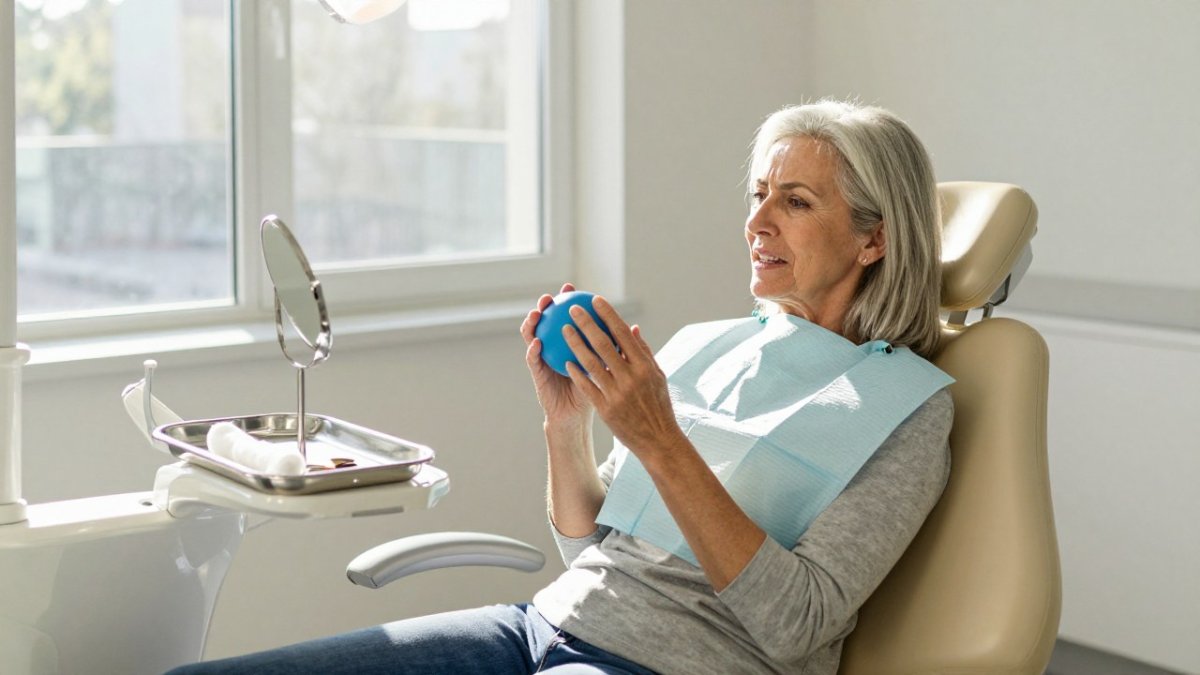
A stop signal is a pre-arranged gesture that pauses treatment immediately. Agree on it before anything starts. Most teams use a raised hand, and some use a squeeze ball or a simple word.
This small agreement changes how the chair feels: you are no longer trapped, and you can say "pause" without talking around instruments.
Ask your dentist to confirm the signal out loud. Then test it once before treatment begins.
Relaxation Techniques for Dental Anxiety That Work in the Chair
The best relaxation technique is the one you practice before the appointment.
Deep breathing is the simplest.
Progressive muscle relaxation means tensing and releasing one muscle group at a time, from your toes to your jaw.
Guided imagery means picturing a calm place in detail: a lake, a garden, a favourite room.
Other options include headphones, slow counting, or a stress ball.
For a broader set of techniques, see our guide to managing dental anxiety for adults.
What to Expect at a Dental Appointment, Step by Step
A predictable visit is a calmer visit, and knowing the sequence removes surprises. Most checkups follow the same general pattern, though every practice varies. For older adults, plan the day around the appointment rather than squeezing it between errands.
Before the visit
- Book with context. Say you are an older adult with dental anxiety and ask for a longer slot or the first appointment of the day, when the office is quieter. Ask about a lift, accessible washroom, or ground-floor treatment room if stairs are a problem.
- Confirm the medication list. Write down every prescription, over-the-counter product, and supplement, including blood thinners, blood pressure drugs, and diabetes medications. Bring it in writing in case the team needs to photocopy it.
- Plan transport both ways. If you may receive sedation, arrange a ride home in advance. Even without it, a long appointment can leave you tired, so a companion driver is safer.
- Time your meals and medications. Ask whether to eat normally and take your usual medications on the day, and follow the dentist's instructions rather than guessing.
- Pack a small comfort kit. Bring headphones, a light blanket, water, and your questions. Bring hearing aids and glasses, and tell the team where they are.
On arrival
- Check in and flag your needs. Tell reception if you need a quiet corner, a chair with arms, or extra time to walk to the treatment room. Ask them to note your anxiety and stop signal in your chart.
- Settle before reclining. Tell the hygienist or dentist if you need extra pillows, a short break, or the chair raised slightly, arthritis and back problems can make full recline painful.
During treatment
- Examination. The dentist checks your teeth, gums, and soft tissue, often with a small mirror and probe. Ask for a running commentary if that helps; many anxious patients find that knowing what comes next is more calming than silence.
- X-rays if needed. These are quick, and a lead apron protects you. Tell the team if you have trouble holding still or if the position is uncomfortable.
- Cleaning. A hygienist removes plaque and tartar, then polishes your teeth. If the scraping sound bothers you, ask for headphones or a break. Dry mouth from medications can make cleaning more sensitive, so mention it.
- Findings and next steps. The dentist explains what they found and what, if anything, comes next. Ask for the plan in writing or for a caregiver to take notes, since memory of instructions can fade after an anxious appointment.
After the visit
- Recovery and follow-up. If you received sedation, rest for the day and do not drive, sign documents, or make important decisions until the effects wear off. Eat and drink per instructions, confirm any follow-up before you leave, and ask for a written summary if a family member manages your care.
Watch out: If you take blood thinners or have a bleeding disorder, tell the dentist before any extraction or deep cleaning, since the team may need to coordinate with your physician.
Questions to Ask Your Dentist About Dental Anxiety
Asking direct questions puts you in control of the appointment. A dentist who welcomes them is a good sign. Here are the ones worth asking before treatment.
| Question | Why it matters |
|---|---|
| How do you help anxious patients? | Shows whether the team has a real approach |
| Can we agree on a stop signal? | Gives you control during treatment |
| What are my options for pain control? | Covers local freezing and other choices |
| Can I have a short break during treatment? | Prevents feeling trapped |
| What will this cost before we start? | Avoids billing surprises |
| Can I bring someone with me? | Support helps many patients |
Add your own questions. Write them down and bring the list. No one will think less of you for being prepared.
Medication, Sedation, and Health Considerations for Seniors
Sedation is an option, not a requirement, and it needs careful thought in later life. Older adults often take multiple medications, and some health conditions change how sedatives affect the body. Any discussion of sedation belongs in a consultation with your dentist and, where needed, your physician.
Why age changes the calculation
As people age, the body processes drugs more slowly: kidney and liver function decline, body composition shifts, and the same dose that worked at fifty can linger longer and hit harder at seventy-five. Older adults often feel oral sedatives for many more hours than younger patients expect, so a clinician who knows your full medication list should decide whether sedation is appropriate and at what dose.
The main options and their trade-offs
- Nitrous oxide (laughing gas). Breathed through a small mask, it takes effect quickly and wears off within minutes. Most people can drive themselves home afterward, though some offices still prefer a companion. It is often the first choice for mild anxiety because it is easy to adjust during treatment.
- Oral sedatives. Taken as a pill before the appointment, these can leave you drowsy for hours. You will need a ride home and should not drive, cook, or make important decisions for the rest of the day. The dose may need to be lower for older adults.
- Intravenous or deeper sedation. Reserved for more complex treatment or severe anxiety, this requires monitoring and a recovery period. It is not offered in every office, and older adults with heart, lung, or kidney conditions may need medical clearance first.
What to tell your dentist before sedation is discussed
Bring a written list of every medication, including blood thinners, blood pressure drugs, diabetes medications, sleep aids, and supplements such as fish oil or ginkgo.
Watch out: Do not adjust or stop any prescription medication on your own before a dental appointment. Changes to blood pressure or blood thinning drugs should be decided by your physician, not by the dental office alone.
Planning the day around sedation
If sedation is chosen, arrange transport home in advance and ask a family member or caregiver to stay with you for several hours. Skip driving, signing documents, and managing finances until the effects wear off, eat and drink per instructions, and keep the office number handy in case you feel unwell.
If you would rather avoid sedation altogether, our article on managing dental fear without sedation walks through non-drug approaches that many older adults prefer.
How Caregivers and Family Can Support a Calmer Visit
A caregiver can change the whole experience, and your role starts before the appointment and continues after it. Ask what kind of help they want first, since some people prefer to lead the conversation themselves.
Practical ways to help:
- Book a quieter time of day, often mid-morning
- Help write down medications, triggers, and questions
- Arrange transportation home, especially after sedation
For a relative with cognitive impairment, tell the dental team in advance. Short sentences, one instruction at a time, and a familiar face nearby all help. Consent matters here too.
Booking a Dental Visit That Feels Manageable
Booking is the hardest step for many anxious patients, so make it small: call at a quiet time, ask for a short first visit, and say plainly that you are nervous. You can also book an appointment directly when you feel ready.
If you are ready to take that step, our step-by-step guide to booking a dental exam covers what to say and what to bring.
At Pearly Curve Dentistry, we combine modern treatments with expert support and comfortable care.
Dental anxiety does not have to keep you or someone you love out of the chair. If fear has delayed care for years, a calm first conversation is a good place to start.
Frequently Asked Questions
How can seniors manage anxiety before a dental appointment?
Start the day before by writing down what worries you most and packing comfort items like headphones or a sweater. On the day, eat a light meal, avoid caffeine, and practice slow breathing in the waiting room. Arrive a few minutes early so you are not rushed. Tell the dental team at check-in that you feel anxious, and ask whether you can sit in the chair for a few minutes before treatment begins. These small steps give you a sense of control before the appointment starts.
What should I tell my dentist if I am afraid of dental treatment?
Be direct about what triggers your fear, whether that is needles, drills, the sound of the suction, or feeling unable to speak during treatment. Mention any past bad experiences and any health conditions or medications you take. Ask what the team can adjust, such as explaining each step before it happens, offering breaks, or using a stop signal. A dentist who listens and adjusts the plan is responding the way you want. If you feel dismissed, that is useful information too.
Can I ask for breaks during a dental procedure?
Yes. Ask before treatment begins how breaks will work and agree on a signal, such as raising your hand, that means stop immediately. Most procedures can pause safely for a short rest. Shorter appointments scheduled earlier in the day often suit seniors better than long sessions. If you use a hearing aid or have trouble speaking with instruments in your mouth, agree on a written or hand signal in advance so the dental team knows exactly what you need.
What should seniors ask about sedation or other anxiety-management options?
Ask which options the practice offers, from nitrous oxide to oral sedatives, and which is appropriate given your medical history. Bring a list of all medications, including blood thinners and over-the-counter drugs, and mention conditions such as sleep apnea, heart disease, or kidney problems. Ask whether you will need someone to escort you home and how long recovery takes. Sedation carries real risks for older adults, so a thorough medication review before the appointment matters more than the type of sedation chosen.