 How-to
How to Overcome Dentist Fear and Return to Care
Last Updated: October 25, 2026
Quick Summary
Overcoming dentist fear means returning on your own terms before pain forces the issue, using a staged plan rather than one brave all-in visit. Start with a short talk-only visit, then an information-only assessment, then the easiest treatment item first, followed by short, frequent visits until trust is built.
- Fear triggers usually trace back to pain, needles, drills, or feeling out of control.
- Agree out loud on a raised-hand stop signal before the appointment begins.
- Set up distraction like headphones and a playlist the night before, not in the chair.
- Keep the first talk-only visit to 15 to 20 minutes with no treatment or tools.
- Short, frequent visits beat long, dreaded ones because each reinforces that the chair is routine.
Table of Contents
- Why Dentist Fear Keeps You Away, and Why Returning Matters
- How to Calm Down Before a Dentist Appointment
- What to Tell Your Dentist About Anxiety
- Agreeing on a Stop Signal and Taking Breaks
- Distraction Techniques at the Dentist
- Sedation Dentistry for Dental Anxiety: Options and Suitability
- A Staged Plan for Returning After Years of Avoidance
- Booking Your First Comfortable Appointment
- Frequently Asked Questions
Why Dentist Fear Keeps You Away, and Why Returning Matters
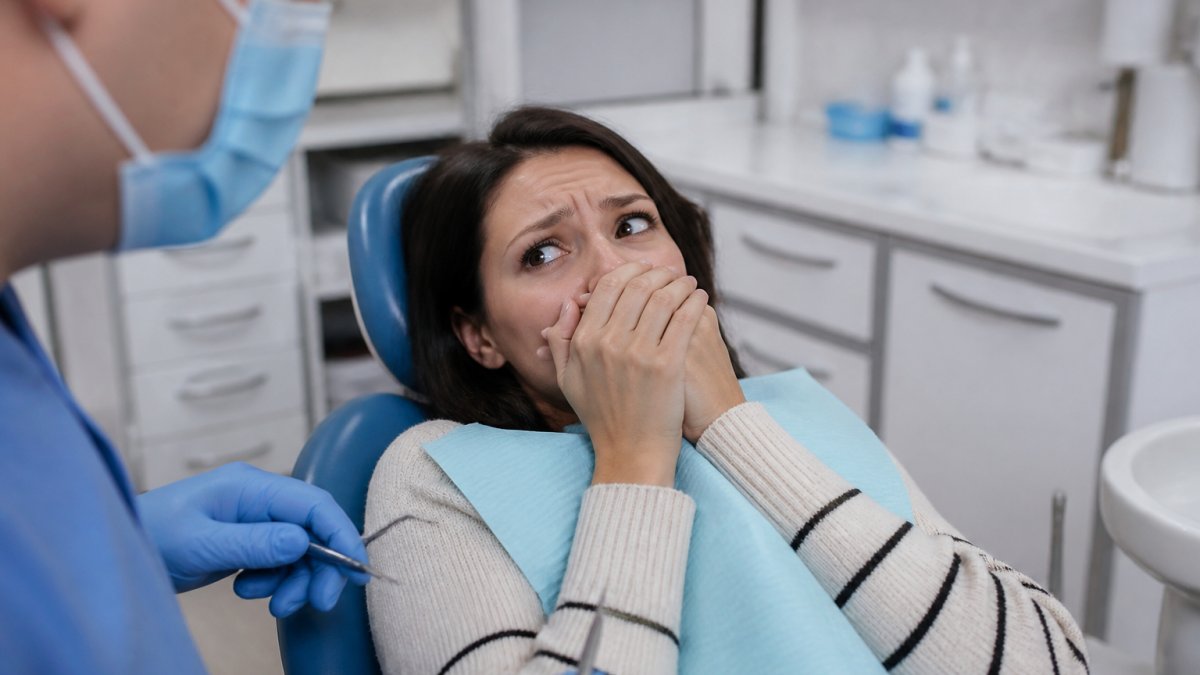
Dentist fear is a real, common, and treatable barrier to care, not a personal failing. At Pearly Curve Dentistry, we hear it constantly: people who have avoided the chair for years and feel ashamed about it.
A common mistake is waiting until something hurts. By then, the visit is urgent, which is the worst possible setup for an anxious patient.
- Fear triggers usually trace back to pain, needles, drills, or feeling out of control
- Skipping appointments makes anxiety worse, not better
- A planned, gradual return works better than one brave all-in visit
How to Calm Down Before a Dentist Appointment
Calming down before a dentist appointment starts the night before, not in the waiting room. Preparation lowers the surprise factor, and surprise is what spikes anxiety.
Try these steps:
- Write down what you fear most. Name it: needles, the drill, gagging, or embarrassment.
- Book a morning slot so you are not stewing all day.
- Eat a light meal. Low blood sugar makes anxiety feel worse.
- Practice slow breathing: in for four counts, out for six. Do this in the car.
- Bring headphones and a support person if that helps.

Watch out: arriving early and sitting in a silent waiting room can make nerves build. Ask if you can wait in your car and be texted when it is your turn.
What to Tell Your Dentist About Anxiety
Tell your dentist about anxiety in plain words at the very start of the visit, before any treatment begins. You do not need a diagnosis or a long story.
Here is a simple script you can borrow:
"I've avoided dentists for a while because of fear. Please tell me what you're doing before you do it, and stop if I raise my hand."
A good dental team will welcome this. If they brush it off, that tells you something important. For a deeper guide on preparing what to say, see how to talk to a dentist about anxiety.
- Say what triggers you: needles, drills, certain sounds
- Ask for a treatment plan explained before anything starts
- Ask what pain management options exist
Agreeing on a Stop Signal and Taking Breaks
A stop signal is a pre-agreed hand gesture that tells the dentist to pause immediately, no questions asked. It is the single most effective tool for patients who fear loss of control.
Breaks matter too. Ask for them in advance. A short pause to sit up, rinse, and breathe can reset your nerves and make the rest of the visit manageable.
- Agree on a raised hand as your stop signal
- Confirm the dentist will stop the moment you signal
- Ask for a break whenever you need one, no explanation required
Distraction Techniques at the Dentist
Distraction techniques work because they give your brain something to do besides monitor the room. The most reliable options are simple and free.
- Music or podcasts: bring headphones and a playlist you know well
- Focused breathing: count breaths instead of minutes
- Squeeze something: a stress ball gives nervous energy an outlet
What most guides miss is that distraction must be set up before the appointment, not improvised in the chair. Pack your headphones the night before.
Sedation Dentistry for Dental Anxiety: Options and Suitability
Sedation dentistry uses medication to reduce anxiety during treatment, ranging from mild nitrous oxide to oral medication or deeper sedation. Suitability depends on your health history, the procedure, and your level of fear, so this is always a conversation with a qualified professional, not a self-diagnosis. What most guides skip is the practical layer: who each option actually suits, what it costs, how you get home, and what to ask before you agree.
Here is how the main options compare:
| Option | Awareness Level | Best For | Key Considerations |
|---|---|---|---|
| Nitrous oxide (laughing gas) | Awake, relaxed | Mild anxiety, short visits, needle fear | Fast on and off; you can usually drive yourself home; some clinics charge a separate fee per visit |
| Oral medication (e.g., a sedative taken before the appointment) | Drowsy, relaxed | Moderate anxiety, longer visits, strong gag reflex | Takes time to wear off; you need a ride home and someone to stay with you for several hours |
| IV sedation | Minimally aware | High anxiety, complex or lengthy work, severe gag reflex | Requires a qualified clinician, an escort, and recovery time; not offered at every clinic |
| General anesthesia | Unconscious | Complex surgical cases, some pediatric or special-needs cases | Hospital or surgical setting; reserved for specific situations |
Who each option suits, and who should ask more questions
- Nitrous oxide is often the first step for people with mild to moderate fear who want to stay in control. It wears off quickly, so it suits short appointments and patients who want to drive themselves home. It is not ideal if you have certain breathing conditions or cannot tolerate the mask.
- Oral medication suits people whose anxiety builds in the days before a visit, or who need to get through a longer appointment. The trade-off is logistics: you cannot drive, and you will need the rest of the day to recover.
- IV sedation is for high anxiety or complex work. It requires a clinician trained in sedation, monitoring equipment, and an escort. Not every practice offers it, so ask when you book.
Questions to ask before agreeing to sedation
A good clinician will welcome these questions, not dodge them:
- What level of sedation do you recommend for my procedure and my level of fear, and why?
- Who will monitor me during and after the appointment?
- What are the risks for someone with my health history (heart, breathing, medications, pregnancy)?
- How long will I be drowsy, and when can I drive or return to work?
- What is the total cost, including any separate sedation fee, and is it covered by my insurance or the Canadian Dental Care Plan?
- What is the plan if I feel anxious despite the medication?
Cost and coverage
Sedation usually carries an extra fee on top of the treatment itself, and the amount varies by option and clinic. Nitrous oxide is often the least expensive add-on; IV sedation is typically the most.
If you would rather avoid sedation entirely, you can learn ways to manage dental fear without sedation. Either way, ask about risks, recovery, and cost at your consultation.
A Staged Plan for Returning After Years of Avoidance
Returning after years of avoidance works best as a staged plan, not a single heroic appointment. Gradual exposure teaches your brain that the dental chair is survivable. What most guides miss is the practical mechanics: how to book each stage, what to expect, and how to keep momentum when a visit goes sideways.
Stage 1: The talk-only visit (no treatment, no tools)
Call and say plainly: "I've avoided the dentist for years because of fear. I'd like a short visit to meet the team and see the room, no treatment, no tools." A practice that handles anxious patients will offer this without hesitation. Keep it to 15-20 minutes. You are not there to be assessed; you are there to prove the room is survivable.
Stage 2: The assessment (information only)
Book a full assessment with the understanding that no treatment starts that day. Ask for the findings in writing: what needs doing, in what order, and what can safely wait. This turns a vague dread into a concrete list you can plan around. If the list feels overwhelming, ask the dentist to rank items by urgency.
Stage 3: The easiest item first
Start with the smallest, least threatening item, often a cleaning or a small filling. The goal is a completed appointment, not a perfect mouth. Book a morning slot, bring headphones, and agree on your stop signal before anything begins. A short, successful visit does more for your confidence than a long, brave one.
Stage 4: Short, frequent visits
Space appointments closer together rather than letting months pass. Short, frequent visits beat long, dreaded ones because each one reinforces that the chair is routine. Many anxious patients find a 30-minute visit every few weeks easier than a single two-hour marathon.
Stage 5: Bigger work once trust is built
Once you have a few successful visits behind you, tackle the bigger items. Sedation or extra support can help here. If a root canal is likely on your plan, you can prepare for a root canal without anxiety step by step.
If a visit goes badly
A setback is not a failure. Reschedule for a shorter, easier appointment, tell the team what went wrong, and adjust the plan. The goal is momentum, not perfection. If anxiety keeps derailing visits despite a staged plan, that is a signal to ask about professional mental-health support alongside dental care, not a reason to give up.
Booking Your First Comfortable Appointment
Booking your first comfortable appointment is the step that turns intention into action.
When choosing where to go, look for a few clear signals. Does the team ask about your fears before you arrive? For a full checklist, read how to find a gentle dentist.
At Pearly Curve Dentistry, we offer comprehensive, modern dental care designed to help every patient achieve a healthier, more radiant smile.
Frequently Asked Questions
What is dentophobia, and how is it different from ordinary dentist fear?
Dentophobia is an intense, persistent fear of dental treatment that goes beyond mild nervousness. People with dentophobia may feel panic, avoid appointments for years, or experience physical symptoms like a racing heart or nausea just thinking about a dental visit. Ordinary dentist fear is more common and often manageable with communication, relaxation techniques, and a supportive dental team. If avoidance is affecting your oral health or daily life, speak with a dentist and, if needed, a mental-health professional about a plan that works for you.
Can I wear headphones at the dentist?
Many dental teams allow headphones during appointments, and they work well as a distraction technique at the dentist. Ask before your visit so the team can plan around it. Noise-cancelling headphones can block out the sound of drills and suction, which are common fear triggers. Bring a playlist, podcast, or audiobook you find calming, and agree on a hand signal so you can pause treatment if you need a break. Your dentist may need to give instructions during the procedure, so confirm how you will communicate.
Can sedation help with dental anxiety?
Sedation dentistry for dental anxiety includes options such as nitrous oxide, oral medication, and other forms of sedation prescribed by a qualified dental professional. Sedation can make treatment more comfortable for anxious patients, but it is not right for everyone. Suitability depends on your health history, the procedure, and the clinic's protocols. Your dentist will review risks, consent, and aftercare, including whether you need someone to escort you home. Discuss sedation openly at your consultation so you can make an informed choice.
How do I find a dentist who understands dental fear?
Look for a practice that asks about anxiety on its intake forms, offers a consultation before treatment, and explains procedures step by step. Ask how the team handles anxious patients, whether they use a stop signal, and what sedation options they provide. Reading reviews and speaking with the front desk can help you judge whether the clinic is genuinely anxiety-sensitive. A short meet-and-greet visit lets you assess the environment and communication style before committing to treatment.
Dental fear does not have to run your oral health. The hardest part is the first call, and you do not have to white-knuckle it alone. Get started with Pearly Curve Dentistry and take the first step back toward a healthier smile by booking an appointment when you are ready.