 How-to
7 Ways to Maintain Dental Bridges Long Term
Last Updated: November 4, 2026
Quick Summary
Maintain dental bridges long term by brushing twice daily with a soft-bristle toothbrush and cleaning beneath the bridge every day with a suitable tool. Attend dental exams at the interval recommended for your oral health, and contact a dental professional if the bridge feels different, becomes damaged, or causes persistent sensitivity.
- Use a floss threader to guide floss beneath the replacement tooth and clean the supporting teeth gently.
- Choose an interdental brush that fits comfortably; never force it into a tight space.
- Take care with sticky candy, hard candy, ice, and foods that require forceful biting.
- Ask your dentist to check the bridge’s fit, edges, supporting teeth, gums, and bite at dental exams.
Table of Contents
- Step 1: Build a daily dental bridge care routine
- Step 2: How to floss under a dental bridge
- Step 3: Choose tools that clean around your bridge
- Step 4: Foods to avoid with dental bridges
- Step 5: Understand dental bridge lifespan and long-term care
- Step 6: Signs of a loose dental bridge and other problems
- Step 7: Book a dental bridge checkup with Pearly Curve Dentistry
- Frequently Asked Questions
Step 1: Build a daily dental bridge care routine
A dental bridge replaces one or more missing teeth, but the teeth and gums around it still need daily care. This guide explains how to maintain dental bridges long term, starting with a routine that cleans the bridge and the supporting teeth.
A dental bridge is a fixed dental appliance that fills a gap using nearby teeth or implants for support. Brush twice daily with a soft-bristle toothbrush and fluoride toothpaste, and clean along the gumline (Flossing & Brushing). A steady routine helps remove plaque before it hardens.
Try this simple sequence:
- Brush gently around every edge of the bridge.
- Clean your tongue and the rest of your teeth.
- Use a tool made to clean beneath the bridge.
- Spit out toothpaste, then follow your dentist’s advice on rinsing.
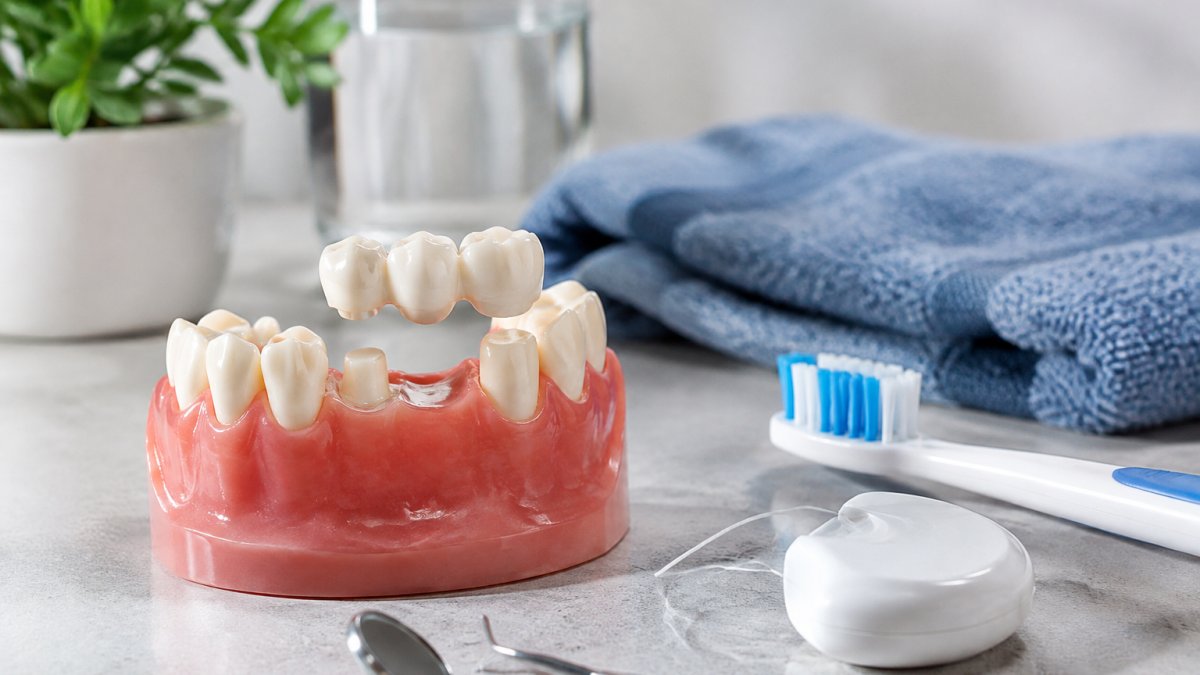
The abutment teeth are the teeth that support a bridge. The pontic is the replacement tooth in the gap. Both need care. If brushing is hard to remember, keep your toothbrush and toothpaste in view and tie brushing to an existing daily habit. A common mistake is brushing only the visible top of the bridge.
Step 2: How to floss under a dental bridge
To floss under a dental bridge, guide floss beneath the replacement tooth with a floss threader, then gently clean the gumline and the sides of the supporting teeth. Move slowly and avoid snapping floss into the gums. Ask a dental professional to show you the method if you are unsure.
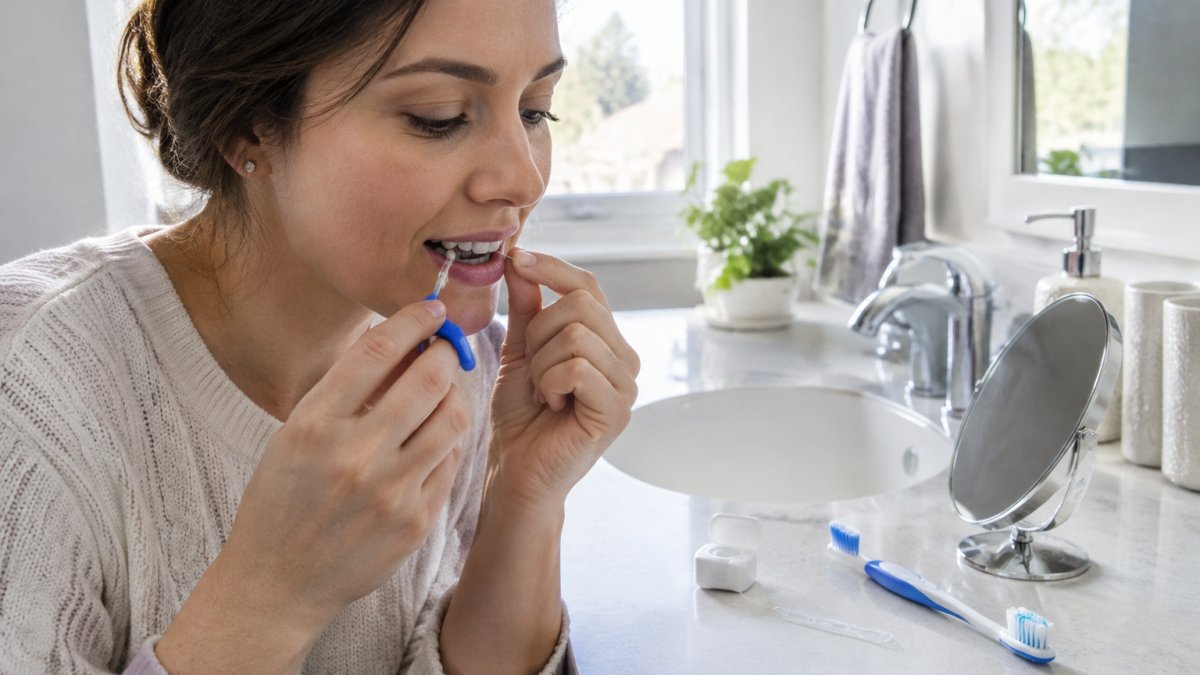
A bridge can block regular floss from passing through the gap. A threader creates a path under the pontic so you can remove trapped food and plaque. The goal is gentle cleaning, not force.
- Thread floss through the loop.
- Guide the threader under the bridge.
- Pull the floss through with care.
- Clean each side of the supporting teeth.
- Rinse, then check for food left behind.
For a visual walkthrough, follow our step-by-step bridge flossing guide. If the floss catches or causes pain, stop and ask your dental team for help.
Step 3: Choose tools that clean around your bridge
The right tool depends on the space beneath the bridge, your dexterity, and what you can use comfortably every day. A floss threader carries regular floss beneath the pontic; an interdental brush can clean an open space if its bristles fit without being forced; and a water flosser can help rinse around the bridge when threading is difficult. These tools are alternatives for particular needs, not interchangeable guarantees of plaque removal.
- Soft-bristle toothbrush: Brush the bridge, the gumline, and the exposed surfaces of the supporting teeth twice daily. Angle the bristles toward the gumline and use gentle, short strokes rather than scrubbing across the bridge.
- Floss threader or bridge floss: Use a threader to pass floss beneath the pontic, then move it gently along the underside and around the supporting teeth. Pre-threaded bridge floss with a stiffened end may be easier to guide, but it still needs to pass without force.
- Interdental brush: Choose a size that enters the space comfortably. The bristles should contact the sides of the space without the wire scraping the bridge or the brush needing to be pushed through. A dental professional can help select a size and demonstrate the angle.
- Water flosser: Direct the stream along the gumline and around the bridge, following the device instructions and your dental professional’s advice. It can be a useful option for people who struggle with threaders, but keep brushing and use any other recommended cleaning method as well.
A practical way to choose is to ask your dental team to watch you clean your bridge and recommend a tool for the actual shape of the gap. If you have limited hand mobility, difficulty threading floss, or a space that traps food, mention that; the easiest tool to handle consistently may be more useful than a tool you find frustrating.
Watch out: Stop if a brush catches, the wire presses into your gums, or cleaning causes persistent pain or bleeding; do not force a tool into a tight space, and ask a dental professional to check the fit and show you an alternative.
Mouthwash can be part of your routine if it suits your oral health needs, but it does not remove trapped debris or replace brushing and cleaning beneath the bridge. Rinse with water after meals when you cannot clean straight away, then use your usual tools when convenient.
Step 4: Foods to avoid with dental bridges
Sticky and very hard foods can put extra force on a dental bridge or catch around it. You do not need to avoid every firm food, but cutting food into smaller pieces and chewing with care can reduce strain. If a certain food repeatedly causes discomfort, stop eating it and ask a dental professional for advice.
Foods to take extra care with include:
- Sticky candy and chewy sweets
- Hard candy and ice
- Tough foods that need forceful biting
- Foods that often lodge beneath the bridge
A common mistake is using the bridge to bite into hard foods. That can place pressure on the bridge and its supporting teeth. Food trapped under the pontic can also contribute to plaque buildup if it is not cleaned away. Rinse with water after meals when brushing is not possible, then clean the area as part of your usual routine.
Step 5: Understand dental bridge lifespan and long-term care
There is no single lifespan that applies to every dental bridge. Its condition depends on factors such as the health of the supporting teeth and gums, the fit of the bridge, daily plaque control, bite forces, and whether problems are found and addressed. Good home care supports oral health, but it cannot prevent every chip, change in fit, or problem beneath a bridge.
Bridge materials can have different properties, but the material alone does not determine how you should clean your bridge. Porcelain-fused-to-metal bridges combine a porcelain outer layer with a metal substructure; zirconia bridges are made from a ceramic material. Your dentist can identify your bridge and explain any care considerations for its design and condition. In either case, use a soft-bristle brush, clean beneath the pontic, and avoid using hard objects to scrape the bridge. Do not assume that a material is immune to damage or that a special product is needed unless your dental team recommends it.
At dental exams, ask the clinician about the bridge’s fit and edges, the supporting teeth, the surrounding gums, and your bite. Mention changes such as food becoming trapped in a new spot, sensitivity, a rough or chipped area, or the bridge feeling different when you close your teeth. These details can help the dental team decide whether the bridge needs closer assessment; they are not, by themselves, proof that it is failing.
Grinding or clenching can place extra force on teeth and dental work (Jaw Clenching and Teeth Grinding (Bruxism)). Tell your dentist if you wake with jaw soreness, notice worn or chipped teeth, or have been told you grind.
For long-term care:
- Brush twice daily and clean beneath the bridge every day using a method suited to its shape.
- Attend dental exams and professional cleanings at the interval recommended for your oral health.
- Report a new bite change, persistent sensitivity, food trapping, damage, or movement instead of waiting for the next routine visit.
- Ask whether your bridge material, bite, or grinding habits call for any specific care instructions.
Watch out: Do not try to tighten, reshape, or repair a bridge yourself; a change in fit or bite needs assessment by a dental professional.
Use these long-term care steps to help maintain your bridge and spot changes early.
| Step | What to do | Frequency or timing |
|---|---|---|
| Brush | Use a soft-bristle brush and clean beneath the bridge | Twice daily; beneath the bridge every day |
| Dental exams | Ask about fit, edges, supporting teeth, gums, and bite | At dental exams |
| Report changes | Mention sensitivity, food trapping, damage, or movement | Instead of waiting for the next routine visit |
| Get specific advice | Ask about material, bite, or grinding-related care | At dental visits |
Step 6: Signs of a loose dental bridge and other problems
Signs of a loose dental bridge can include movement, a changed bite, new discomfort, or food getting trapped more often. These signs do not show the cause on their own. Contact a dental professional for an assessment rather than trying to adjust or remove the bridge yourself.
Other changes to report include:
- Pain when chewing or biting
- A crack, chip, or damaged edge
- Red, swollen, or bleeding gums
- A bad taste or odor that persists
- Sensitivity around the supporting teeth
A loose bridge can expose nearby areas to further damage, so do not wait if it moves or causes pain. Watch out: Avoid household glue or other DIY fixes, which can harm the bridge or tissues in your mouth. If the bridge comes out, keep it safe and contact a dental professional for guidance.
Step 7: Book a dental bridge checkup with Pearly Curve Dentistry
A dental professional can assess a dental bridge, the supporting teeth, and the surrounding gums (Canadian Dental Association). Regular exams can help spot changes that are hard to see at home. If you are worried about cost or feel anxious about dental care, consider sharing that before a visit.
At Pearly Curve Dentistry, we provide modern dental care with expert support and a focus on comfortable, personalized care. You can read about crowns and bridges treatment, learn about dental exams and cleanings, or book an appointment to discuss your bridge.
Frequently Asked Questions
What is the best way to floss under a dental bridge?
Use a floss threader or bridge-specific floss to guide floss beneath the pontic, then gently clean along the gumline and around the supporting teeth. Avoid snapping floss against the gums. An interdental brush may suit some bridge spaces, but its size should fit without force. Ask your dental professional to demonstrate the technique for your bridge so you can clean it comfortably and consistently.
Can a dental bridge last a lifetime?
A dental bridge is not guaranteed to last a lifetime. Its lifespan depends on factors such as the condition of the abutment teeth, oral hygiene, bite forces, and regular professional care. Keep up with cleaning beneath the bridge and attend dental exams so a professional can check its fit and the surrounding teeth and gums. If you notice movement, discomfort, or damage, arrange an assessment rather than trying to repair it yourself.
What foods should I avoid with dental bridges?
Sticky foods can pull at a bridge, while very hard foods can place excess force on it. Be cautious with items such as chewy candy and hard nuts, and avoid biting hard objects. You do not necessarily need to remove all firm foods from your diet; cut them into smaller pieces and chew carefully. If a particular food causes pain or makes the bridge feel unstable, stop eating it and contact a dental professional.
Are water flossers recommended for dental bridge maintenance?
A water flosser can help rinse around a dental bridge and beneath its pontic, but it should not replace brushing or other cleaning methods recommended for your bridge. Use it according to the device instructions and direct the stream gently along the gumline. A floss threader or correctly sized interdental brush may be needed to remove debris from specific spaces. Ask your dental professional which combination suits your bridge.
Keeping a bridge clean can be difficult when flossing feels awkward or the area becomes sore. Get started with Pearly Curve Dentistry and discuss a care plan that fits your bridge, your daily routine, and your oral health needs.