 Comparison
Is Sedation Dentistry Safe for Children? A Parent's Review
Last Updated: November 27, 2026
Quick Summary
Pediatric sedation dentistry is safe when a qualified dentist carefully assesses the child, chooses the right sedation level, and monitors vital signs throughout the procedure. Safety depends on patient selection, trained professionals, and proper monitoring, not on the sedative alone. Serious adverse events are rare but real, so parents should weigh the risks first.
- Nitrous oxide keeps the child awake and wears off within minutes once the mask is removed.
- Oral sedation dosage is weight-based, so an accurate weight and full medical history are essential.
- The person monitoring the child during sedation should have no other job during the procedure.
- Children should not return to school or play sports until fully alert after sedation.
- If a child has a fever, active cough, or breathing difficulty, rescheduling is usually the safer choice.
Table of Contents
- Is sedation dentistry safe for children?
- Pediatric dental sedation risks parents should weigh
- Types of sedation for children at the dentist
- How a pediatric dentist assesses a child before sedation
- Child dental sedation recovery time and aftercare
- Questions to ask a pediatric dentist about sedation
- Alternatives to sedation and how to decide
- Book a sedation consultation at Pearly Curve Dentistry
- Frequently Asked Questions
Is sedation dentistry safe for children?
Pediatric sedation can be delivered safely when a qualified dentist carefully assesses the child, chooses the right sedation level, and monitors vital signs throughout the procedure.
Pediatric dental sedation is the supervised use of medication to calm a child during dental treatment. It ranges from minimal sedation with nitrous oxide to general anesthesia for complex cases. Each level carries different benefits and risks.
Here is the honest answer most parents need: sedation is not risk-free, and no responsible dentist claims otherwise. Research reviews, including a pediatric dental sedation review on PubMed Central, describe serious adverse events as rare but real.
Pediatric dental sedation risks parents should weigh
The main risks of pediatric dental sedation include breathing changes, low oxygen levels, allergic reactions, and prolonged drowsiness after the appointment.
Common side effects include nausea, vomiting, and irritability during recovery.
A parent resource on anesthesia and sedation for children's dental work notes that moderate sedation lets children breathe on their own, while deeper levels require closer support.
Risk is commonly linked to factors such as patient selection, fasting, and monitoring rather than the medication alone. A thorough health assessment and clear day-of instructions reduce these risks significantly.
How risk changes with sedation depth and medication
Risk shifts with sedation depth, drug choice, and the child's health. Minimal sedation with nitrous oxide carries a very different risk profile from moderate oral sedation, and both differ from deep sedation or general anesthesia.
With nitrous oxide, the child stays awake and breathes independently, and the effect reverses within minutes once the mask comes off; the main complaints are nausea and mild headache, not airway compromise.
Patient health matters just as much. Children with asthma, sleep apnea, active respiratory infection, obesity, or certain heart conditions face higher risk at any given sedation depth.
What the evidence can and cannot tell you
Parents often ask for a single safety statistic. The honest answer is that pediatric dental sedation evidence has limits. Research reviews, including a pediatric dental sedation review on PubMed Central, describe serious adverse events as rare but real.
What the evidence does support is a consistent pattern: serious events cluster around preventable factors, inadequate fasting, unrecognized medical conditions, dosing errors, and insufficient monitoring. Careful assessment and clear day-of instructions are the main levers that reduce risk.
Risk factors you can actually control
Some risk factors sit with the child's health and cannot be changed; others are within the family's control. Arriving with an accurate weight, reporting every medication and supplement, disclosing snoring or breathing problems, and following fasting instructions exactly all reduce risk, as does planning a quiet day afterward.
A common pattern is that parents underestimate how much a mild cold or recent illness matters. If a child has a fever, active cough, or breathing difficulty on the day of the appointment, the safer choice is usually to reschedule rather than proceed.
Types of sedation for children at the dentist
Dentists choose a sedation level based on the child's age, anxiety, treatment needs, and medical history. The right level is the lowest one that lets the dentist complete care safely.
| Sedation type | Depth | Child stays awake? | Typical use | Recovery |
|---|---|---|---|---|
| Nitrous oxide | Minimal | Yes | Mild anxiety, short visits | Minutes |
| Oral sedation | Minimal to moderate | Drowsy, responsive | Anxious children, longer treatment | A few hours |
| General anesthesia | Deep | No | Complex or lengthy procedures | Several hours to a day |
Nitrous oxide (laughing gas)
Nitrous oxide is a gas breathed through a small mask. It provides minimal sedation, and the child stays awake and responsive throughout. Effects wear off within minutes once the mask is removed.
This is often the first option for mild dental fear. It is not enough for children who cannot cooperate or who need extensive treatment, and some children dislike the mask itself.
Oral sedation and sedative medication
Oral sedation uses liquid or pill medication, sometimes oral midazolam, to relax a child before and during treatment. The child becomes drowsy but usually remains responsive to voice.
Dosage is weight-based, so an accurate weight and full medical history are essential. Oral sedation generally requires fasting beforehand and a longer recovery period at home.
General anesthesia and deep sedation
General anesthesia puts the child fully asleep and is reserved for complex treatment, very young children, or cases where other sedation levels fail. It is delivered by an anesthesia professional in a controlled setting.
This option carries the highest level of monitoring and preparation. It suits children with significant treatment needs or medical conditions that make lighter sedation unreliable.
How a pediatric dentist assesses a child before sedation
A pediatric dentist assesses a child through a full medical history, a physical exam, and a discussion of anxiety and cooperation before recommending any sedation.
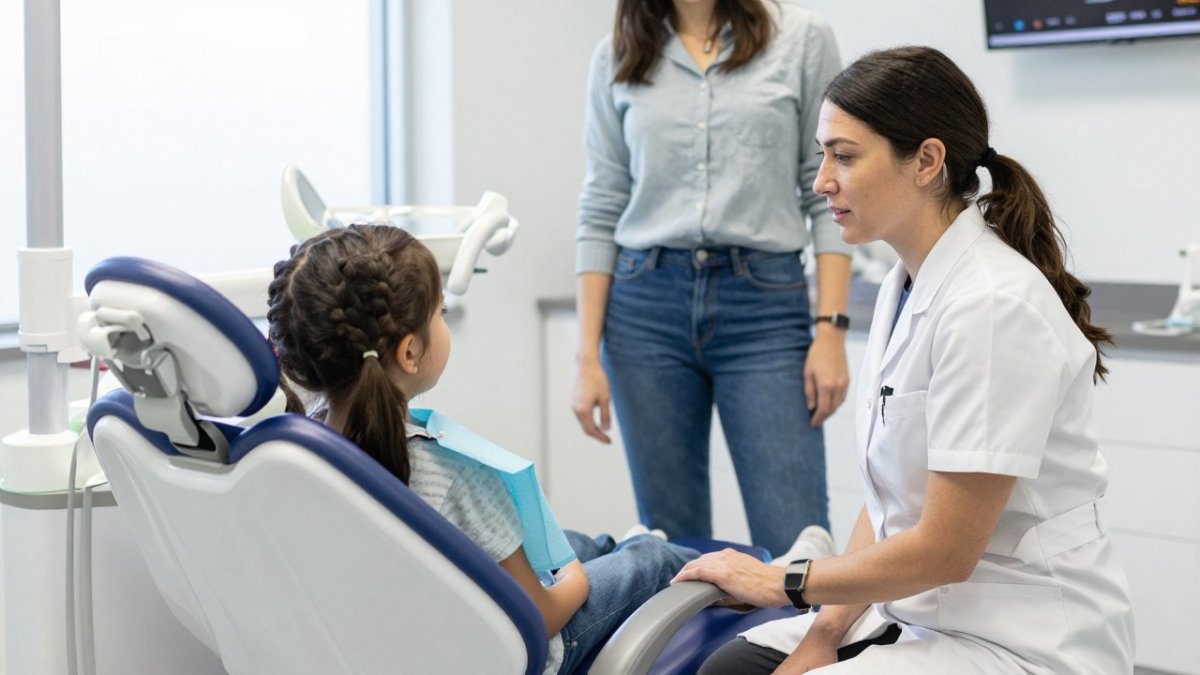
The health assessment covers allergies, medications, prior reactions to sedation, breathing conditions such as asthma, and any heart concerns. Age and weight guide dosage decisions.
This is also where a dentist for patients with anxiety earns trust. Our guide on caring for anxious patients explains how that assessment works in practice.
Skipping or rushing the medical history can lead to sedation problems. A hidden breathing condition or an unreported medication can change the entire plan.
What the assessment should actually include
A thorough pre-sedation assessment is more than a form. It should include a focused airway exam, mouth opening, tonsil size, and any signs of obstruction, because airway anatomy is central to sedation safety. It should record an accurate weight in kilograms, since pediatric sedative doses are weight-based.
The dentist should also classify the child's physical status using a standard scale such as the American Society of Anesthesiologists (ASA) classification, which ranges from healthy to severe systemic disease. Children in higher ASA classes may need a different setting, a different provider, or a referral.
Monitoring and emergency readiness: what to ask about
This is the part of the safety conversation most parents never hear, and it is worth pressing on. Monitoring and emergency readiness are concrete equipment, trained people, and rehearsed protocols.
Ask what monitoring is used. For moderate sedation, that typically includes continuous pulse oximetry, often capnography, plus regular blood pressure and heart rate checks. For deeper sedation or general anesthesia, expect the same plus closer airway support.
Ask who is monitoring. The person watching the child should have no other job during the procedure.
Ask what rescue equipment is on site.
Questions that reveal how a practice actually operates
- Which sedation level do you recommend, and why is it the right choice for my child?
- Who will monitor my child during the procedure, and what is their training?
- What monitoring equipment do you use for vital signs, oxygen levels, and breathing?
- What rescue equipment and reversal agents are on site, and what is your emergency plan?
- What are the fasting and medication instructions before the appointment?
- What side effects should I expect, and when should I call you?
- How will you manage my child's anxiety without sedation, if we choose that route?
Our list of questions to ask before complex dental procedures covers more of what to raise at a consultation. The goal is to confirm that safety is built into the practice's routine, not improvised on the day.
Child dental sedation recovery time and aftercare
Recovery time depends on the sedation level. Nitrous oxide clears in minutes, oral sedation typically wears off over a few hours, and general anesthesia can leave a child groggy for the rest of the day.
After oral sedation or anesthesia, children may be unsteady, irritable, or nauseous. Most dentists advise rest, fluids, and close adult supervision for the remainder of the day.
Post-treatment care includes watching for prolonged drowsiness, breathing difficulty, or vomiting that does not settle. Contact the dental office if anything concerns you. A follow-up call from the practice is standard for deeper sedation.
Questions to ask a pediatric dentist about sedation
- Which sedation level do you recommend, and why is it the right choice for my child?
- Who will monitor my child during the procedure, and what is their training?
- What monitoring equipment do you use for vital signs and oxygen levels?
- What are the fasting and medication instructions before the appointment?
- What side effects should I expect, and when should I call you?
- What is your emergency plan if something goes wrong?
- How will you manage my child's anxiety without sedation, if we choose that route?
Our list of questions to ask before complex dental procedures covers more of what to raise at a consultation.
Alternatives to sedation and how to decide
Not every anxious child needs sedation. Behavioral approaches, a calm environment, and gradual exposure often work well, especially for mild dental fear.
Techniques such as tell-show-do, positive reinforcement, and short familiarization visits help many children cooperate without medication. Our guide on managing dental fear without sedation walks through those strategies.
Sedation makes sense when anxiety is severe, treatment is extensive, or a child's safety during treatment depends on staying still.
If cost is part of your decision, our sedation dentistry cost guide explains what affects pricing before you commit.
Book a sedation consultation at Pearly Curve Dentistry
Choosing sedation for your child is a decision built on trust, clear information, and a dentist who takes the time to assess rather than rush.
If you are ready to talk through your child's needs, we offer compassionate, family-focused care in a welcoming setting.
Sedation can be a well-managed part of dental care for children when it is matched to the child and monitored closely. If you have questions about your child's anxiety, treatment needs, or sedation options, book a consultation with Pearly Curve Dentistry to discuss them.
Frequently Asked Questions
Is sedation dentistry safe for children?
Pediatric sedation can be delivered with appropriate care when a trained professional assesses the child first, selects the right sedation level, and monitors breathing and oxygen levels throughout. Research reviews report serious adverse events are uncommon but do occur, so safety depends on patient selection, weight-based dosing, and a clinic prepared for emergencies. No option is risk-free, and the right choice depends on your child's health, age, anxiety, and the treatment needed. Ask about monitoring and emergency readiness before consenting.
What are the main pediatric dental sedation risks?
The most discussed pediatric dental sedation risks include breathing depression, low oxygen levels, over-sedation, nausea, and prolonged drowsiness after the appointment. Risks rise with higher sedation levels, certain health conditions, and dosing that does not account for the child's weight. Clinical reviews note that serious outcomes are rare but reported, which is why qualified providers use careful assessment, continuous monitoring, and clear discharge instructions. Discuss your child's medical history and any medications openly so the dentist can judge suitability.
How long does child dental sedation recovery time usually last?
Recovery depends on the type used. After nitrous oxide, most children return to normal within minutes to an hour once oxygen is given. Oral sedation can leave a child drowsy for several hours, with full alertness often taking the rest of the day. General anesthesia recovery is longer and typically requires observation before discharge. Plan a quiet day afterward, keep your child home from school, and follow the dentist's instructions on eating, drinking, and activity. Ask for written aftercare guidance before you leave.
What should parents ask a pediatric dentist about sedation?
Ask who will administer and monitor the sedation, what training and emergency equipment are on site, which sedation level is recommended and why, how dosage is calculated for your child's weight, and what monitoring is used during and after the procedure. Also ask about fasting instructions, expected recovery time, and what to do if your child reacts unusually at home. Request written informed consent details and a clear cost estimate in advance. These questions to ask a pediatric dentist about sedation help you compare answers and decide with confidence.