 How-to
Dental Hygiene Tips for ADHD: What Actually Helps?
Last Updated: November 2, 2026
Quick Summary
Good dental hygiene with ADHD depends on building external cues into your day, since executive function challenges like time blindness and task initiation make memory-based routines hard to keep. Timers, reminders, and pairing brushing with an existing daily activity give the habit a trigger your brain can't easily ignore.
- Set a phone alarm for morning and night, labeled "Brush.
- Pair brushing with an activity you already do every day, like waking up.
- Floss immediately after brushing and keep floss beside the toothbrush.
- Use a minimum routine on hard days: two minutes of brushing with fluoride toothpaste before bed.
- Change one sensory variable at a time when brushing feels overwhelming.
Table of Contents
- Why Dental Hygiene Is Hard With ADHD
- How to Remember to Brush Teeth With ADHD
- Choosing the Best Toothbrush for ADHD
- ADHD Flossing Tips That Stick
- Sensory-Friendly Dental Care Options
- A Minimum Viable Routine for Difficult Days
- Booking Your Next Visit With a Supportive Dental Team
- Frequently Asked Questions
Why Dental Hygiene Is Hard With ADHD
Brushing your teeth twice a day sounds simple. This guide explains why that happens and what practical steps can help. (Source: Statistics Canada's 2023 Canadian Health Survey)
ADHD affects executive function, the brain skills that handle planning, memory and starting tasks. Oral care depends on all of those. Many people find that a routine they set up with good intentions fades after a few weeks.
Time Blindness and Forgotten Routines
Time blindness makes it hard to sense how much time has passed. Morning feels like it just started, and then it is already time to leave. Brushing can slip out of the day without anyone noticing.
Many people with ADHD also forget routines that do not have a clear trigger. Brushing at night feels random when nothing in the evening reminds you to do it.
Task Initiation and Low-Effort Habits
Starting a task can feel harder than finishing it. This is called task initiation difficulty, and it is common with ADHD. Getting the toothbrush out of the cabinet can feel like too much effort at 10 p.m.
Low-effort habits help here. Keep the toothbrush and toothpaste on the counter in plain sight. Fewer steps between you and the sink means fewer chances to skip the task.
How to Remember to Brush Teeth With ADHD
The goal is to build cues into your day so brushing does not depend on memory alone. Find practical steps in this guide to maintaining dental hygiene with ADHD. Most people with ADHD do better with external reminders than with willpower.
Using Timers, Reminders and Visual Cues
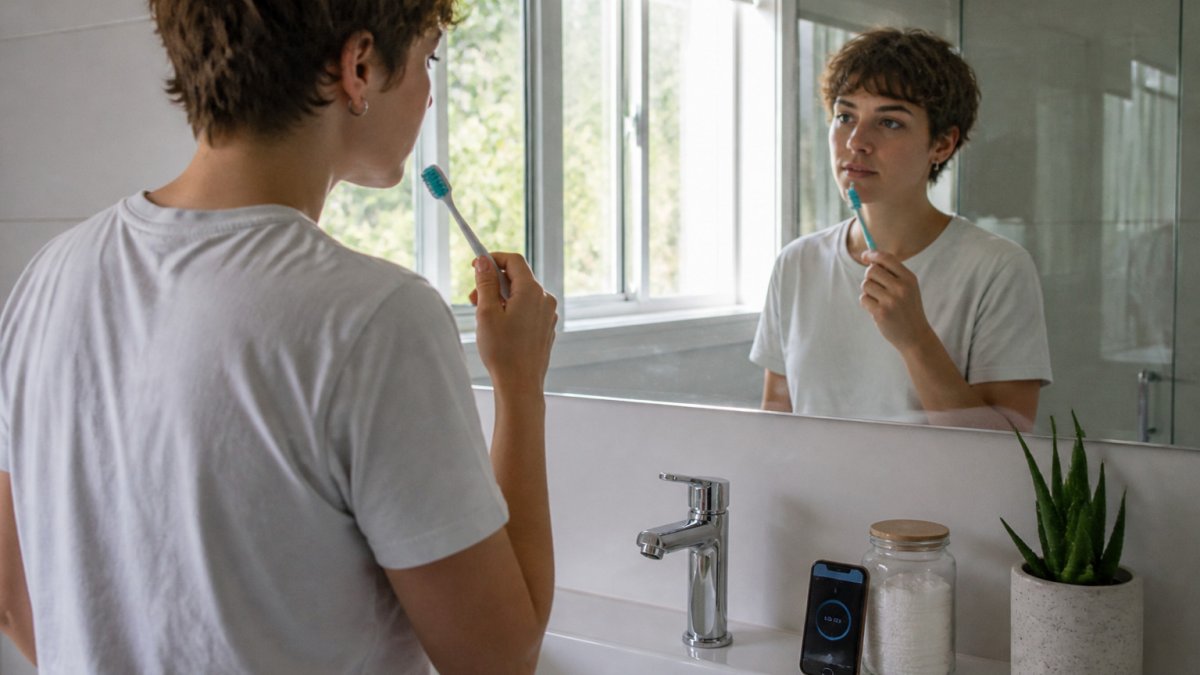
Timers and reminders give your brain a signal it cannot ignore. Try these options:
- Set a phone alarm for morning and night, labeled "Brush."
- Use a timer on your toothbrush or in your bathroom.
- Place a sticky note on the mirror as a visual cue.
Choose one or two cues to start. Too many reminders can become background noise.
Pairing Brushing With an Existing Daily Activity
Habit pairing attaches brushing to something you already do. Examples include brushing right after your morning coffee or right before you put on your pajamas. The existing activity becomes the reminder.
Watch out: a new routine that depends on a cue you rarely see will fail. Pick a trigger you do every day, like waking up or turning off the bedroom light.
Choosing the Best Toothbrush for ADHD
An electric toothbrush with a built-in timer can take much of the guesswork out of brushing.
A manual brush can also work well.
Ask your dental team which option suits your needs. They can recommend a brush based on your teeth and gums.
The article points to a few brush types that can make daily care easier to keep up.
| Option | Best for | Key difference |
|---|---|---|
| Electric toothbrush with timer | People who need a built-in cue | Pulses or beeps at two-minute intervals |
| Manual brush with timer | Those who want a simpler tool | Comfortable grip and soft bristles, timed by phone |
| Recommended choice | Anyone unsure | The brush you will actually use every day |
ADHD Flossing Tips That Stick
Flossing is often the first step people skip, and with ADHD the reasons are specific: it is a separate task with its own start-up cost, it has no natural cue, and it requires fine-motor coordination that some people find frustrating. Treating flossing as a standalone habit is usually the problem. The fix is to attach it to brushing, reduce the number of decisions, and accept a lower-effort version on difficult days.
Why Flossing Fails More Often Than Brushing
Brushing has a visible cue (the toothbrush) and a clear endpoint (two minutes). Flossing has neither. It also requires working memory to remember which teeth you have already cleaned, which is why people with ADHD often lose track mid-routine and stop. Time blindness makes a one-minute task feel longer than it is, and task switching makes it hard to start a second activity right after brushing.
Attach Flossing to Brushing, Not to a Separate Time
Habit pairing works best when the new behavior is chained to an existing one. Floss immediately after brushing, before you leave the sink. Keep floss in the same drawer or cup as the toothbrush so the cue is visible. If you floss in the shower, keep a second container there. The goal is to remove the step where you have to remember to go back to the bathroom.
Reduce the Decisions
- Pick one tool and keep it stocked. Floss picks, string floss, and interdental brushes each have trade-offs, but switching tools every week adds decisions. Choose one that you tolerate and keep it in the same place.
- Use a visible count. If you lose track of which teeth you have cleaned, work in a fixed order, upper right, upper left, lower right, lower left, or use a floss pick and move it one tooth at a time.
- Set a one-minute timer. A timer gives flossing a clear endpoint, which helps with time blindness.
Tool Trade-Offs Worth Knowing
String floss removes plaque effectively in tight contacts but requires more coordination and can shred on rough fillings. Floss picks are easier to hold and faster to start, which helps with task initiation, but they may not wrap around teeth as well. Interdental brushes work well for larger gaps and are easier for some people with fine-motor difficulty, but they do not fit tight contacts.
A Fallback for Difficult Days
On days when flossing is out of reach, do not skip interdental cleaning entirely.
Watch out: flossing harder or faster to "catch up" after missed days can irritate gums. Gentle, consistent passes are more effective than aggressive ones.
Interdental cleaning helps clear plaque between teeth, where a toothbrush cannot reach. Even a few times a week is better than none, and your dental team can show you which tool fits your teeth.
Sensory-Friendly Dental Care Options
Sensory sensitivities are common alongside ADHD, and they can turn brushing into a daily negotiation. The goal is not to eliminate discomfort entirely but to reduce the number of sensory barriers between you and the sink. Identifying the one sensation that is the real blocker can make product changes easier than swapping everything at once.
Identify the Specific Trigger First
Before buying new products, run a short self-check. Is the problem taste (mint, sweetness, foam volume), texture (bristle firmness, toothpaste grit, floss shredding), sound (electric motor whine), vibration, temperature, or the feeling of saliva pooling? Write down the one or two sensations that reliably make you want to stop.
Toothpaste Adjustments
- Flavor: Mild or mint-free options exist, including flavors like cinnamon, bubblegum, and unflavored varieties. Strong mint is a frequent complaint because it triggers a cooling or burning sensation that some people find overwhelming.
- Foam: Some people dislike the amount of foam from sodium lauryl sulfate (SLS). SLS-free toothpastes produce less foam, which can make brushing feel less messy.
- Texture: Gel toothpastes tend to feel smoother than paste; some people prefer one over the other for that reason alone.
Toothbrush Adjustments
- Bristles: Soft bristles are the standard recommendation for most adults. If standard soft bristles still feel harsh, look for extra-soft or "sensitive" heads.
- Handle: A handle that is too thin, too smooth, or too bulky can make grip uncomfortable. Test a few shapes; some people do better with a larger, contoured handle, while others prefer a slim one.
- Electric vs. manual: Electric brushes add vibration and sound, which some people find regulating and others find intolerable. A quieter model or a manual brush with a built-in two-minute timer can be a better fit. There is no rule that electric is required; the brush you will actually use is the better choice.
- Bristle covers and caps: If bristles touching the inside of your mouth feels unpleasant, a smaller brush head can reduce the area of contact.
Floss and Interdental Alternatives
String floss can shred, slip, or feel like it is cutting the gums, especially with tight contacts. Floss picks, interdental brushes, and water flossers are alternatives worth testing. Each has trade-offs: floss picks are easier to hold but may not wrap around teeth as effectively; interdental brushes work well for larger gaps but not tight ones; water flossers are gentle but do not remove plaque as thoroughly as string floss in tight spaces.
Reduce the Number of Sensations at Once
If brushing feels overwhelming, change one variable at a time, for example, switch to a milder toothpaste for two weeks before changing the brush. Changing everything at once makes it hard to know what helped. It also helps to keep the environment consistent: same cup, same towel, same order of steps.
Watch out: a product marketed as "sensory-friendly" is not automatically a fit for you. The label describes a general category, not your specific trigger, so test one change at a time and keep what works.
Fluoride toothpaste is still recommended for most adults, so talk with your dental team before switching products permanently.
A Minimum Viable Routine for Difficult Days
Some days, a full routine is out of reach. On those days, a minimum routine keeps your mouth protected without adding pressure.
- Brush for two minutes with fluoride toothpaste before bed.
- Skip everything else if needed, and try again the next day.
- Keep a backup toothbrush and toothpaste in a bag or drawer.
A simple routine done most days beats a perfect routine you abandon after a week.
Booking Your Next Visit With a Supportive Dental Team
If brushing has become hard to keep up, you do not have to manage it alone. A dental team can talk through your routine and suggest practical tools. Share what has been difficult so you can work on a plan that fits your life. Book your next visit to start from where you are today.
Frequently Asked Questions
How can adults with ADHD remember to brush their teeth?
Attach brushing to something you already do every day, such as making coffee or getting into bed, so the cue is automatic. Keep the toothbrush and paste on the counter rather than in a cabinet, since out-of-sight supplies are easy to forget. A phone reminder or a two-minute timer at the sink can also help you start the task without having to plan it. Many people find that the first week is the hardest, and that a visible checkmark on a calendar helps the habit stick. If you miss a session, simply resume at the next scheduled cue rather than trying to catch up.
What toothbrush is best for someone with ADHD?
An electric toothbrush with a built-in timer is often helpful because it runs for two minutes and signals when to move to the next section of the mouth. Some people prefer a lighter handle or a rounded head that is easier to control, while others prefer a stronger vibration to stay focused. Sensory preferences matter, so test a few models before committing. A dental hygienist can recommend a brush suited to your gums and enamel.
How can I remember to floss with ADHD?
Keep floss or interdental picks beside your toothbrush so you see them every time you brush. Some people floss right after brushing in the same spot, which turns it into one routine rather than two separate tasks. Pre-threaded flossers can reduce the setup effort that often causes people to skip the habit. If flossing still feels too hard, interdental brushes may be easier to use and still clean between teeth. Talk to your dental team about which option fits your mouth and your daily routine.
Should I tell my dentist about my ADHD?
Yes. Telling your dental team about ADHD helps them plan appointments with fewer surprises, such as scheduling shorter visits, explaining each step before it happens, or arranging a quieter room. You can also share which parts of your routine you find hardest so they can suggest realistic goals. This information is kept confidential as part of your health record.