 blog
blog
Cosmetic Veneers: A 2026 Guide to Your Best Options
Table of Contents
- What Are Cosmetic Veneers?
- Porcelain vs. Composite Veneers: Cost and Material Differences
- The Dental Veneer Procedure: Step-by-Step Process
- Benefits of Cosmetic Veneers for Your Smile
- How to Maintain Dental Veneers Long-Term
- Choosing the Right Cosmetic Dentist
- Are You a Candidate for Veneers?
- Frequently Asked Questions
Last Updated: September 3, 2026
What Are Cosmetic Veneers?
Cosmetic veneers are thin, custom-crafted shells made from tooth-colored materials that bond to the front surface of your teeth to improve their appearance. They're designed to mask discoloration, close gaps, reshape teeth, or correct minor alignment issues. Unlike crowns, which cover the entire tooth, veneers preserve most of your natural tooth structure while delivering dramatic aesthetic improvements.
The two main types are porcelain and composite. Porcelain veneers are milled in a dental laboratory and offer superior stain resistance and longevity. Composite veneers are applied directly in the dentist's office and can be completed in a single visit. Both create a natural-looking smile when designed by a skilled cosmetic dentist.
At Pearly Curve Dentistry, we work with patients to understand their smile goals before recommending the veneer approach that best fits their needs. The consultation process involves examining your teeth, discussing your expectations, and using digital smile design tools to preview potential results. This ensures you know exactly what to expect before any treatment begins.
Porcelain vs. Composite Veneers: Cost and Material Differences
The choice between porcelain veneers and composite bonding comes down to durability, appearance, and timeline. Porcelain veneers are fabricated in a dental laboratory using high-temperature ceramic materials like E.max or feldspathic porcelain. These materials mimic the light-reflecting properties of natural tooth enamel, creating a luminous, lifelike appearance that's difficult to replicate with composite resin.
Composite veneers use a tooth-colored resin material that the dentist applies and sculpts directly onto your tooth. This approach is faster, often completed in one appointment, and requires less tooth preparation. However, composite is more prone to staining and typically lasts 5-7 years before needing replacement, whereas porcelain veneers often last 10-15 years or longer with proper care.
The material choice also affects how your dentist prepares your tooth. Porcelain veneers typically require minimal-prep or no-prep techniques, where only a thin layer of enamel is removed to accommodate the shell. Composite veneers may require slightly more tooth structure removal, depending on the extent of correction needed (the American Dental Association).
Cost considerations vary based on the complexity of your case, the number of teeth being treated, and your dentist's experience level. Porcelain veneers generally represent a larger upfront investment, but their longevity makes them more economical over time. Composite veneers cost less initially but require more frequent maintenance and replacement. For specific pricing, consult with your dentist about what fits your budget and timeline.
The Dental Veneer Procedure: Step-by-Step Process
The veneer procedure typically unfolds over two to three appointments, though composite veneers can be completed in one visit. Understanding each step helps you feel prepared and confident moving forward.
Step 1: Consultation and Digital Smile Design Your dentist examines your teeth, discusses your aesthetic goals, and uses digital imaging or 3D smile design software to show you a preview of potential results. This is your chance to communicate exactly what you want, whether that's closing a gap, lightening your shade, or reshaping your smile line. The dentist will also assess whether you're a good candidate based on the health and structure of your existing teeth.
Step 2: Tooth Preparation For porcelain veneers, your dentist removes a thin layer of enamel from the front surface of each tooth. This step is painless, local anesthesia is applied to ensure your comfort. The amount removed is minimal, usually equivalent to the thickness of the veneer itself, which helps the final restoration sit flush with your natural tooth. For composite veneers, preparation is often even lighter or sometimes skipped entirely.
Step 3: Impression and Temporary Veneers After preparation, the dentist takes a detailed impression of your teeth using a digital scanner or traditional impression material. This impression is sent to the dental laboratory, where technicians craft your custom veneers. While you wait, typically 1-2 weeks, temporary veneers are placed to protect your prepared teeth and maintain your appearance.
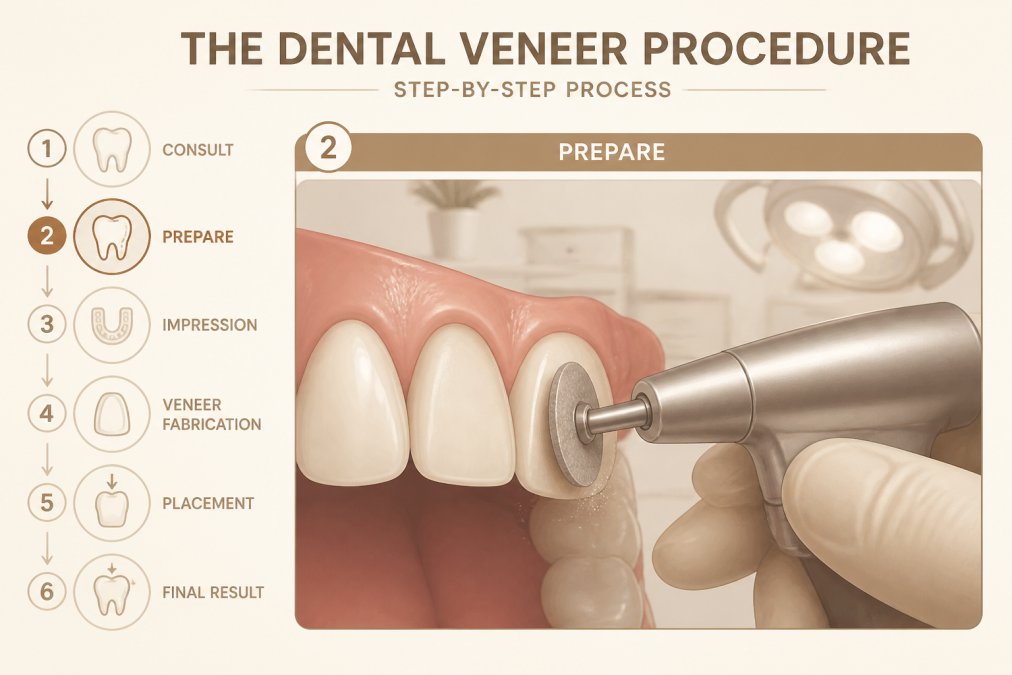
Step 4: Bonding When your custom veneers are ready, you return for the bonding appointment. Your dentist removes the temporary veneers and cleans your teeth thoroughly. A bonding agent is applied to the prepared tooth surface, and the veneer is positioned carefully. The dentist checks your bite and makes adjustments to ensure proper occlusion. Once positioned correctly, a special light hardens the bonding material, securing the veneer permanently.
Step 5: Final Adjustments and Polish Your dentist refines the bite, polishes the veneers, and ensures they blend seamlessly with your natural teeth. You'll receive care instructions for maintaining your new smile.
Benefits of Cosmetic Veneers for Your Smile
Cosmetic veneers solve multiple aesthetic concerns in a single treatment. They close gaps between teeth without the need for orthodontics, lighten severely stained teeth that don't respond to whitening, and reshape teeth that are worn, chipped, or naturally small. For many patients, veneers offer a faster path to their ideal smile than other cosmetic approaches.
The aesthetic benefits are immediate and transformative. Veneers are custom-designed to match your skin tone, facial proportions, and personal style. Whether you prefer a bright white smile or a more natural shade, your dentist can create veneers that reflect your vision. The translucency of high-quality porcelain means light passes through the veneer much like it does through natural enamel, creating a warm, lifelike appearance rather than a flat, artificial look.
Beyond appearance, veneers can improve your confidence and oral health perception. Many patients report feeling more comfortable smiling in social and professional settings after receiving veneers. This psychological benefit often extends to better oral hygiene habits, as patients become more invested in protecting their investment.
Veneers also provide a conservative treatment option compared to full crowns. Because they preserve most of your natural tooth structure, veneers are reversible in principle, though removal and replacement should only be done by a qualified dentist. This makes them an attractive choice for patients who want significant aesthetic improvement without extensive tooth modification.
How to Maintain Dental Veneers Long-Term
Proper maintenance extends the life of your veneers and keeps your smile looking fresh. While veneers are durable, they require the same care as natural teeth, and sometimes a bit more attention because the bonding agent at the edge of the veneer can be vulnerable to decay if not properly maintained.
Brush your teeth twice daily with a non-abrasive toothpaste and a soft-bristled brush. Avoid whitening toothpastes, which can be too harsh on the veneer surface and may cause the bonding material to degrade over time (the American Dental Association). Floss daily, being gentle around the gum line where the veneer meets your natural tooth. This area is especially prone to plaque buildup and decay.
Avoid habits that stress the veneers. Don't chew on ice, hard candy, or non-food items like pen caps. If you grind your teeth at night, ask your dentist about a night guard to protect your veneers from excessive force. Similarly, avoid using your teeth as tools to open packages or bottles, these habits can chip or crack your veneers.
Your diet matters too. While porcelain veneers resist staining better than composite, they're not immune to discoloration at the margins. Limit consumption of deeply pigmented foods and beverages like red wine, coffee, and berries, or rinse your mouth with water immediately after consuming them. Acidic foods and drinks can also weaken the bonding agent over time, so rinse after consuming citrus fruits or soda (peer-reviewed research).
Schedule dental checkups every six months. Your dentist will examine the veneers for any signs of wear, check the integrity of the bonding, and assess your oral health. Professional cleanings help maintain the appearance of your veneers and prevent decay at the tooth-veneer interface.
Choosing the Right Cosmetic Dentist
Your results depend almost entirely on your dentist's skill, aesthetic sense, and attention to detail. A dentist experienced in cosmetic veneers understands tooth proportion, shade selection, and the subtle contours that make a smile look natural rather than artificial. They'll also listen carefully to your goals and manage your expectations realistically.
Look for a dentist who uses modern technology like digital smile design and 3D imaging. These tools allow you to preview your results before treatment begins and help your dentist communicate with the dental laboratory about your specific vision. Ask to see before-and-after photos of previous veneer cases. Pay attention to whether the smiles look natural and well-proportioned, not overly bright or bulky.
Experience matters significantly. A dentist who places veneers regularly develops the skill to match shades accurately, prepare teeth consistently, and bond veneers with precision. Ask how many veneer cases your dentist completes per year and whether they continue education in cosmetic dentistry. Membership in cosmetic dentistry organizations or completion of advanced training programs indicates commitment to excellence.
Patient reviews and word-of-mouth referrals provide valuable insight into a dentist's bedside manner and results. Read reviews that mention specific experiences with veneers, how the dentist handled concerns, whether the final result matched expectations, and how they addressed any issues afterward. A dentist who stands behind their work and is responsive to patient concerns is worth seeking out.
At Pearly Curve Dentistry, our approach combines advanced treatment techniques with genuine attention to your comfort and goals. We use digital smile design to show you exactly what your veneers will look like before we begin, and we take time to understand what matters most to you in your smile. Our commitment is to deliver results that exceed your expectations while ensuring you feel supported throughout the process.
Are You a Candidate for Veneers?
Most people with healthy teeth and gums are candidates for veneers, but certain factors influence whether they're the right choice for you. Your dentist will assess your oral health, tooth structure, bite alignment, and aesthetic goals to determine if veneers are appropriate.
You're a good candidate if you have healthy teeth with no untreated decay or significant gum disease. Veneers require a solid foundation, if your teeth are compromised by decay or your gums are inflamed, those issues need to be addressed first. You should also have enough enamel on the front surface of your teeth to support the veneer bonding.
Bite alignment matters too. If your teeth are severely misaligned or your bite is problematic, your dentist may recommend orthodontics before veneer placement. Veneers can correct minor alignment issues and close small gaps, but they cannot fix a significant bite problem. Placing veneers on a compromised bite can lead to premature wear or damage.
Your expectations should be realistic. Veneers create a dramatic improvement in appearance, but they work within the framework of your existing teeth and facial features. A skilled dentist will guide you toward results that enhance your natural beauty rather than create an artificial appearance. If you're seeking a specific look that doesn't align with your tooth size or facial proportions, your dentist will discuss alternative approaches.
Commitment to maintenance is essential. Veneers require proper daily care and regular professional checkups. If you're not willing to brush, floss, and avoid damaging habits, veneers may not be the right investment. They're durable, but they're not indestructible.
Age is not a barrier. Teenagers and adults can receive veneers, provided their teeth are fully developed and they're motivated to care for them properly. Older adults can also benefit from veneers as a way to refresh their smile and address years of wear or discoloration.
Cosmetic veneers represent one of the most effective ways to transform your smile quickly and dramatically. Whether you're looking to close gaps, lighten discoloration, or reshape your teeth, the right veneer approach, paired with a skilled dentist, delivers results that last. At Pearly Curve Dentistry, we combine modern treatment techniques with expert support to help you achieve the confident, radiant smile you deserve. Book an appointment today to discuss your smile goals and explore whether veneers are right for you.
Frequently Asked Questions
What is the difference between composite and porcelain veneers?
Porcelain veneers are custom-crafted in a dental laboratory and offer superior stain resistance, durability, and a more natural-looking appearance. They typically last 10-15 years or longer. Composite veneers are applied directly to your tooth and cure with light, making them faster and less expensive but generally less durable and prone to staining. Your dentist can discuss which material suits your goals and budget during your patient consultation.
How long do cosmetic veneers typically last?
Porcelain veneers usually last 10-15 years with proper maintenance and oral hygiene. Composite veneers typically last 5-7 years before they may need touch-ups or replacement. Longevity depends on your bite alignment, how well you care for your teeth, and whether you avoid habits like chewing on hard objects. Your dentist will discuss expected durability during treatment planning.
Are dental veneers covered by provincial health insurance plans?
Cosmetic veneers are generally not covered by provincial health insurance plans because they are considered cosmetic procedures rather than medically necessary treatment. Some private dental insurance plans may offer partial coverage, depending on your policy. Contact your insurance provider directly to confirm your coverage. Many dental practices offer payment options to make cosmetic dentistry more accessible.
What should I look for when choosing a cosmetic dentist for veneers?
Look for a dentist with clinical expertise in cosmetic dentistry, a portfolio of before-and-after cases, and experience with digital smile design or 3D imaging technology. Choose someone who takes time for a thorough patient consultation and listens to your aesthetic goals without overselling unnecessary work. Verify their credentials, read patient reviews, and ensure they explain the treatment plan clearly before you commit to the procedure.