 how-to
Dental Veneers Consultation Process Explained (2026)
Table of Contents
- What Happens During a Dental Veneers Consultation
- The Dental Veneer Procedure Timeline: From First Visit to Final Bonding
- Porcelain vs Composite Veneers Cost: What Drives the Price Difference
- Questions to Ask Before Getting Veneers
- Digital Smile Design and 3D Mockups: Previewing Your Results
- Veneer Reversibility and Long-Term Enamel Health
- Managing Sensitivity and Recovery After Veneer Placement
- Conclusion
- Frequently Asked Questions
Last Updated: September 12, 2026
What Happens During a Dental Veneers Consultation
A dental veneers consultation process explained 2026 begins with a straightforward goal: deciding whether veneers are right for you, and if so, what kind. At Pearly Curve Dentistry, we treat that first appointment as a conversation. The consultation typically covers three things: a candidacy assessment, digital imaging of your smile, and a candid discussion of cost, timeline, and expectations.
Most people walk in expecting to be talked into treatment. The reality is closer to the opposite. A good consultation rules veneers out as often as it rules them in.
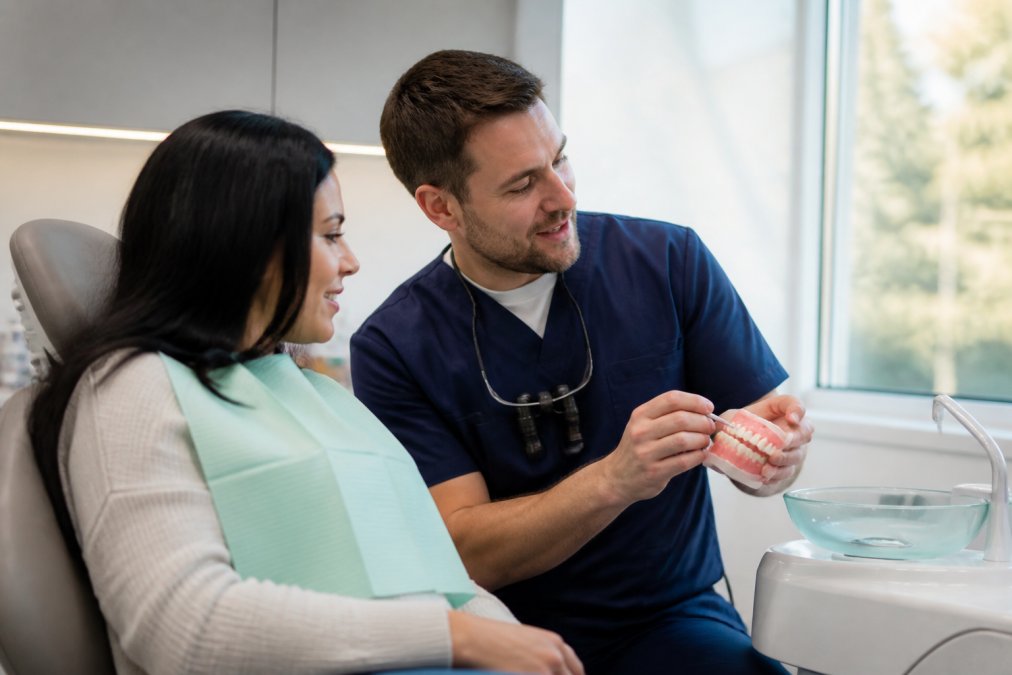
Candidacy Assessment and Dental Health Eligibility
Candidacy assessment determines whether your teeth and gums can support veneers. The clinician checks enamel thickness, gum health, bite alignment, and existing restorations during a periodontal exam and dental x-rays. Healthy gums and enough sound enamel matter more than the aesthetic goal itself.
Common disqualifiers include active gum disease, untreated decay, and heavy clenching. These get addressed first.
Digital Imaging and Smile Simulation
Digital imaging replaces the old guesswork. Intraoral scans and photographs feed smile simulation software that shows a preview of the finished result before anything is permanent. You see the proposed shape, length, and shade matching on your own face, not a generic model.
What most guides miss: this preview is a planning tool, not a contract. Final results depend on how your teeth respond during preparation.
The Dental Veneer Procedure Timeline: From First Visit to Final Bonding
The dental veneer procedure timeline usually runs two to four weeks across three or four appointments. The exact schedule depends on whether you choose porcelain or composite, and on how many teeth you're treating.
Here's the typical sequence:
- Consultation and imaging (60-90 minutes)
- Candidacy assessment, x-rays, and treatment planning
- Tooth preparation and impressions
- Temporary restoration placement
- Final bonding and cementation
- Follow-up visit to check occlusion and gum health
Porcelain veneers are custom-fabricated in a lab, so they need temporaries in the meantime. Composite veneers are often built directly on the tooth in a single chairside session, which shortens the timeline considerably.
Tooth Preparation, Impressions, and Temporary Restorations
Tooth preparation removes a thin layer of enamel, typically fractions of a millimeter, to make room for the veneer. Local anesthesia keeps this comfortable. The amount of enamel reduction depends on the veneer type; some minimally invasive designs require very little.
After preparation, the clinician takes dental impressions or a digital scan. Those records go to the lab for custom fabrication. Temporary restorations protect the prepared teeth and let you test the look before the final version is bonded.
Porcelain vs Composite Veneers Cost: What Drives the Price Difference
Porcelain versus composite veneers cost comes down to material, lab work, chair time, and longevity. Porcelain is fabricated in a lab by a technician, which adds cost but tends to hold its shade and resist staining longer. Composite is applied directly by the dentist, usually costs less upfront, and can often be repaired rather than replaced.
The final number depends on the clinic's location, the technician's lab fees, the complexity of your case, and how many teeth are being treated. A single-tooth case is priced differently than a full smile makeover of eight to ten units.
What Actually Drives the Per-Tooth Price
- Lab fabrication fees. Porcelain veneers are hand-layered or milled by a dental technician, and that skilled labor is the single biggest line item. Higher-end labs that offer characterizations (subtle translucency, incisal halo, surface texture) charge more.
- Chair time. Composite veneers are built directly on the tooth, which can take 60 to 90 minutes per tooth. Porcelain requires two or three shorter visits instead.
- Number of units. Most practices discount per-tooth pricing once you cross four or six units, because setup and planning costs are shared.
- Case complexity. Bite issues, existing restorations, gum contouring, or orthodontic prep add appointments and cost.
- Material tier. Not all porcelain is equal, feldspathic, lithium disilicate, and zirconia-based veneers sit at different price points and have different strength and translucency profiles.
What Insurance and Financing Usually Cover
Veneers are almost always classified as cosmetic, which means provincial health plans and most private dental benefit plans do not cover them (canada.ca). There are narrow exceptions: if a veneer is restoring a tooth damaged by trauma or decay, a portion may be claimable under a restorative code rather than a cosmetic one. Ask your practice to submit a pre-determination to your insurer before treatment so you know what, if anything, will be reimbursed.
Ask about interest rates and whether there is a fee for early repayment.
The Longevity Math
A common pattern is that porcelain veneers last ten to fifteen years with good care, while composite veneers last five to seven years before needing refresh or replacement (cda-adc.ca). That does not automatically make porcelain cheaper over a lifetime, composite can be added to and polished rather than fully replaced, which lowers the cost of each maintenance cycle. Ask your clinician to walk you through the ten-year cost of each option for your specific case, not just the upfront number.
| Factor | Porcelain | Composite |
|---|---|---|
| Fabrication | Dental lab, custom | Chairside, direct |
| Typical visits | 2-3 | Often 1 |
| Stain resistance | Higher | Moderate |
| Repair approach | Usually replaced | Often added to |
| Typical lifespan | 10-15 years | 5-7 years |
| Best for | Long-term aesthetics | Budget, quick fixes |
Questions to Ask Before Getting Veneers
Questions to ask before getting veneers should cover cost, longevity, and what happens if you're unhappy. Bring a written list. A clinician who welcomes the questions is a good sign; one who deflects them is not.
Ask these:
- How much enamel will you remove, and is it reversible?
- What's the total cost, including follow-up visits?
- How long should I expect these to last with normal care?
- What happens if a veneer chips or comes loose?
- Can I see a smile simulation before committing?
- What are my alternatives if I decide against veneers?
If you've had bad dental experiences before, say so at the start. It changes how the appointment runs.
Digital Smile Design and 3D Mockups: Previewing Your Results
Digital Smile Design and 3D mockups let you preview your results before treatment starts. The clinician photographs and scans your teeth, then builds a digital model that shows the proposed veneers in place. Some practices go further with a physical mockup you can wear temporarily, so you can see the shape in your own mirror, in your own lighting.
This is the biggest shift in aesthetic dentistry over the past few years. Older approaches relied on the dentist's eye and the patient's imagination. Today, the preview is collaborative: you can ask for a slightly longer tooth or a warmer shade, and the clinician adjusts the plan before anything is permanent.
The limitation is honesty: a simulation is a close approximation, not a guarantee. Gum healing, enamel response, and lighting all affect the final look.
Canadian Dental Association guidance on cosmetic dental procedures
Veneer Reversibility and Long-Term Enamel Health
Veneer reversibility depends on how much enamel was removed. Minimal-prep and no-prep veneers preserve more enamel, which keeps more options open if you ever want them removed. Traditional preparation removes a thin layer that does not grow back, so that decision is effectively permanent.
This is the part most patients underestimate. Enamel reduction is irreversible. If you're on the fence, ask about minimally invasive options first, and get a clear answer about how much tooth structure will be removed before you commit.
Long-term enamel health also depends on what's underneath. Gum health, oral hygiene, and bite alignment all affect how well veneers age. A veneer on a tooth with untreated decay or gum disease will fail early, no matter how good the lab work is.
Managing Sensitivity and Recovery After Veneer Placement
Sensitivity after veneer placement is common and usually temporary. When enamel is reduced, the underlying dentin becomes more permeable, and the nerve inside the tooth reacts more strongly to temperature changes. That is the mechanism behind the twinge you feel with hot coffee or ice water in the days after bonding. It typically settles as the tooth adjusts and the dentin seals over.
The First 48 Hours: What to Do
The first two days matter more than the rest of the recovery window combined. A practical routine:
- Skip extreme temperatures. No ice water, no scalding tea. Lukewarm is your friend for 48 hours.
- Avoid staining agents. Coffee, red wine, tea, and dark sauces can penetrate freshly bonded margins before they fully settle. This is more of a concern with composite than porcelain.
- Eat soft, cool foods. Yogurt, eggs, pasta, and smoothies. Avoid ice, hard crusts, and unpopped popcorn kernels.
- Brush gently with a soft-bristled brush. Do not scrub the gumline where the veneer meets the tooth.
- Use a sensitivity toothpaste containing potassium nitrate or stannous fluoride. It takes a few days of consistent use to build up the effect.
- Do not floss aggressively around the new margins for the first day or two. Gentle flossing is fine after that.
What Is Normal vs. What Needs a Call
Normal: mild sensitivity to hot and cold that fades over one to two weeks, a slight awareness of the new veneers when you bite, and minor gum tenderness around the margins.
Call your dentist if:
- Sensitivity persists beyond two to three weeks or gets worse instead of better.
- A veneer feels high when you bite down, or your other teeth feel like they are not meeting the same way.
- You notice a sharp edge, a loose veneer, or a visible gap at the margin.
- Gum tissue around a veneer stays red, swollen, or bleeds consistently past the first week.
A bite that feels off is the most common fixable issue. A five-minute occlusal adjustment at a follow-up visit often resolves sensitivity that would otherwise linger for weeks.
Protecting the Investment Long-Term
Once the initial recovery passes, the habits that keep veneers looking good are the same ones that protect natural teeth: regular hygiene visits, a night guard if you clench or grind, and avoiding using your teeth as tools. Porcelain is strong but brittle, it can chip under a direct blow in a way that natural enamel usually will not. If you play contact sports, a custom mouthguard is worth the cost.
Conclusion
The consultation is where a good veneer outcome is actually decided, long before any bonding happens. Getting the candidacy assessment, the digital preview, and the cost conversation right up front saves you from surprises later.
At Pearly Curve Dentistry, we approach veneers the same way we approach everything else: modern treatments, expert support, and comfortable care built around your long-term oral health. If you're weighing porcelain versus composite, or wondering whether veneers are even the right call, book an appointment and we'll walk you through it honestly, and provide a clear written estimate before anything begins.
Frequently Asked Questions
What should I ask my dentist during a veneer consultation?
Ask about the dentist's experience with veneers, which material they recommend and why, how much enamel will be removed, and what the total cost includes. Request a digital smile preview if available. Ask about the expected lifespan of the veneers and what maintenance they require. Also clarify whether the procedure is reversible and how many follow-up visits are needed.
How long does the entire dental veneer process take from start to finish?
Most veneer cases take two to four weeks across two or three appointments. The first visit covers examination, digital scans, and treatment planning. The second involves tooth preparation, impressions, and temporary veneers. The final visit is cementation and bite adjustment. Some practices offer same-day veneers using chairside milling, which shortens the timeline to a single appointment.
Are dental veneers considered a permanent procedure?
Veneers are long-lasting but not permanent. Porcelain veneers typically last 10 to 15 years with proper care. The enamel reduction during preparation is irreversible, which is why the decision deserves careful thought. Composite veneers require less enamel removal and can sometimes be replaced with minimal additional preparation. Regular dental checkups and good oral hygiene extend veneer longevity.
What are the primary differences between porcelain and composite veneers?
Porcelain veneers are custom-fabricated in a dental lab, resist staining well, and mimic natural tooth translucency. Composite veneers are applied directly to the tooth surface, often in a single visit, and cost less upfront. Porcelain tends to last longer but costs more. Composite can chip more easily and may need polishing or replacement sooner. Your dentist can recommend the best option based on your goals and budget.