 Comparison
Alternatives to Dental Bridges and Implants Explained
Last Updated: November 1, 2026
Quick Summary
The main alternatives to dental bridges and implants are removable partial dentures, resin-bonded bridges, temporary flippers, and mini implant-supported options. Each suits different situations, so a dentist should assess your teeth, gums and budget to choose.
- Removable partial dentures are often the most affordable option for several missing teeth and need no surgery.
- A resin-bonded bridge keeps more natural tooth structure intact and is often used for a single missing front tooth.
- Flippers are quick and easy but are not built for long-term use and offer less chewing strength.
- Mini dental implants are smaller than standard implants and can often be placed with less invasive surgery.
Table of Contents
- Why Look Beyond Bridges and Implants
- Removable Partial Dentures for Missing Teeth
- Resin-Bonded Bridge: A Conservative Fixed Option
- Flipper Tooth for a Missing Tooth: When It Makes Sense
- Complete and Mini Implant-Supported Options
- What Happens If You Don't Replace a Missing Tooth
- Comparing Costs, Coverage and Invasiveness
- Booking a Consultation to Choose Your Replacement Option
- Frequently Asked Questions
Why Look Beyond Bridges and Implants
Missing teeth affect more than your smile. They change how you chew, speak and hold your face, and they can shift the teeth around them over time. Dental bridges and implants are the best-known fixes, but there are several alternatives to dental bridges and implants, and they do not suit every mouth or every budget.
Bridges and implants each ask something different of your mouth. A traditional bridge usually requires reshaping healthy neighbouring teeth to hold a crown. You can review the clinic's crown and bridge treatments to see what that process involves. An implant requires a surgical procedure and enough healthy jawbone to support it.
The right choice depends on how many teeth are missing, where they sit, the health of your remaining teeth and gums, and what you want to spend. A short conversation with a qualified dentist is the best way to sort through those factors. The alternatives to dental bridges and implants below are general information, not a recommendation for any one person.
Removable Partial Dentures for Missing Teeth
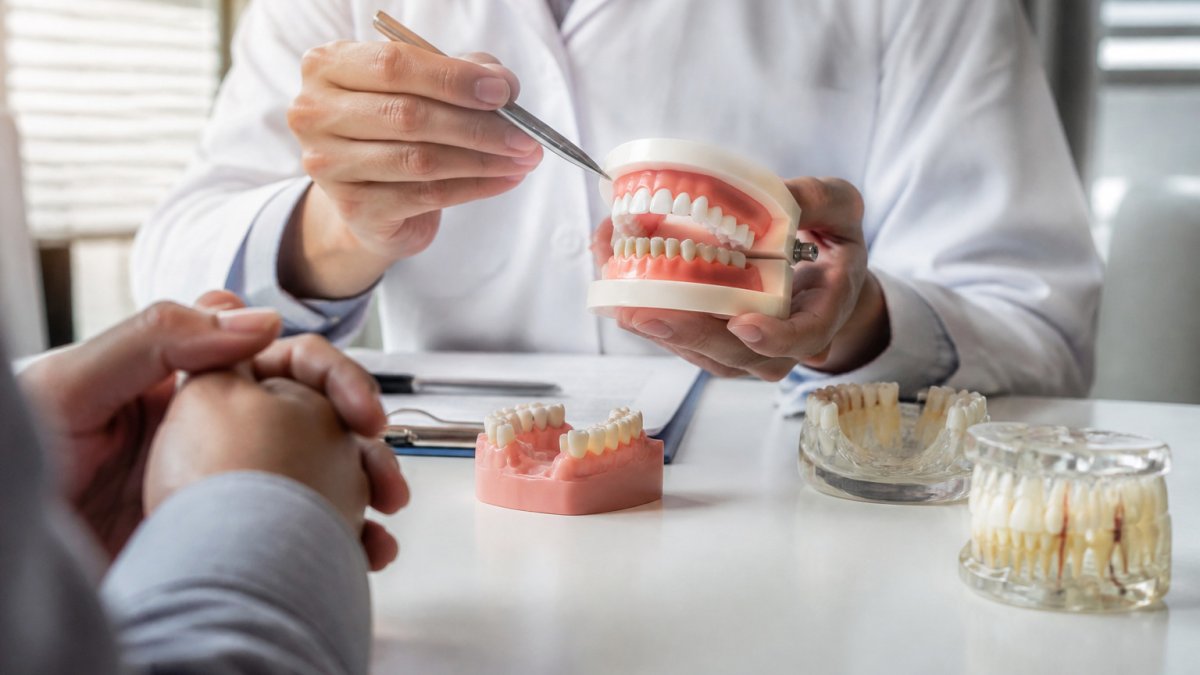
A removable partial denture replaces one or more missing teeth with a false tooth set on a framework. The framework clips onto your remaining natural teeth with metal or plastic clasps, and you take it out for cleaning and at night.

Partial dentures tend to be the most affordable option for several missing teeth, and they do not require surgery. You can see the clinic's denture treatment options to understand what fitting and choices look like there. Their main drawbacks are that they need daily removal and cleaning, and many people find them less stable than fixed bridges or implants. Some wearers also notice clasps showing when they smile.
Partial dentures may need adjustment over time as your gums and bone change, so a periodic check is worth discussing with your dentist. Ask your dentist whether a removable option fits your bite and your remaining teeth.
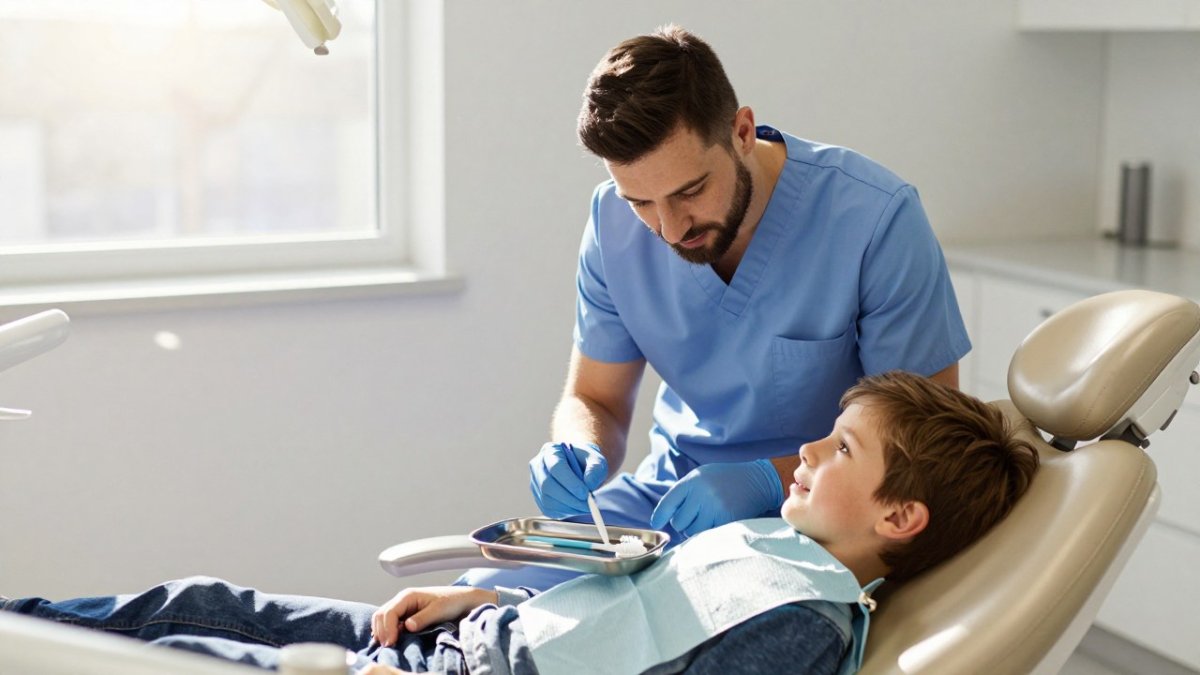
!A dental professional in a bright, calm treatment room showing a patient a removable partial denture with a warm, reassuring expression
Resin-Bonded Bridge: A Conservative Fixed Option
A resin-bonded bridge, sometimes called a Maryland bridge, is a fixed option that uses a metal or porcelain framework bonded to the back of the neighbouring teeth. Unlike a traditional bridge, it generally does not require crowning those teeth.
This makes it a conservative choice. It keeps more of your natural tooth structure intact and is often used to replace a single missing front tooth where the neighbouring teeth are healthy and well formed. Its bond is generally weaker than a traditional crown, so it is usually not recommended for high-stress areas such as back molars.
Resin-bonded bridges are not suitable for every case. Your dentist will assess the strength of the bond and the health of the supporting teeth before recommending one.
Flipper Tooth for a Missing Tooth: When It Makes Sense
A flipper is a temporary removable tooth, usually a single false tooth attached to an acrylic base. Patients often use one while waiting for a permanent solution, or as a low-cost stopgap for a missing front tooth.
Flippers are quick to make and easy to adjust, but they are not built for long-term use. They can feel bulky, may affect speech for a short time, and offer less chewing strength than a fixed or implant option. Treat a flipper as a bridge to the next step, not a final answer, unless your dentist says otherwise.
Complete and Mini Implant-Supported Options
Complete dentures replace a full arch of teeth and rest on the gums. Their stability depends heavily on the shape of your jaw, and they can lose fit as bone changes over time. Pricing depends on your situation, so ask for a written estimate that details what is included.
Mini dental implants offer a middle ground. They are smaller in diameter than standard implants, can often be placed with less invasive surgery, and are commonly used to stabilize removable dentures. They may suit patients with limited bone width, though they are not a fit for every situation.
Implant-supported options can improve the stability of a denture without the full cost and surgery of a complete implant arch. Discuss bone density and your overall health with your dentist to see which approach fits.
What Happens If You Don't Replace a Missing Tooth
Leaving a gap alone is a legitimate option, but it is not a neutral one. The changes that follow are typically gradual, which is why they are easy to underestimate. Understanding the mechanism helps you decide whether to treat, wait, or choose a replacement that protects the bone.
The bite shifts first
The tooth next to the gap can drift toward the space, and the opposing tooth, no longer meeting a partner, can over-erupt into it. Over months to years this changes how your teeth fit together. A bite that was even becomes uneven, which can make cleaning harder, raise the risk of decay and gum problems around the tilted teeth, and sometimes produce jaw-joint discomfort or clicking. These are general patterns; the timing differs from person to person.
The bone resorbs, and the mechanism matters
Jawbone is maintained by the mechanical load of chewing transmitted through tooth roots. When a tooth is lost, that load disappears from that site, and the bone responds by remodeling away, a process called resorption. Most of the loss happens in the first year, then continues more slowly. The practical consequences:
- Ridge shrinkage: the gum ridge under the gap narrows and flattens, which can make a later denture fit poorly or require grafting before an implant.
- Facial change: with several missing back teeth, the lower face can lose some vertical support over time.
- Adjacent tooth support: neighbouring teeth lose some of the bone that anchored them.
This is the strongest argument for choosing a replacement that loads the bone. A conventional bridge or a removable partial replaces the tooth but does not transmit chewing load into the bone at the gap, so resorption can continue under the pontic or the saddle. An implant, by contrast, is the only option that replaces the root and restores that load, which is why it is often described as the bone-preserving choice. That does not make it right for every patient, but it is the biological trade-off worth naming explicitly.
If you are deferring treatment, ask your dentist to note the bone height and ridge width at the gap and to re-check them at your next exam. A measured baseline is what turns 'watch it' into a real plan.
Function and confidence
Chewing may shift to one side of the mouth, which can strain the jaw joint and wear the teeth on the working side faster. Many people with a visible gap also feel self-conscious about their smile or speech, and that can affect confidence day to day. These effects are general, and their timing differs from person to person, so a dental assessment is the best way to understand your own risk, and to decide whether a temporary option, a fixed alternative, or no treatment at all is the right next step for you.
Comparing Costs, Coverage and Invasiveness
Each option trades cost, surgery and maintenance differently, and the trade-offs are easier to see when you separate them into three questions: what does it cost upfront, what will your plan actually pay, and what does your mouth go through to get there.
Upfront cost, in broad ranges
Pricing depends on your situation, the number of teeth involved and the treatment plan, so contact Pearly Curve Dentistry for a current quote. For context, see the Toronto dental bridge price guide for current local pricing. Pricing structures generally follow these patterns:
-
Resin-bonded (Maryland) bridge: typically less than a conventional crown-and-bridge because it avoids crowning the neighbours, but it is a fixed restoration and priced as one.
-
Mini implant or implant-supported denture: sits between a removable denture and a full implant arch; the implants and the attachment hardware are billed separately from the denture itself.
Ask for an itemized estimate that separates the restoration, any extractions, any bone grafting, and any lab fees. To see the direct comparison, read the bridge versus implant cost guide. That breakdown is what lets you compare two plans fairly.
How insurance usually categorizes these
Dental plans often categorize treatment differently, and the category can affect your reimbursement. Check with your plan provider about how each option is classified. Common categories include:
- Basic: exams, cleanings, fillings, and often extractions and some partial dentures.
Ask your plan provider how a resin-bonded bridge would be classified and whether timing treatment across benefit years affects your coverage before scheduling.
Ask your dentist about a pre-treatment estimate and check with your insurer about coverage before booking.
Invasiveness, ranked
From least to most invasive to your natural teeth and body:
- Flipper or removable partial: no drilling, no surgery; the trade-off is daily removal and less stability.
- Resin-bonded bridge: minimal tooth preparation (often none beyond light etching), no surgery; the trade-off is a weaker bond and limited use in back teeth.
- Conventional bridge: irreversible reshaping of the neighbouring teeth; no surgery.
- Mini implant-supported denture: a surgical procedure, but smaller diameter and often less bone grafting than standard implants.
- Standard implant or full implant arch: surgery, healing time, and a bone-volume requirement.
Pricing depends on your teeth, your bone and the treatment plan. Ask for an itemized estimate before you commit to any option.
The options differ in invasiveness, from no surgery for removable appliances to surgical placement for implants, as summarised below.
| Option | Surgery needed | Key difference |
|---|---|---|
| Flipper or removable partial | No | No drilling; removed daily |
| Resin-bonded bridge | No | Minimal tooth preparation; weaker bond |
| Conventional bridge | No | Reshapes neighbouring teeth |
| Mini implant-supported denture | Yes | Smaller diameter; often less grafting |
| Standard implant or full arch | Yes | Requires adequate bone volume |
Booking a Consultation to Choose Your Replacement Option
The best next step is a consultation. A dentist can examine your gums, bone and remaining teeth and explain which options may be realistic for you. Bring a list of questions about cost, maintenance and how each choice fits your daily life.
You can book an appointment with Pearly Curve Dentistry to talk through your choices. Writing down what matters most to you, whether that is cost, speed, or comfort, helps the conversation stay focused. Once you understand the trade-offs, the right replacement becomes much easier to see.
Frequently Asked Questions
What is the alternative to dental implants?
Common alternatives to dental implants include removable partial dentures, resin-bonded bridges and traditional fixed bridges. Each option replaces missing teeth differently. Removable partial dentures are the least invasive and usually the lowest cost, but they must be taken out for cleaning. Resin-bonded bridges avoid surgery and preserve more natural tooth structure, though they suit only some locations. Your dentist can assess your jaw, remaining teeth and bite to recommend the best fit. Pricing depends on your situation, so contact Pearly Curve Dentistry for a current quote.
Is it better to choose a bridge or an implant?
A bridge or an implant depends on the health of your neighbouring teeth, your bone density and your long-term goals. Traditional bridges require reshaping healthy adjacent teeth to hold crowns. Implants require a surgical placement but do not rely on neighbouring teeth. A resin-bonded bridge or a removable partial denture may be considered when those factors make a bridge or implant less suitable. A consultation with a qualified dentist is the best way to weigh these factors for your mouth.
Can a flipper tooth replace a missing tooth?
A flipper tooth is a temporary removable appliance, usually a partial denture made of acrylic with one or more artificial teeth. It can fill a gap while you wait for a longer-term solution, or serve as a short-term option for a single missing tooth. Because it is not fixed in place, it can move while you eat or speak and needs regular cleaning. Ask your dentist whether a flipper suits your situation and how long it can safely be worn.