 How-to
What to Look for in Dental Office Sterilization
Last Updated: November 9, 2026
Quick Summary
To know what to look for in dental office sterilization, check that instruments arrive in sealed, dated pouches opened in front of you and that staff wear fresh gloves and masks. Then ask how the practice monitors its autoclave, since mechanical, chemical, and biological monitoring together confirm each cycle actually sterilized the load.
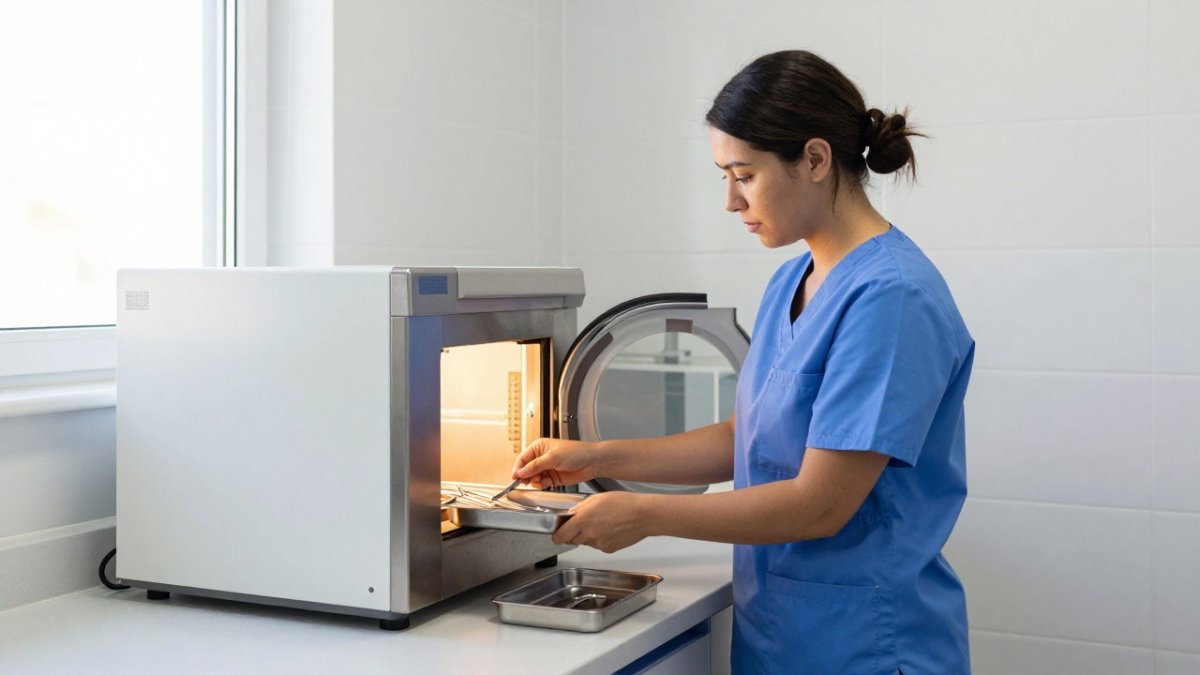
- Instruments are cleaned, often run through an ultrasonic cleaner, then sterilized in an autoclave.
- External chemical indicators confirm a pouch was processed; internal ones confirm sterilant reached the instruments.
- A biological indicator, or spore test, shows whether live spores survived a cycle after incubation.
- A compliant logbook records the date, cycle number, sterilizer identifier, readouts, and indicator results.
- A failed spore test means quarantining the load and taking the sterilizer out of service until the cause is found.
Table of Contents
- How Dental Instruments Are Sterilized: From Chairside to Sealed Pouch
- Dental Clinic Sterilization Checklist: What to Look For in the Operatory
- Dental Sterilization Monitoring: Indicators, Spore Tests, and Logbooks
- Questions to Ask a Dentist About Sterilization Without Sounding Rude
- Troubleshooting Failed Cycles and Sterilizer Maintenance
- Technology and Workflow Upgrades That Improve Sterility Assurance
- Book Your Visit and See the Sterilization Process for Yourself
- Frequently Asked Questions
How Dental Instruments Are Sterilized: From Chairside to Sealed Pouch
Knowing what to look for in dental office sterilization starts with understanding the path every instrument takes. Patients who understand this process are better placed to ask good questions. The journey has two clear stages: cleaning, then sterilization.
Cleaning and Decontamination Before Sterilization
Sterilization fails if debris stays on the instrument. Instruments are typically cleaned, then run through an ultrasonic cleaner to loosen particles from hinges and grooves.
Packaging, Loading, and the Sterilization Cycle
Clean instruments are commonly packed into a sterilization pouch or cassette, sealed and labeled. The autoclave then uses pressure, temperature, and exposure time to kill pathogens.
Dental Clinic Sterilization Checklist: What to Look For in the Operatory
A dental clinic sterilization checklist helps you spot whether a practice takes infection control seriously. You do not need clinical training to notice the basics. Watch how the room is set up before your exam begins.

Visual Clues Patients Can Check
- Instruments arrive in sealed, dated pouches, opened in front of you
- Staff wear fresh gloves and a mask for each patient
- Surfaces are wiped down between appointments
- Sharps sit in a proper container, never loose on a tray
- Handpieces look clean, with no visible debris
If you want a broader picture of quality signals beyond the operatory, our guide to signs of high quality dental care covers what else to watch for.
Dental Sterilization Monitoring: Indicators, Spore Tests, and Logbooks
Dental sterilization monitoring is the proof layer of infection control. A sealed pouch and a humming autoclave tell you nothing on their own; monitoring is how staff confirm that each cycle actually reached the pressure, temperature, and exposure time needed to kill pathogens. Three types of monitoring work together, and a practice that relies on only one is leaving a gap.
Mechanical and Chemical Indicators
Mechanical monitoring means reading the autoclave's own gauges and printouts, the pressure, temperature, and cycle-time readouts that show the machine ran as programmed. Chemical indicators are the strips, dots, or tape that change color when a cycle hits its target parameters. External chemical indicators on the outside of a pouch confirm the pouch was processed; internal chemical indicators, placed inside the pouch or cassette, confirm the sterilant reached the instruments themselves. A common pattern is to use both: an external indicator for load segregation and an internal indicator for each pack. Watch out: a color change proves the cycle conditions were met, not that the load is sterile, chemical indicators cannot detect whether live spores survived.
Biological Indicators and Spore Tests
A biological indicator, often called a spore test, is the closest thing to a direct answer. It contains a known population of highly resistant bacterial spores, commonly Geobacillus stearothermophilus for steam autoclaves, that are processed alongside a regular load. The vial is then incubated, and a passing result means no spore growth occurred, which is strong evidence the cycle achieved sterilization. Results are read after incubation and recorded before the next monitoring interval closes.
What a Compliant Logbook Contains
A sterilization logbook is only useful if it is complete and current. For each cycle, a well-run practice records the date, the cycle or load number, the sterilizer identifier, the type of cycle run, the mechanical readout (temperature, pressure, time), the chemical indicator result, and the biological indicator result with the date it was read. Failed results and the corrective action taken belong in the same record. Ask to see the logbook, and look for gaps: missing dates, blank indicator columns, or a spore-test schedule that stops for weeks at a time are the signals that matter.
How to Read the Records as a Patient
You do not need clinical training to spot a well-monitored practice. Ask three questions: how often spore tests are run, where the results are kept, and what happens when a test fails. A clinic that answers directly, shows a current log, and can describe its failed-cycle process is demonstrating sterility assurance rather than claiming it. A clinic that deflects or produces a log with obvious gaps is telling you something too.
Three types of monitoring work together to confirm each cycle actually sterilized the load.
| Monitoring type | What it shows | Key limitation |
|---|---|---|
| Mechanical | Pressure, temperature, and cycle-time readouts | Shows the machine ran as programmed |
| Chemical indicator | Color change when a cycle hits target parameters | Cannot detect whether live spores survived |
| Biological indicator (spore test) | No spore growth after incubation | Results read after incubation |
| External chemical indicator | Confirms the pouch was processed | Used for load segregation |
| Internal chemical indicator | Confirms sterilant reached the instruments | Placed inside pouch or cassette |
Questions to Ask a Dentist About Sterilization Without Sounding Rude
You can ask about sterilization politely and directly. Good practices welcome the question. Try these:
- "How do you monitor your autoclave?"
- "Can I see the spore test log?"
- "How are instruments stored between patients?"
- "What happens if a cycle fails?"
If you are weighing different types of practices, our comparison of personalized dental care vs corporate clinics explains how care standards can differ.
Troubleshooting Failed Cycles and Sterilizer Maintenance
A failed cycle is the moment sterilization monitoring earns its keep, and it is the scenario most guides skip. The response depends on which monitor failed, and the order of steps matters.
When a Chemical Indicator Fails
If an external or internal chemical indicator does not change as expected, the load is treated as unprocessed. Staff pull the load, inspect the packaging for tears or overloading, re-clean the instruments if the pouch was compromised, repackage, and rerun the cycle. The autoclave is checked for obvious causes, an overloaded chamber, a door seal that is not seating, a cycle selected at the wrong parameters. The load does not reach a patient until a repeat cycle passes.
When a Biological Indicator Fails
A positive spore test is the more serious result because it suggests live spores survived a cycle the practice believed was sterile. The standard response is to quarantine the load and any loads processed since the last passing test, re-clean and re-sterilize the affected instruments, and take the sterilizer out of service until the cause is found. Common causes include a faulty door gasket, a clogged chamber drain, incorrect packaging that blocks steam penetration, or an autoclave that needs calibration. Watch out: a practice that cannot describe this sequence in specific terms may be running cycles without biological monitoring at all.
Preventative Maintenance That Keeps Failures Rare
Routine maintenance is what makes failed cycles uncommon. Every maintenance action belongs in the same logbook as the cycle records, because a service history is part of the sterility assurance record.
What to Ask When You Want Reassurance
Ask how the practice handles a positive spore test, how long the sterilizer stays out of service, and where the corrective-action record lives. A clear, specific answer, quarantine, retest, three passes, documented, is the mark of a practice that has thought through the failure mode rather than one that hopes it never happens.
Technology and Workflow Upgrades That Improve Sterility Assurance
Newer practices track sterilization cycles digitally, logging each load automatically instead of by hand. Some autoclaves flag errors in real time, which catches problems before instruments reach a patient. Better office design helps too: a clear separation between dirty and clean zones reduces cross-contamination. These upgrades support standard precautions rather than replace them.
Book Your Visit and See the Sterilization Process for Yourself
Reading about sterilization only goes so far. Seeing it in person, and asking your questions face to face, tells you more than any checklist. We are glad to answer your questions about our infection control steps. You can learn more about us and contact us with any questions, or book an appointment to see the process firsthand.
The best way to judge a clinic's sterilization standards is to visit and ask. Pearly Curve Dentistry offers modern treatments, expert support, and comfortable care, and our team welcomes your questions about how we keep instruments safe. Get started with Pearly Curve Dentistry and book a visit to see our sterilization process for yourself.
Frequently Asked Questions
How can I tell if a dental office sterilizes its instruments properly?
Look for sealed pouches opened at chairside, a visible sterilization area with an autoclave, and staff wearing fresh gloves and masks. Ask whether the practice runs biological spore tests and keeps logbooks. In Canada, dental offices follow infection prevention and control guidance from provincial dental regulators and public health authorities. A practice that tracks dental sterilization monitoring and can show you records is a good sign.
What is the difference between cleaning, disinfecting, and sterilizing dental instruments?
Cleaning removes debris and bioburden from instruments, usually with an ultrasonic cleaner or washer-disinfector. Disinfecting reduces pathogens on surfaces but does not kill all spores. Sterilization, typically in an autoclave using steam under pressure and temperature, kills all microorganisms including spores. Each step matters: instruments cannot be effectively sterilized if they are not cleaned first, and dental sterilization monitoring confirms the cycle worked.
Are dental instruments sterilized between every patient?
Yes. Reusable instruments such as mirrors, scalers, and forceps go through cleaning and sterilization between patients. Single-use items like needles and gloves are discarded. Ask your dentist about their process for handling instruments between appointments. A clear dental clinic sterilization checklist includes bagging instruments after cleaning, sealing them before the cycle, and storing them in a dry, closed area to protect sterility.
How do dental offices check that sterilizers are working?
Offices use chemical indicators on each pouch, biological indicators (spore tests) at regular intervals, and mechanical monitoring of pressure and temperature. Results go into a logbook with the load number. If a spore test fails, the sterilizer is taken out of service and instruments from that load are reprocessed. Ask to see how dental sterilization monitoring is documented at your next visit.