 Ultimate guide
What to Expect at Your First Dental Exam
Table of Contents
- What Happens at a First Dental Appointment: A Step-by-Step Walkthrough
- How Long Does a Dental Exam Take?
- What to Bring to a Dentist Appointment
- First Visit vs. Routine Checkup vs. Cleaning: What's the Difference?
- Dental X-Rays at Your First Dental Exam: When They're Needed and How They're Kept Safe
- Questions to Ask a Dentist at Your First Visit
- Managing Dental Anxiety and Staying in Control During Your Exam
- What Happens After the Exam: Your Treatment Plan and Next Steps
- Frequently Asked Questions
Last Updated: October 5, 2026
What Happens at a First Dental Appointment: A Step-by-Step Walkthrough
A first dental exam is a comprehensive assessment of your teeth, gums, jaw, and overall oral health, typically lasting 30 to 45 minutes.
Most people worry the exam will hurt or that they'll be pressured into treatment. It's diagnostic, not treatment, and knowing the sequence removes most of the uncertainty.

Reviewing Your Medical and Dental History
Your dentist reviews your medical and dental history before anyone looks inside your mouth. This step matters more than patients expect.
Medications, chronic conditions, allergies, past surgeries, pregnancy, smoking, grinding, and clenching all affect what your dentist can safely recommend.
Be honest here. The Canadian Dental Association's patient resources notes that regular preventive visits catch problems earlier, and your dentist needs an accurate baseline to build a realistic plan.
Examining Teeth, Gums, and Soft Tissues
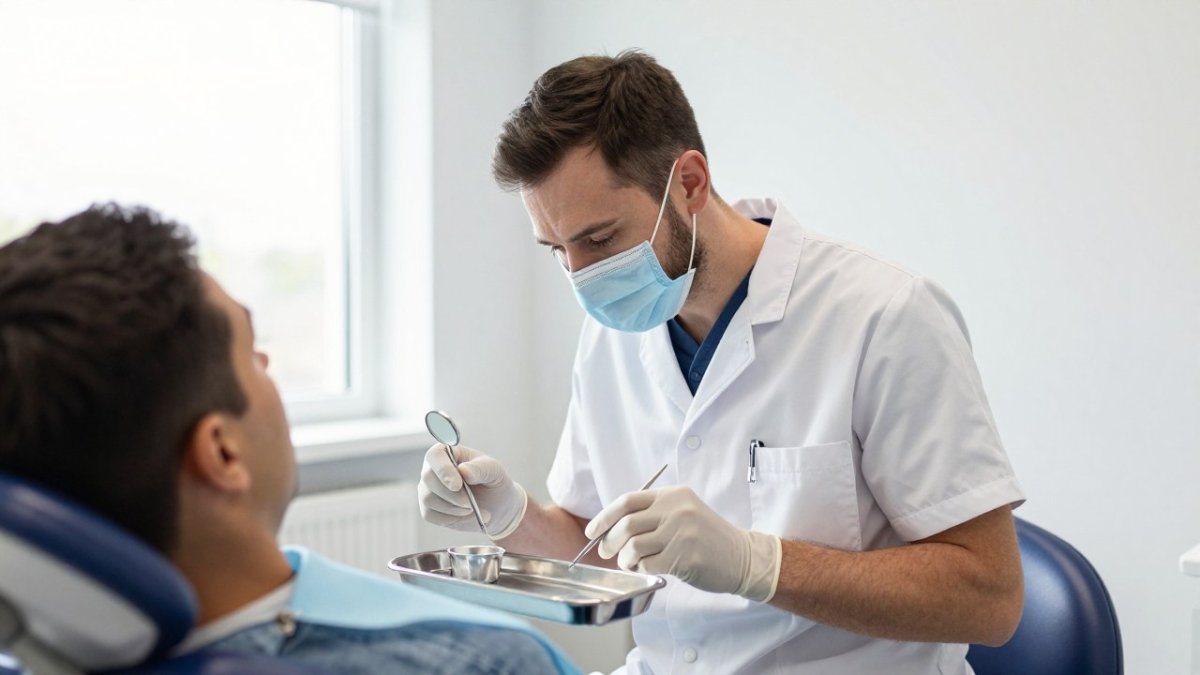
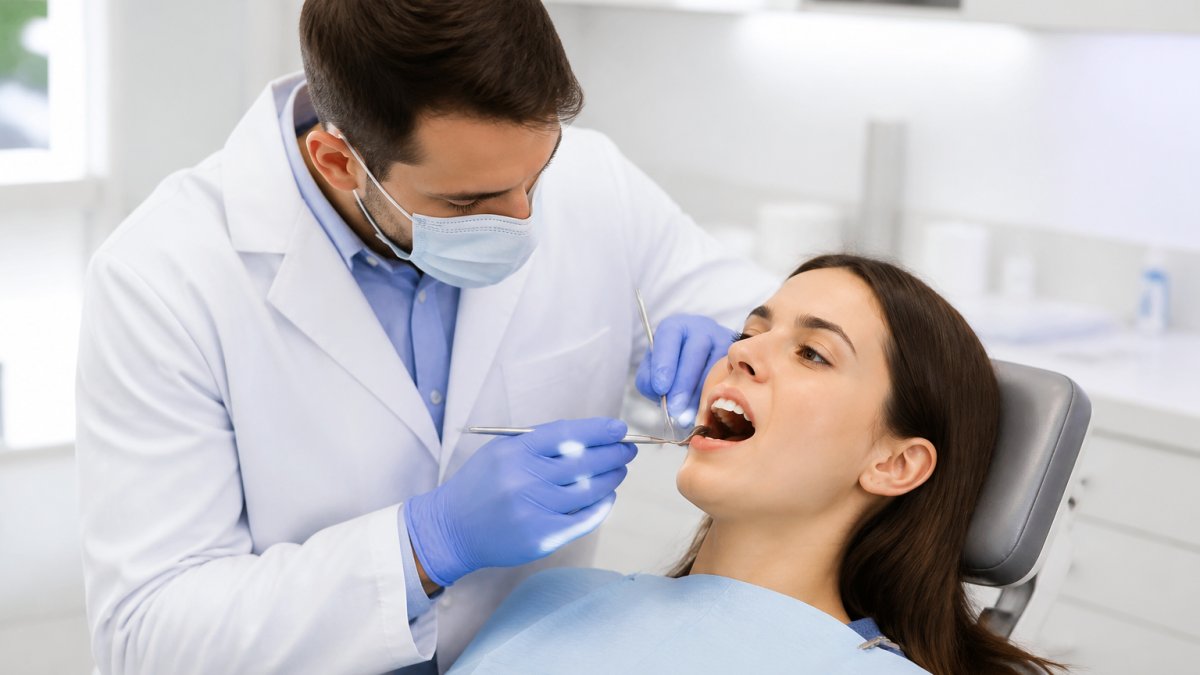
The clinical examination covers your teeth, gums, and soft tissues systematically. Your dentist checks each tooth for decay, cracks, chips, and worn surfaces, and inspects existing fillings and crowns for loose edges or failure.
Gum health gets equal attention: swelling, redness, bleeding, and pockets that suggest periodontal disease. The tongue, inner cheeks, lips, palate, and throat are checked for lumps or abnormalities; oral cancer screening takes a minute or two.
Checking Your Jaw, Bite, and Existing Dental Work
Jaw and bite assessment catches problems a single tooth won't show. Your dentist feels the jaw joints for clicking, tenderness, or restricted movement, and checks how your upper and lower teeth meet.
Crowded or crooked teeth affect cleaning, chewing, and long-term wear. Existing fillings, crowns, and bridges are evaluated for fit and condition, and supporting bone may be assessed through X-rays if needed.
How Long Does a Dental Exam Take?
A dental exam takes roughly 30 to 45 minutes for a first visit, longer than a routine checkup because of the history review and full assessment. Recall exams are usually 15 to 30 minutes.
Several factors stretch or shorten that window:
- New patient paperwork and history review: adds 10 to 15 minutes
- X-rays: adds 10 to 20 minutes if images are needed
- Complex history or anxiety: may require a slower, more gradual pace
If your appointment includes a cleaning, plan for the full block. Many practices schedule the exam and cleaning together for new patients.
What to Bring to a Dentist Appointment
Bring government-issued photo ID, insurance information, a list of current medications, and any recent dental records or X-rays from a previous provider. If you have coverage through a provincial program or a federal dental benefit, bring that documentation.
A practical preparation checklist:
- Photo ID and provincial health card
- Insurance policy number and group details
- List of medications, dosages, and allergies
First Visit vs. Routine Checkup vs. Cleaning: What's the Difference?
A first visit is a comprehensive intake and assessment. A routine checkup is a shorter recall exam monitoring changes since your last visit. A cleaning removes plaque and tartar above and below the gumline.
| Appointment Type | Typical Duration | What Happens | Frequency |
|---|---|---|---|
| First visit | 30-45 min exam | Full history, complete exam, possible X-rays | Once per practice |
| Routine checkup | 15-30 min | Focused exam, compare to previous records | Every 6-12 months |
| Cleaning | 30-45 min | Scaling, polishing, gum assessment | Every 6-12 months |
Patients often assume a checkup includes a cleaning. It often does, but not always, and some practices book them separately. Ask when you schedule.
Dental X-Rays at Your First Dental Exam: When They're Needed and How They're Kept Safe
Dental X-rays are not standard on every first exam. They're a diagnostic tool your dentist reaches for when a visual exam and probe can't answer a specific question. The decision is clinical and should be explained before the sensor goes in your mouth.
How Your Dentist Decides Whether You Need Images
Your dentist typically weighs four things before ordering any image:
- Your symptoms and visible findings. A dark spot on a biting surface may be visible, but decay between touching teeth usually isn't. A swollen gum, loose crown, or pain when biting down all point toward imaging.
- Your dental history. Someone with older amalgam fillings, crowns, or root canals needs a different baseline than someone with mostly virgin teeth. Previous decay strongly predicts future decay.
- Time since your last images. If you had bitewings or a panoramic image elsewhere within the last year or two, bring the files or ask the previous office to forward them. Your dentist may read those instead of exposing you again.
If you're unsure why an image is recommended, ask: "What are you looking for, and would the answer change what we do today?" A reasonable answer is specific; a vague one is worth pushing on.
The Types of Images You Might Hear About
You don't need to memorize these, but the names help you follow the conversation:
- Bitewing X-rays. Small images showing the crowns of upper and lower back teeth together. The workhorse for finding decay between teeth and checking bone height between roots.
- Periapical X-rays. A close-up of one or two teeth from crown to root tip. Used when a specific tooth is the problem, or to check a root canal or implant.
- Panoramic X-ray. One image capturing the whole upper and lower jaw, sinuses, and temporomandibular joints. Often taken once as a baseline, or when wisdom teeth, impacted teeth, or jaw issues are a concern.
How Safety Is Managed in Practice
Dental radiography uses low levels of ionizing radiation, and any exposure should be justified by expected benefit and kept as low as reasonably achievable (pubmed.ncbi.nlm.nih.gov). In practice, expect:
- Lead apron and thyroid collar. The thyroid collar especially matters for children and younger adults.
- The fastest image receptor that fits the task. Digital sensors and phosphor plates require less exposure than older film.
- Collimation. The beam is narrowed to the area of interest, not the whole face.
If you're pregnant or might be, tell the team before any imaging. Most dentists defer non-urgent images until after pregnancy; when imaging is genuinely needed, the apron, collar, and narrowed beam are used. An untreated dental infection is its own risk, so the conversation is about timing and necessity, not a blanket no.
If You Have Recent Images From Another Provider
Bring them. A copy of your last bitewings or panoramic image, ideally as a digital file or forwarded email, saves time and exposure. Ask the previous practice to send them before your appointment. If the images are old or the area of concern has changed, your dentist may still recommend a new set, a reasonable call to make together.
Questions to Ask a Dentist at Your First Visit
Ask what your dentist found, what it means, and what your options are. A good first visit ends with you understanding your own mouth, not just a treatment list.
Bring these questions:
- What did you find today, and which of those findings need treatment now?
- Which findings can we monitor instead of treating immediately?
- What are my options, and what happens if I wait?
If a dentist can't explain a recommendation in plain language, notice that. You're entitled to a clear answer before agreeing to anything.
Managing Dental Anxiety and Staying in Control During Your Exam
Dental anxiety is common enough that most practices have a routine for it, but the routine only works if you tell them before you're in the chair. Treat the appointment as a negotiation you're allowed to shape, you're not a passive recipient of a procedure.
Say It When You Book, Not When You Sit Down
When you call to schedule, mention that you're anxious. That single sentence changes how the front desk and clinician prepare, a longer first appointment, a quieter morning slot, or a note in your chart the hygienist reads before you arrive. It also gives you permission to ask for things you might otherwise feel awkward requesting.
Concrete Ways to Stay in Control
Specific, testable moves, not vague reassurance:
- Agree on a stop signal before anything starts. A raised hand, a tap on the armrest, or squeezing a stress ball. Confirm the clinician will stop immediately when you use it.
- Ask for a running commentary. "Tell me what you are about to do before you do it." Knowing the next step removes the startle response, often the hardest part.
- Request a mirror. Some patients feel more in control seeing what's happening; others find it worse. Try it once and decide.
Scripts You Can Use Word for Word
If you're not sure how to raise something, borrow these:
- "I have dental anxiety. Can we agree on a hand signal so I can pause things?"
- "I would like you to explain each step before you do it."
- "I need a break. Can we stop for two minutes?"
None of these are unreasonable. A practice that reacts poorly is telling you something useful.
Accommodations and Sedation Options Worth Asking About
If standard comfort measures aren't enough, options exist, and asking is normal:
- Topical anesthetic before injections. A gel applied to the gum before a needle reduces the pinch.
- Numbing without epinephrine. Some patients are sensitive to the adrenaline-like component in standard local anesthetic. A different formulation may be available.
- Nitrous oxide (laughing gas). Inhaled sedation that works quickly and wears off within minutes; you stay conscious and can talk. Not suitable for everyone, and not covered by most provincial health plans, so ask about the fee.
If you may want sedation, raise it at booking. It affects appointment length, who is scheduled, and whether you need a driver.
Sensory Sensitivities and Neurodivergent Patients
If you're autistic, have ADHD, or have sensory processing differences, the standard dental environment can be genuinely overwhelming. Accommodations many practices can provide:
- A quiet room or less busy time slot.
- Sunglasses or an eye mask to block the overhead light.
- A weighted blanket or lap pad if deep pressure calms you.
Ask specifically. Most cost the practice nothing and are easy to arrange with notice.
What Happens After the Exam: Your Treatment Plan and Next Steps
After the exam, your dentist summarizes findings and presents a treatment plan.
A well-built plan has three tiers: treatment needed now, treatment to schedule in coming months, and areas to watch at your next visit.
At Pearly Curve Dentistry, we walk through the plan with you, answer questions before you leave the chair, and only recommend treatment we'd recommend for our own families.
Frequently Asked Questions
What happens during your first dental exam?
A first dental exam usually starts with a review of your medical and dental history, followed by a thorough examination of your teeth, gums, tongue, jaw, and bite. The dentist also checks any existing fillings or crowns and may take X-rays if needed. You'll typically finish with a discussion of your oral health, preventive care advice, and a treatment plan if anything needs attention. The whole appointment is designed to build a clear picture of your mouth, not to rush you into treatment.
How long does a first dental appointment take?
Most first dental appointments take about 30 to 45 minutes, though this can run longer if you need X-rays or a cleaning on the same day. If it has been several years since your last visit, expect closer to an hour. Arriving 10 to 15 minutes early to complete new-patient forms helps the clinical portion stay on schedule. If you have dental anxiety, let the clinic know when you book so they can allow extra time.
What should you bring to your first dental appointment?
Bring a list of any medications you take, including dosages, plus the names of your doctor and any specialists. If you have dental insurance, bring your policy information. It also helps to note any recent health changes, allergies, or past dental work. If you've had X-rays taken elsewhere in the past year, ask for them to be transferred. Writing down your questions beforehand means you won't forget them once you're in the chair.
Do you get your teeth cleaned at your first dental exam?
Not always. Some clinics combine the exam and a cleaning in one visit, while others schedule the cleaning separately after the dentist has reviewed your X-rays and gum health. If you have signs of gum disease or heavy tartar buildup, the dentist may recommend a deeper cleaning rather than a standard one. Ask when you book whether your first appointment includes a cleaning so you can plan accordingly.
Will you need X-rays at your first dental visit?
X-rays are often recommended at a first visit because they show decay between teeth, bone levels, and issues that aren't visible to the eye. The decision depends on your age, your dental history, and whether you have recent images from another clinic. Dental offices follow radiation protection principles, using the lowest dose needed and shielding where appropriate. If you're pregnant or concerned about exposure, tell your dentist so they can adjust the approach.
What should you avoid doing before going to the dentist?
Avoid heavy meals right before your appointment, especially if you're prone to gagging. Skip alcohol and tobacco on the day of your visit, as both can affect your gums and breath. Don't brush so aggressively that your gums bleed, since that makes it harder for the dentist to assess your gum health accurately. If you're anxious, avoid caffeine beforehand. Normal brushing and flossing are fine and actually help the exam go smoothly.
What can a dentist tell by looking in your mouth?
A dentist can spot tooth decay, cavities, worn fillings, cracked teeth, and gum inflammation during an oral examination. They also check for swelling, lumps, or bumps on your tongue, cheeks, and soft tissues, which can signal problems needing further review. Your jaw and bite are assessed for alignment issues, and crowded or crooked teeth are noted. In some cases, changes in the mouth reflect broader health conditions, which is why regular exams matter.