 how-to
Modern Dental Techniques for Comfort: 2026 Guide
Table of Contents
- How Modern Dental Techniques for Comfort Change the Chairside Experience
- Managing Dental Anxiety: What Actually Helps in Practice
- Sedation Dentistry Options: Nitrous Oxide to Oral Conscious Sedation
- Minimally Invasive Dental Procedures That Reduce Discomfort
- Digital Imaging and Diagnostic Accuracy: X-Rays, Intraoral Cameras
- Post-Procedure Recovery Comfort: What to Expect
- Cost-Benefit Analysis of Modern Dental Technology
- Frequently Asked Questions
Last Updated: September 21, 2026
How Modern Dental Techniques for Comfort Change the Chairside Experience
Modern dental techniques for comfort have changed what a trip to the dentist feels like. Today's care leans on quieter tools, gentler freezing, and technology that shortens appointments.
The old model asked patients to tough it out; the new one asks how you feel, then adjusts. That shift matters most for people with dental anxiety, who often delay care for years. This guide breaks down the techniques that actually reduce discomfort.
Below, we cover what each technique does, who it suits, and where it falls short.
Managing Dental Anxiety: What Actually Helps in Practice
Managing dental anxiety starts with being believed, not rushed. Treating anxiety as something to push through backfires; slow down, explain each step, and give the patient control.
Anxiety is physical, not just mental. A racing heart and tense jaw make treatment harder for everyone, so the first job is settling the body.
A few things help right away:
- A clear signal, like a raised hand, to pause at any moment
- A short walkthrough of the tools before they're used
- Noise-canceling headphones and a calm, quiet room
- Appointments booked at less busy times
The Canadian Dental Association's patient resources notes that open communication about fear helps patients and dentists plan care together. If you've avoided care for years, say so at booking. That one sentence changes how the visit runs.
Sensory-Friendly Dental Environments
Sensory-friendly dental environments cut down on the sights, sounds, and smells that trigger stress, especially for patients with ADHD or autism.
Simple changes help a lot:
- Softer lighting instead of harsh overhead lamps
- Quieter handpieces and suction units
- Unscented products in the treatment room
- A weighted blanket or a familiar item from home
These aren't extras, they're the difference between showing up and canceling for the fifth time.
Interactive Patient Education Tools
Interactive patient education tools let you see what's happening in your own mouth: an intraoral camera shows your teeth in real time, and a digital scan shows your bite.
This matters for trust. When you can see the crack in a tooth or the gap in your gums, a recommended treatment makes sense.
Sedation Dentistry Options: Nitrous Oxide to Oral Conscious Sedation
Sedation dentistry options range from mild to moderate, and the right one depends on your anxiety level, health history, and the work being done. The goal is never to put you to sleep, it is to lower your guard enough that treatment can proceed calmly and safely.
Nitrous Oxide: The Lightest Option
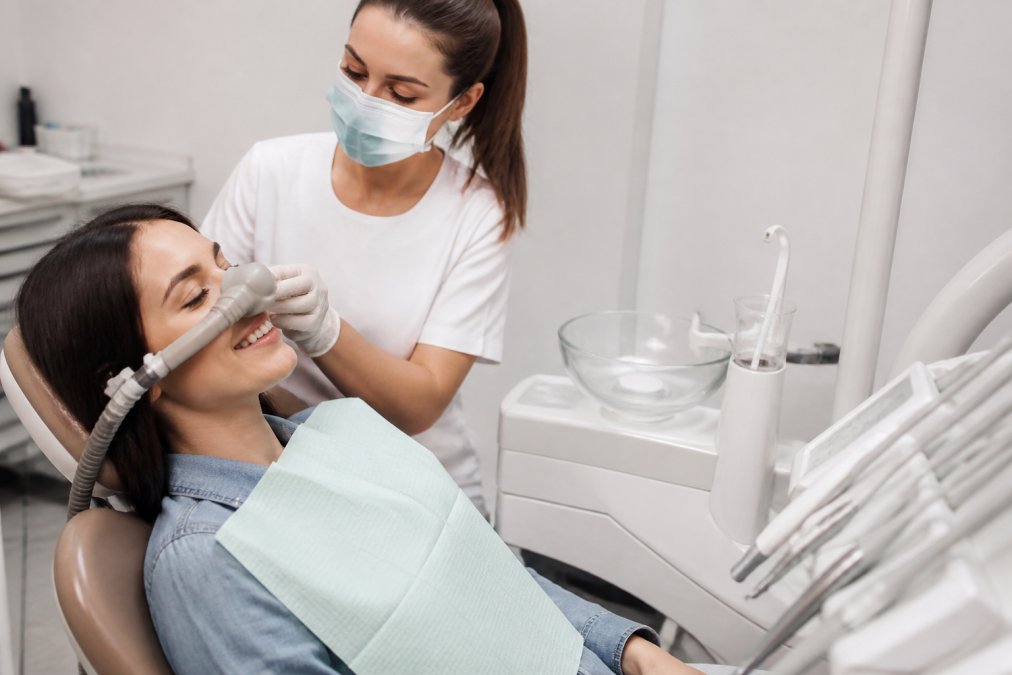
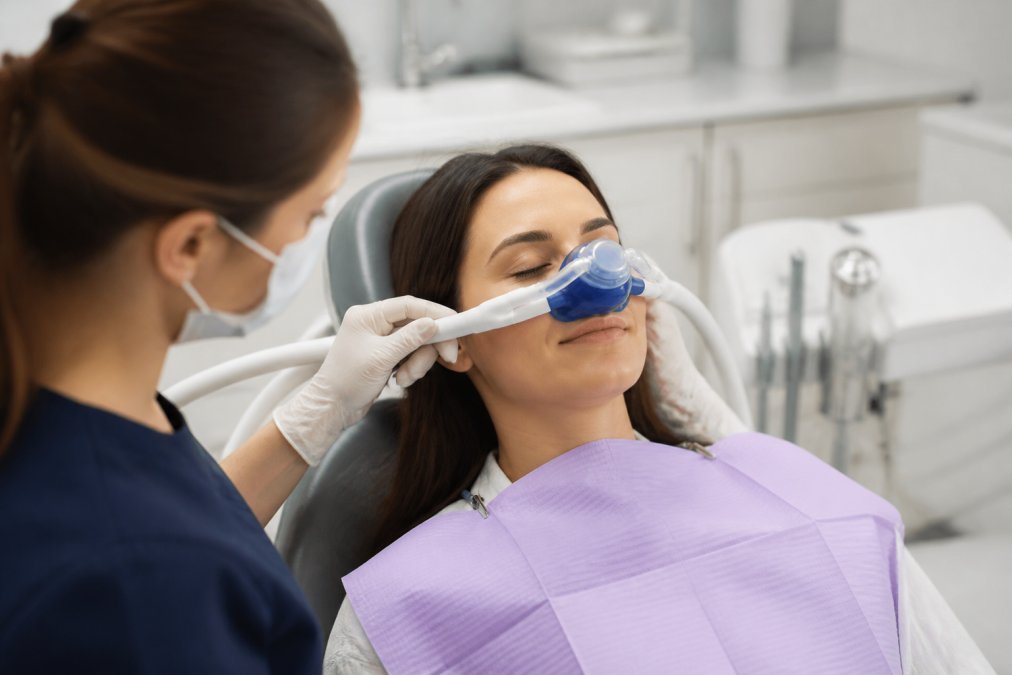
Nitrous oxide, or laughing gas, is inhaled through a small mask over your nose. You stay fully awake and can respond to your dentist the whole time. Effects peak within minutes and fade within minutes once the mask comes off, so you can usually drive yourself home.
Oral Conscious Sedation: Deeper Relaxation
Oral conscious sedation uses a pill taken about an hour before your visit. You remain awake but deeply relaxed, and most people remember little afterward. The trade-off is recovery: you'll need a ride home, someone to stay with you for several hours, and no driving or important decisions for the rest of the day.
How the Options Compare
| Option | Awareness | Onset | Recovery | Best For |
|---|---|---|---|---|
| Nitrous oxide | Awake, relaxed | Minutes | Minutes | Mild anxiety, short visits |
| Oral conscious sedation | Drowsy, relaxed | About an hour | Several hours | Moderate anxiety, longer work |
| Anesthesia-free care | Fully awake | None | None | Routine cleanings, small fillings |
What to Tell Your Dentist First
Sedation is safe for most people, but a few conditions change the plan. Tell your dentist if you:
- Have a heart or lung condition
- Take medications for blood pressure, anxiety, or sleep
- Are pregnant or breastfeeding
- Have sleep apnea or use a CPAP machine
- Have had a bad reaction to sedation before
A Note on Cost and Coverage
Sedation is often billed separately, and coverage varies by plan. Nitrous is usually least expensive; oral conscious sedation costs more due to the prescription, longer appointment, and monitoring. Ask for a written estimate before the visit, and if cost is a barrier, say so, many clinics can suggest a phased or lighter option that still keeps you comfortable.
Minimally Invasive Dental Procedures That Reduce Discomfort
Minimally invasive dental procedures remove less tooth structure, meaning less drilling, less freezing, and faster healing. The goal: fix the problem while keeping as much natural tooth as possible.
Laser Dentistry Benefits and Vibration Reduction
Laser dentistry benefits include less bleeding, less need for freezing, and no high-pitched drill for many soft-tissue jobs. Lasers treat gums, remove small amounts of tissue, and help with some fillings.
Same-Day Crowns and CAD/CAM Technology
Same-day crowns use CAD/CAM technology to design and mill a crown in the office, skipping the temporary crown and second visit.
The process works like this:
- The dentist scans your tooth with a digital wand
- Software designs the crown on screen
- A milling machine carves it from a ceramic block
- The dentist bonds it in place
Digital design also improves bonding precision.
Digital Imaging and Diagnostic Accuracy: X-Rays, Intraoral Cameras
Digital imaging has cut radiation and wait times, but the bigger shift is psychological. Seeing your own teeth on a screen shrinks the unknown, which matters more for comfort than most people realize.
Digital Radiography: Less Radiation, Faster Answers
Digital radiography uses a sensor instead of film, capturing images in seconds and sending them straight to a monitor. Because the sensor is more sensitive, the radiation dose is substantially lower. Your dentist can also zoom, adjust contrast, and compare images over time.
Intraoral Cameras: Your Mouth on Screen
An intraoral camera is a small wand with a light and lens. It shows a live view of your teeth and gums on a chairside monitor. Your dentist can freeze a frame, zoom in on a single tooth, and show you exactly what they see.
What Advanced Imaging Catches Earlier
- Cavities show up when they're smaller and easier to fix
- Cracks and gum problems are easier to spot before they spread
- Bone levels around teeth can be tracked over time
- Impacted or misaligned teeth are visible before they cause pain
Better diagnostic accuracy means fewer surprises: catching problems while they're small usually means simpler treatment and less time in the chair.
Sharing and Records
Digital images can be emailed or transferred between offices if you move or see a specialist, avoiding repeat X-rays and mailing delays. They take up no physical space, so your full history is available at every visit.
The Comfort Payoff
The Canadian Agency for Drugs and Technologies in Health reviews dental imaging tools and their role in care planning. It's a useful starting point if you want to understand the technology behind your visit.
Post-Procedure Recovery Comfort: What to Expect
Post-procedure recovery comfort gets far less attention than the procedure itself, yet it's where patients spend most of their time. What you do in the first 24 hours shapes the next few days.
General tips that help most people:
- Use an ice pack for 15 minutes at a time on the first day
- Stick to soft, cool foods for 24 hours
- Skip straws after an extraction
- Keep your head raised on a couple of pillows
- Avoid hot drinks and alcohol for the first day
Cost-Benefit Analysis of Modern Dental Technology
The cost-benefit analysis of modern dental technology often favors the newer option, even when the upfront price looks higher.
Questions worth asking before you agree to any treatment:
- What does this fix, and what happens if I wait?
- Are there simpler options that would work?
- What's included in the quoted price?
- Does my plan cover any of it?
Frequently Asked Questions
What are the latest advancements in painless dental procedures?
Modern techniques focus on reducing discomfort through laser dentistry, which often eliminates the need for drills, and minimally invasive procedures that preserve more natural tooth structure. Computer-controlled anesthesia delivers numbing agents gradually. Vibration reduction tools and same-day crowns using CAD/CAM technology also cut down on multiple visits and extended chair time. These advances mean many routine treatments now involve less noise, fewer needles, and faster recovery.
How can I manage dental anxiety during a routine checkup?
Start by telling your dental team about your anxiety before the appointment. Many practices offer noise-canceling headphones, weighted blankets, or hand signals to pause treatment. Nitrous oxide provides mild relaxation that wears off quickly. Bringing a supportive friend or scheduling a morning visit when you're less rushed can also help. If anxiety has kept you away for years, ask about a no-treatment meet-and-greet visit first. Managing dental anxiety is a skill built over time with a team you trust.
What is digital dentistry and how does it improve patient comfort?
Digital dentistry replaces traditional impressions and film X-rays with intraoral cameras, digital radiography, and CAD/CAM scanning. These tools are faster, often more comfortable, and reduce the gag reflex caused by bulky impression trays. Digital X-rays use lower radiation doses than film. Same-day crowns are possible because the scan feeds directly into milling machines. The result is fewer appointments, less chair time, and better diagnostic accuracy without the mess of traditional materials.
How do dental clinics accommodate patients with sensory sensitivities?
Sensory-friendly dental environments reduce bright lights, loud noises, and strong smells. Many practices offer silent handpieces, dimmable lighting, and unscented products. Some provide a quiet room for breaks or allow patients to wear sunglasses and earplugs. Weighted lap pads and fidget tools can help with self-regulation. If you have sensory needs, call ahead to discuss what adjustments are possible. A supportive team will work with you to make the visit more tolerable.