 how-to
Getting Dentures Without Feeling Ashamed: A 2026 Guide
Table of Contents
- Why Dentures Are a Medical Necessity, Not a Failure
- Reframing Your Feelings About Getting Dentures
- Adjusting to New Dentures: What the First Weeks Really Feel Like
- How to Talk With Dentures: Practice That Builds Confidence
- Social Scripts: What to Say When People Notice
- Dating and Intimacy: Navigating Disclosure on Your Terms
- Modern Denture Technology Benefits That Change the Experience
- Conclusion: Your Smile Story Is Not Over
- Frequently Asked Questions
Last Updated: September 6, 2026
Why Dentures Are a Medical Necessity, Not a Failure
Tooth loss is a health condition, not a character flaw, and replacing missing teeth with dentures is a medically necessary dental restoration. When teeth are lost, the jawbone begins to resorb, facial muscles lose their support, and chewing efficiency drops, which can lead to poor nutrition (the NIH). The psychological weight of this is real, but the clinical reality is clearer: dentures restore function, protect remaining oral health, and preserve the structure of your face.
Many people delay treatment because they fear judgment, yet the dental community views tooth loss as a common health event. This guide from Pearly Curve Dentistry walks through the emotional and practical side of getting dentures, from the first weeks of adjustment to social situations. Many patients navigate this dental transition, and the shame they carry is almost always heavier than the clinical reality.
Getting dentures is not giving up on your smile. It is choosing a functional, long-term solution that supports your overall well-being. The real failure would be letting stigma prevent you from seeking care that improves your health and quality of life.
Reframing Your Feelings About Getting Dentures
The shame you feel about getting dentures is learned, not innate. Society has attached dentures to aging and decline, but the truth is that people of all ages experience tooth loss for many reasons, including injury, genetics, and gum disease. When you separate the prosthetic from the stigma, you can see it for what it is: a tool that restores your ability to eat, speak, and smile with confidence.
A common mistake is assuming that everyone will notice or care. In practice, most people cannot tell you are wearing dentures unless you tell them. The adjustment phase is as much about your own self-perception as it is about the physical fit.
Your oral health directly affects your systemic health, so choosing dentures is a proactive decision. Self-consciousness fades when you focus on the functional improvement you have gained rather than the perceived loss.
Adjusting to New Dentures: What the First Weeks Really Feel Like
The first weeks with new dentures involve a genuine learning curve, and most new wearers feel awkward, bulky, and unsure of themselves. This is normal. Your mouth needs time to adapt to the prosthetic, and your facial muscles must relearn how to hold it in place. Expect some soreness and increased saliva flow initially, which typically settles as your gum tissue adjusts.
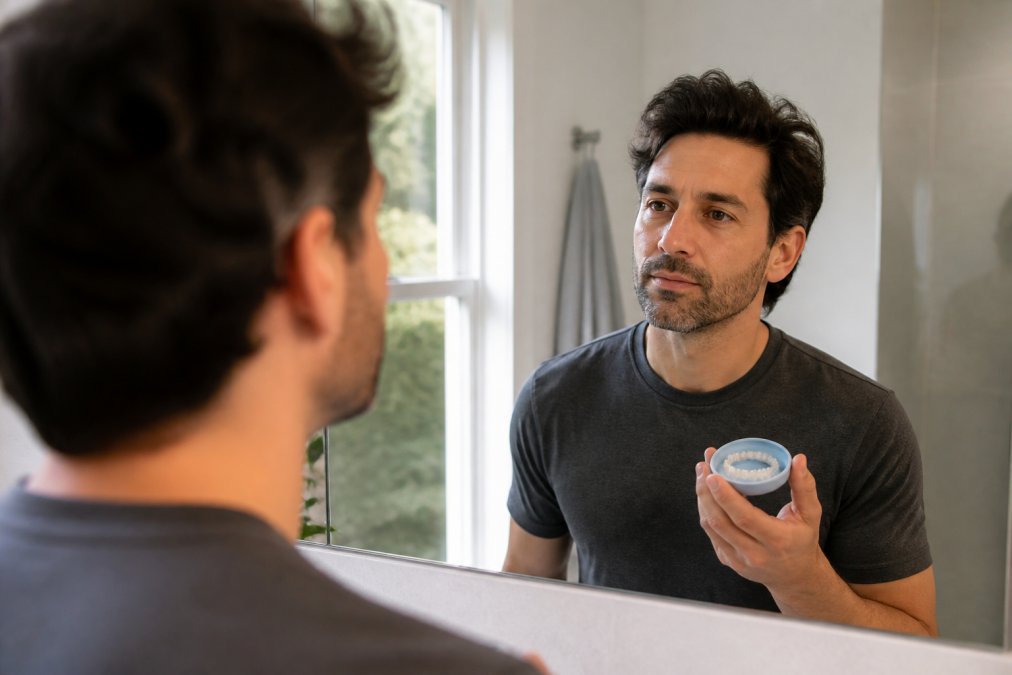
Understanding the timeline helps set realistic expectations. Most practitioners describe the first 72 hours as the most intense, when sore spots are most likely to develop. By day four or five, the initial swelling subsides and your tongue stops treating the denture as a foreign object. The second week is when most people notice a significant shift, eating becomes less deliberate, and speech sounds less slurred. By the end of the first month, the denture should feel like a familiar part of your mouth, not an appliance you are wearing.
Managing Sore Spots and Discomfort
Sore spots are a normal part of the process, but they are also a signal. If a specific area is persistently painful, it means the denture is rubbing against the gum tissue. Do not try to adjust the denture yourself, filing or bending it at home can cause irreversible damage. Instead, book a reline or adjustment appointment. Most dental offices expect this and will see you for a quick check. A common pattern is that you will need two or three adjustments in the first few weeks as your gums settle into their final shape.
For general discomfort, warm saltwater rinses (one teaspoon of salt in a cup of warm water) can soothe irritated tissue. Over-the-counter oral pain relievers can help during the first few days, but follow the dosing instructions on the label. If you develop persistent bleeding or swelling that does not improve, contact your dental office.
Eating: A Step-by-Step Progression
The first 24 hours are not about eating, they are about letting the denture settle. Stick to lukewarm liquids like broth or smoothies. Cold foods like yogurt or pudding are also gentle on tender gums. On day two or three, introduce soft, mashable foods: scrambled eggs, oatmeal, mashed potatoes, and finely flaked fish. Cut everything into small, bite-sized pieces.
By the end of the first week, you can start testing slightly firmer foods. The key technique is to chew on both sides of your mouth simultaneously. This balances the pressure and prevents the denture from tipping. Avoid biting into foods with your front teeth, apples, corn on the cob, and sandwiches are common culprits for dislodging a new denture. Instead, cut them into pieces and chew with your molars.
The Role of Denture Adhesive
Denture adhesive is a tool, not a crutch. During the first few weeks, a small amount of adhesive can provide extra stability while your muscles learn to hold the denture in place. Apply a thin strip or a few dots, more is not better. Excess adhesive can ooze out and cause gagging or a messy feel. As your fit improves, you will likely need less. By the end of the first month, many wearers find they only need adhesive for active situations like public speaking or a long meal.
When to Remove Your Dentures
Wearing your dentures for at least eight hours a day during the adjustment phase is essential. This gives your oral tissues time to adapt to the new shape and helps you build muscle memory. At night, remove them and store them in water or a denture-cleaning solution (the American Dental Association). This nightly break allows your gums to recover and reduces the risk of fungal infections like denture stomatitis (peer-reviewed research).
Many patients report that the second week is significantly easier than the first. By the end of the first month, most people have found their rhythm with eating and speaking. Patience during this dental transition is not optional, it is essential.
How to Talk With Dentures: Practice That Builds Confidence
Speech articulation with new dentures requires deliberate practice, and your mouth needs to relearn how to form certain sounds. The most common trouble spots are sounds like "s," "f," and "th," which rely on your tongue touching your teeth. Reading aloud for ten minutes a day speeds up this process considerably.
Start with these articulation practice steps:
- Read a newspaper or book aloud for five to ten minutes, slowly and deliberately
- Repeat tricky words that contain "s" and "f" sounds, such as "sixty-six" and "fifty-five"
- Speak on the phone with a trusted friend, since you cannot rely on visual cues
- Sing along to songs you know well to build muscle memory
- Practice in front of a mirror to observe your mouth movements
Many patients find that denture adhesive helps with stability during the learning phase, which reduces the clicking sounds that cause self-consciousness. As your confidence grows, you will likely need less adhesive. The goal is to reach a point where speaking feels automatic, and that comes from repetition, not from avoiding conversation.
Social Scripts: What to Say When People Notice
You do not owe anyone an explanation for your dental health, but having a prepared response can ease your social anxiety. A simple, confident statement like "I got dentures a few months ago and I am really happy with how natural they look" shuts down curiosity without inviting further questions.
Most people who notice will not ask directly, they will simply register that your smile looks different. For those who do comment, you can use a light, matter-of-fact tone that signals the topic is not sensitive. Practicing your script at home makes it feel natural when you need it in public.
The more you treat your dentures as a routine part of your life, the more others will follow your lead. Your comfort sets the tone for the conversation.
Dating and Intimacy: Navigating Disclosure on Your Terms
Deciding when and how to tell a romantic partner about your dentures is deeply personal, and there is no single right answer. Many younger denture wearers worry about this more than any other aspect of the experience. The key is to remember that disclosure is your choice, and you can time it based on your comfort level and the depth of the relationship.
If you choose to disclose, frame it as part of your health history rather than a dramatic reveal. A statement like "I have dentures, they are just part of my dental care routine now" normalizes the information. Most partners respond with curiosity or indifference, and the ones who react poorly were not worth your time anyway.
Intimacy itself is rarely affected by dentures. Many wearers remove them before kissing or other close contact, and this is completely normal. Communicate with your partner about what feels comfortable for you, and remember that confidence and connection come from who you are, not what is in your mouth.
Modern Denture Technology Benefits That Change the Experience
Modern denture technology benefits extend far beyond aesthetics, and today's options are more comfortable and natural-looking than what previous generations wore. Digital scanning, improved materials, and better fitting techniques have reduced the bulkiness and discomfort that gave dentures their bad reputation.
Natural-looking dentures now mimic the translucency and variation of real gum tissue and teeth. Modern materials are more durable and stain-resistant, which supports your oral hygiene routine and long-term comfort. Some patients are candidates for implant-supported options, which anchor the prosthetic to the jawbone for greater stability, though this depends on individual bone density and health.
The psychological well-being benefit of a functional, natural-looking smile is substantial. When you feel good about how your teeth look, you smile more, and that changes how others perceive you and how you perceive yourself.
Conclusion: Your Smile Story Is Not Over
Getting dentures without feeling ashamed starts with recognizing that you are making a health decision, not admitting defeat. The adjustment phase passes, the social anxiety fades, and what remains is a functional smile that supports your oral health and confidence. If you are in the early stages of this dental transition, remember that millions of people have walked this path before you, and most will tell you the same thing: the relief of eating and smiling comfortably outweighs the temporary awkwardness.
At Pearly Curve Dentistry, we combine modern treatments with expert support to help every patient achieve a healthier smile. Our team understands the emotional side of tooth loss and provides comfortable, personalized care without judgment. Whether you are exploring dentures for the first time or adjusting to a recent fitting, we are here to support your long-term oral health.
Frequently Asked Questions
How do I tell people I have dentures?
You do not owe anyone an explanation. If you choose to share, keep it simple and matter-of-fact. A phrase like "I had some dental problems and got dentures, best decision I made for my health" sets a confident tone. Practicing a short script in advance reduces anxiety. Remember, most people are focused on themselves and will not scrutinize your smile as closely as you do.
Does anyone regret getting dentures?
Some people struggle during the initial adjustment phase, which can feel like regret. The first weeks involve new sensations, minor speech changes, and eating adjustments. This is temporary. Most people find that once they adapt, the relief from chronic pain and the confidence from a restored smile outweigh the early discomfort. If you are struggling, talk to your dentist about adjustments rather than giving up.
How hard are dentures to wear?
The first few days feel foreign, like wearing new shoes. You may notice increased saliva, minor sore spots, or a feeling of fullness. Chewing efficiency improves gradually as your facial muscles and gum tissue adapt. Eating soft foods in small pieces initially helps. Your dentist will schedule follow-up visits to adjust the fit, which resolves most discomfort. By the one-month mark, most people report feeling natural.
Will dentures look natural to other people?
Modern denture technology benefits include materials and tooth shades that closely mimic natural teeth and gum tissue. A skilled dentist considers your facial structure, skin tone, and smile aesthetics to create a natural-looking result. Most people will not notice you wear dentures unless you tell them. The most noticeable change is often your improved confidence when you smile.
Book an appointment with Pearly Curve Dentistry and take the next step toward a smile you feel good about.