 listicle
Is Fluoride Toothpaste Safe for Toddlers? A 2026 Review
Table of Contents
- How We Evaluated Fluoride Toothpaste for Toddlers
- Fluoride Toothpaste for Toddlers: Quick Comparison
- Canadian Dental Association Fluoride Guidelines for Toddlers
- How to Brush Toddler Teeth With Fluoride Toothpaste
- Signs of Dental Fluorosis in Children and How to Prevent It
- Sensory-Friendly Fluoride Options for Resistant Toddlers
- When to Book a Pediatric Dental Visit
- Frequently Asked Questions
Last Updated: September 25, 2026
How We Evaluated Fluoride Toothpaste for Toddlers
This review examines fluoride toothpaste for toddlers on what matters to parents: safety, dose control, and whether a child will tolerate it long enough to work. Fluoride toothpaste for toddlers is safe when the amount is controlled and a parent supervises.
Selection Criteria
Each product was evaluated on fluoride concentration and labelling clarity, flavor and texture acceptance, ingredient transparency, and how easily a parent can dispense a smear or pea-sized amount. Availability in Canadian pharmacies and grocery stores also counted.
Fluoride Toothpaste for Toddlers: Quick Comparison
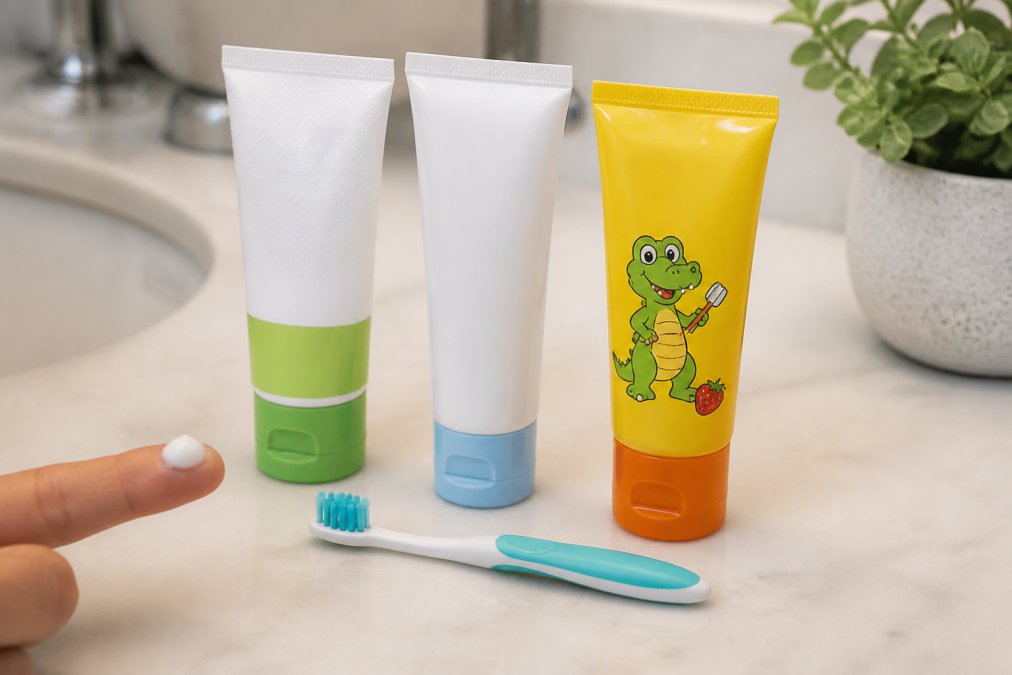
Nine children's toothpastes are widely sold in Canadian stores. Here is how they compare.
| Product | Fluoride Concentration | Flavor and Texture | Ingredient Notes | Best For |
|---|---|---|---|---|
| Colgate Kids Cavity Protection | 1000 ppm | Mild bubble fruit | Contains artificial colors | Budget-conscious families |
| Crest Kid's Sparkle Fun | 1000 ppm | Sparkle gel, mild mint-fruit | Contains artificial dyes | Toddlers who need visual engagement |
| Oral-B Kids | 1000 ppm | Mild, limited variety | Gentle on enamel | Homes using Oral-B electric brushes |
| Aquafresh Kids Cavity Protection | 1000 ppm | Striped gel | Contains artificial colors | Multi-benefit at low cost |
| Arm & Hammer Kids | 1000 ppm | Baking soda texture | Low-abrasion formula | Sensitive gums |
| Tom's of Maine Children's | 1000 ppm | Natural fruit | No artificial dyes or sweeteners | Natural-leaning parents |
| Hello Oral Care Kids | 1000 ppm | Mild fruit | No artificial sweeteners or dyes | Clean ingredient lists |
| Burt's Bees Kids | 1000 ppm | Mild, natural-origin | No artificial flavors | Natural-origin with fluoride |
| Sensodyne Pronamel Kids | 1000 ppm | Mild, SLS-free | Acid-protection formula | Enamel sensitivity |
Canadian Dental Association Fluoride Guidelines for Toddlers
Canadian guidance is straightforward: use a small amount of fluoride toothpaste from the first tooth, and always supervise. Health Canada and the Canadian Dental Association both treat fluoride toothpaste as a cavity-prevention tool, not a risk to avoid.
How to Brush Toddler Teeth With Fluoride Toothpaste
Brushing a toddler's teeth takes about two minutes, twice a day, and technique matters more than brand. The goal is to touch every surface without a battle.
- Sit or stand behind your child so you can see the whole mouth.
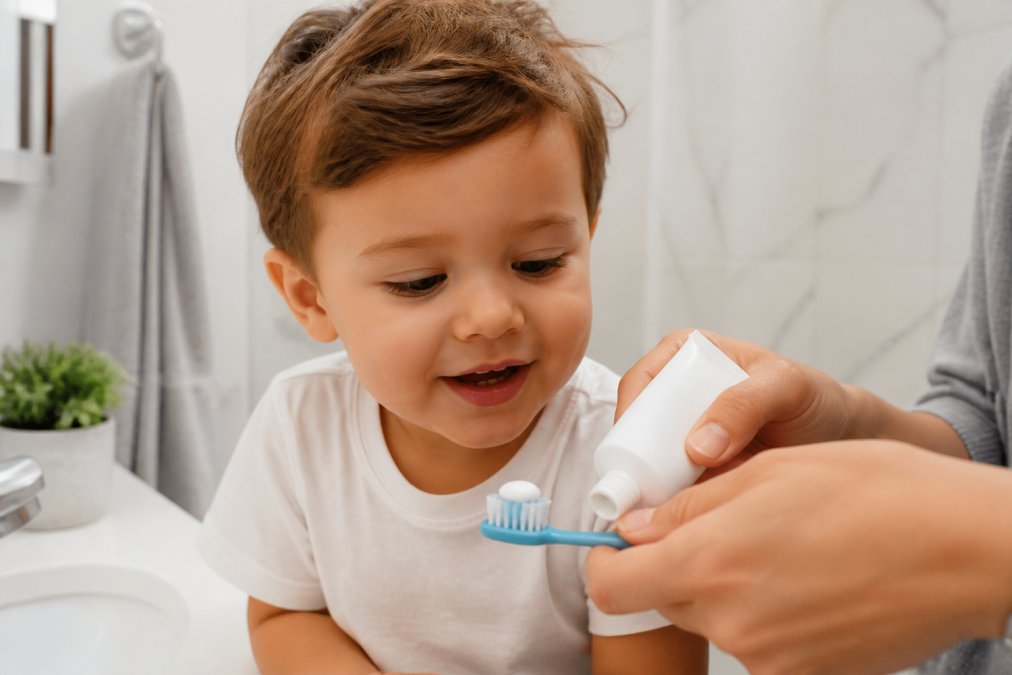
- Squeeze a rice-grain smear onto a soft, small-headed brush.
- Brush the outer surfaces in small circles, then the inner surfaces, then the chewing tops.
- Tilt the brush to reach the back molars, where decay starts most often.
- Encourage spitting. Do not rinse with water, which washes away the fluoride.
- Wipe the brush and store it upright, not touching another brush.
Signs of Dental Fluorosis in Children and How to Prevent It
Dental fluorosis is a cosmetic enamel change appearing as faint white streaks or mottled patches on permanent teeth. It is the main reason parents worry about fluoride toothpaste for toddlers, so it is worth understanding how it happens and how narrow the window is.
Why it happens and when
Fluorosis develops only when a child repeatedly takes in more fluoride than the body needs while permanent teeth form under the gums, roughly birth to age eight. Once those teeth erupt, swallowed fluoride can no longer cause fluorosis on them, which is why the toddler and preschool years matter and the concern fades with age.
The dose math that keeps it in perspective
A rice-grain smear of 1000 ppm fluoride toothpaste contains very little fluoride, and only a fraction is swallowed when a parent supervises and the child spits. The amount on the brush is deliberately calibrated far below the fluorosis threshold while still protecting enamel, the reason pediatric guidance settled on a smear under age three and a pea-sized amount from age three to six.
The sources that stack up
Toothpaste is the most controllable source, but not the only one. Fluorosis risk rises when sources combine:
- Swallowed toothpaste, especially when a child uses a full brush-load or eats paste from the tube.
- Fluoride supplements or drops, which should only be used on professional advice and are not needed when a child is already using fluoride toothpaste.
- Fluoridated drinking water, which is a benefit for cavity prevention but counts toward total intake.
- Infant formula mixed with fluoridated water during the first year, which is a known contributor when used as the sole feeding source.
Signs to watch for
- Chalky white lines, streaks, or spots on newly erupted adult teeth
- Yellow or brown staining in more advanced cases
- Pitting or a rough texture on the enamel surface
Fluorosis is not a cavity and does not weaken the tooth. Most cases are mild and visible only to a dentist under good light, a cosmetic finding, not a disease.
How to prevent it without giving up fluoride
- Control the amount. A rice-grain smear under age three, a pea-sized amount from age three to six. Never a full brush-load.
- Supervise every brush. Toddlers have an incomplete spitting reflex and will swallow part of whatever is on the brush.
- Store paste out of reach. Toddlers who eat toothpaste from the tube can take in far more than a smear.
- Skip fluoride supplements unless a dentist or physician specifically recommends them.
- Encourage spitting, not rinsing. Spitting removes excess paste; rinsing with water washes away the fluoride you want to keep on the enamel.
- Ask about total fluoride intake at your child's dental visit if you use fluoridated water and formula together.
If you notice changes on your child's adult teeth, raise it at a check-up rather than changing your routine alone. A dentist can confirm whether it is fluorosis, how mild it is, and whether your routine needs adjusting.
Sensory-Friendly Fluoride Options for Resistant Toddlers
Most toddlers who "hate toothpaste" are not reacting to fluoride but to foam, texture, temperature, or flavor. Separating the active ingredient from the delivery format is the most useful reframe for a parent stuck in a nightly standoff: you can keep cavity protection while changing everything else.
The four sensory levers
Foam. Sodium Lauryl Sulfate (SLS) is the detergent that makes paste froth. For a toddler with a strong gag reflex or oral sensitivity, that expanding foam feels like it fills the whole mouth. SLS-free pastes such as Sensodyne Pronamel Kids lather noticeably less, often the difference between a tolerated brush and a refused one, and SLS can irritate the soft tissue inside cheeks and lips.
A step-by-step transition plan
Most guidance stops at "start fluoride at the first tooth" and skips the child who has already learned to refuse. This sequence works over roughly two weeks:
- Days 1-3, water only. Brush with a wet brush and no paste at all. The goal is to rebuild the routine and the trust, not to clean perfectly.
- Days 4-6, flavor exposure without brushing. Let your child taste a rice-grain smear of the new paste off a clean finger, or lick it from the brush. No scrubbing. You are decoupling the taste from the sensation of bristles.
- Days 7-9, ten-second brushes. Add the rice-grain smear and brush for about ten seconds, then stop while your child is still calm. Praise and finish. Ending on a win matters more than coverage at this stage.
- Days 10-12, extend gradually. Add a few seconds each session until you reach the full two minutes, or as close as your child tolerates.
- Days 13-14, lock the routine. Two brushes a day, same time, same order, same paste. Predictability is what makes a toddler stop fighting the process.
Practical workarounds that reduce the battle
- Let the child hold a second toothbrush so their hands are busy.
- Brush while they lie on a changing mat or sit on the floor with their head in your lap, which gives you a clear view without a wrestling match.
- Give a choice between two acceptable pastes so the child has control over something that does not matter to you.
- Brush your own teeth at the same time so the behavior is modeled rather than demanded.
- Use a small-headed, soft-bristled brush; a brush that is too big for a toddler's mouth triggers the gag reflex on its own.
What not to do
The most common mistake is abandoning fluoride because the child dislikes the taste. Fluoride-free paste removes cavity protection, and decay in primary teeth can affect how adult teeth erupt and how a child eats and speaks. A second mistake is increasing the paste to "make up" for a short brush, more paste means more swallowed fluoride, not more protection. Keep the amount fixed at a rice-grain smear under age three and solve acceptance through format and routine.
When to Book a Pediatric Dental Visit
A first dental visit is recommended by around the first birthday, or within six months of the first tooth appearing (Your Child's First Visit). Early visits are short, friendly, and mostly about habits, not treatment.
Frequently Asked Questions
At what age can toddlers start using fluoride toothpaste?
Most Canadian dental guidance supports using a small smear of fluoride toothpaste as soon as the first tooth appears, typically around six months. Once your child can spit reliably, usually around age three, you can move to a pea-sized amount. Always confirm the right timing and dose with your dentist, since every child's developmental milestones differ.
How much fluoride toothpaste should a toddler use?
For children under three, use only a smear of fluoride toothpaste, about the size of a grain of rice. From age three to six, a pea-sized amount is appropriate. Exceeding these amounts raises the risk of dental fluorosis in children, so dosage control matters as much as the toothpaste itself. If you are unsure, ask your dentist at your next visit.
Is it safe for toddlers to swallow fluoride toothpaste?
Swallowing small amounts of fluoride toothpaste occasionally is common and generally not harmful, but regularly ingesting it can cause stomach upset or contribute to dental fluorosis. Teach your toddler to spit after brushing, keep the tube out of reach, and supervise every brushing session. If you suspect a large ingestion, contact your local poison control centre right away.
What do the Canadian Dental Association fluoride guidelines say for toddlers?
The Canadian Dental Association supports fluoride toothpaste for cavity prevention in children, used in age-appropriate amounts and with parental supervision. It also recommends that children visit a dentist within six months of the first tooth appearing or by their first birthday. Ask your dental team for the current guidance, since recommendations can be updated.
What is the difference between fluoride and fluoride-free toothpaste for kids?
Fluoride toothpaste helps with enamel remineralization and cavity prevention, which is why dental professionals generally recommend it once teeth appear. Fluoride-free options are sometimes chosen for children who cannot spit or who have a confirmed fluoride sensitivity. For most toddlers, a fluoride toothpaste used in the correct amount offers better tooth decay protection than a fluoride-free alternative.
Fluoride toothpaste for toddlers is safe when the dose is controlled and a parent stays involved. The brands above all deliver effective cavity protection; the differences come down to flavor, texture, and ingredient preferences. If you want guidance tailored to your child, including help with a resistant or anxious toddler, book an appointment with Pearly Curve Dentistry and get a plan built around your family.