 ultimate-guide
Compassionate Dental Care for Trauma Survivors: A Guide
Table of Contents
- What Makes Dental Care Trauma-Informed?
- The Link Between Trauma, PTSD, and Oral Health
- Dental Anxiety Coping Strategies That Work Before Your Visit
- How to Communicate Dental Triggers to Your Dentist
- Accommodations for Dental Patients with PTSD: What to Request
- Grounding Techniques to Use After Your Appointment
- Overcoming Financial and Accessibility Barriers to Care
- Finding a Practice That Prioritizes Your Safety
- Frequently Asked Questions
Last Updated: September 5, 2026
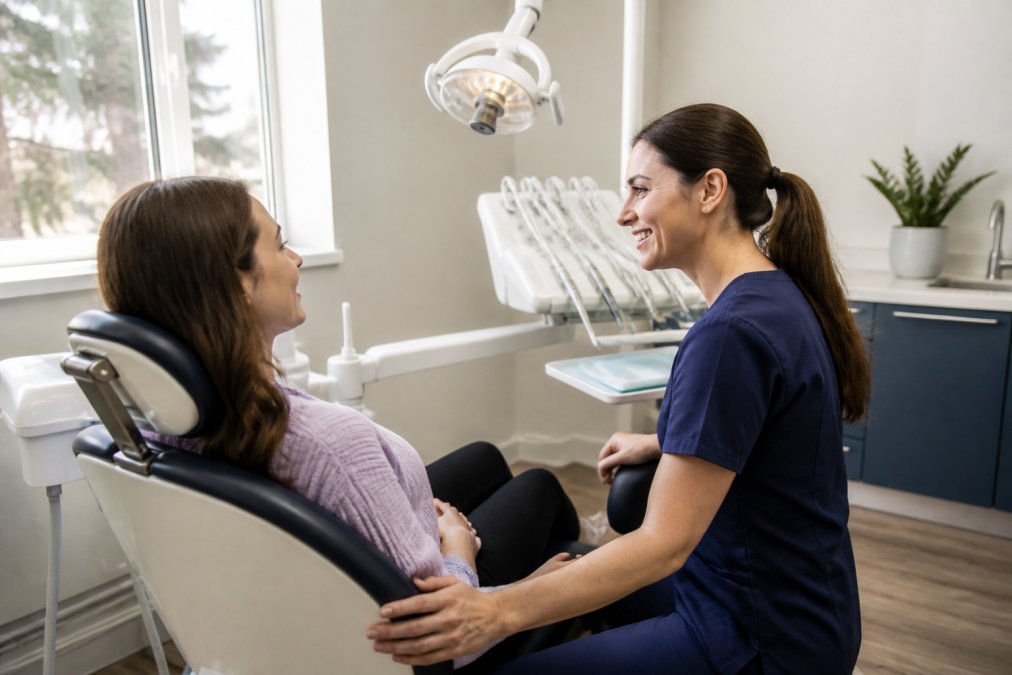
For many trauma survivors, the dental chair is a space where past experiences can resurface without warning. Compassionate dental care prioritizes psychological safety, transparent communication, and patient autonomy. At Pearly Curve Dentistry, we believe a positive clinical experience is built on trust and respect. This guide explains what trauma-informed dentistry looks like in practice and provides actionable strategies to help you receive the care you deserve.
What Makes Dental Care Trauma-Informed?
Trauma-informed care in dentistry recognizes how past abuse, neglect, or medical trauma can shape a person's response to clinical environments. Rather than asking "what is wrong with you," this framework asks "what has happened to you." Core principles include ensuring physical and emotional safety, offering choice, and prioritizing transparency about every step of a procedure.
A truly trauma-informed practice changes its operations to reduce stressors, including allowing extra time, explaining each instrument before use, and offering breaks. Crucially, the patient always retains the power to stop treatment, a concept known as informed consent in real time.
The Link Between Trauma, PTSD, and Oral Health
The connection between psychological trauma and oral health is well-documented. Individuals with PTSD often experience heightened stress responses, leading to teeth grinding, jaw clenching, and orofacial pain (peer-reviewed research). Trauma can also turn routine preventive care into a source of significant dental anxiety.
This avoidance creates a cycle: when anxiety prevents regular visits, minor issues escalate into complex, more invasive treatments that feel even more triggering. Trauma-informed practice interrupts this cycle by making the environment predictable and safe. For many, the first step is not booking a cleaning, but having a conversation about what feels safe.
Dental Anxiety Coping Strategies That Work Before Your Visit
Dental anxiety often peaks in the days before an appointment. Trauma survivors need a structured plan that addresses the specific physiological and psychological responses triggered by anticipating a clinical encounter, moving from a state of reaction to one of agency.
Build a Pre-Visit Nervous System Toolkit
Start by identifying your body's early warning signs of anxiety, racing heart, shallow breathing, or detachment. One effective technique is cyclic sighing: two sharp inhales through the nose followed by one long, slow exhale through the mouth. Repeating this for five minutes has been shown to reduce stress more effectively than mindfulness meditation (PubMed). Practice it in the days before your appointment.
Another tool is orienting, borrowed from somatic therapy. When anxious, slowly look around and name three objects you can see, noting their colors and textures. This engages the prefrontal cortex and calms the amygdala's alarm response. Practice this in the waiting room or in the car before you walk in.
Create a Sensory Script
Your environment can trigger memories or discomfort. Write down a short list of sensory preferences and bring it with you:
- Sound: Do you prefer complete silence, quiet music, or the sound of a fan to mask the high-pitched whine of the drill? Many practices offer headphones; if not, bring your own and ask if you can use them during the procedure.
- Smell: The smell of latex, eugenol (clove oil), or even the minty flavor of prophylaxis paste can be a powerful trigger. Ask if they use latex-free gloves and if they can use unflavored or non-mint polishing paste.
- Sight: The sight of the dental chair, the bright overhead light, or the tray of instruments can be distressing. Ask if you can wear sunglasses to dim the light, or if the chair can be positioned so you don't have a direct line of sight to the instrument tray.
The Power of the 'Warm-Up' Appointment
Do not feel pressured to have a full procedure on your first visit. Schedule a 'meet and greet' or 'walk-through' appointment: a zero-pressure visit where you sit in the chair, meet the team, and discuss concerns without any instruments being used. This creates a new, neutral memory that can override the old, fearful one. A trauma-informed practice will welcome this request.
Plan Your Exit Strategy
Before you walk in, decide how you will leave if you become overwhelmed. Agree on a specific 'stop signal', like raising your hand, and know you have the absolute right to end the appointment at any time. Having this plan reduces the feeling of being trapped, a core component of many traumatic responses.
How to Communicate Dental Triggers to Your Dentist
Communicating your triggers is one of the most effective ways to ensure a safe appointment. You do not need to disclose your trauma history; only describe what causes distress. For example: "I need to see the mirror before you start," or "Please do not lean over my face without telling me first."
Use a simple rating scale during the appointment: holding up a hand means "pause," while "stop" means "end the procedure immediately." If verbalizing is difficult, write your triggers on an intake form and hand it to the dentist. A trauma-informed team will thank you; a defensive response means the practice is not the right fit.
Accommodations for Dental Patients with PTSD: What to Request
Patients have the right to request accommodations that support psychological safety. You might request to be kept fully upright rather than reclined, as a horizontal position can feel vulnerable. You can also ask the dentist to narrate every action before performing it, so there are no surprises.
Other effective accommodations include:
- Using a lead apron or weighted blanket for a sense of grounding.
- Requesting that the bright overhead light be dimmed or angled away from your eyes.
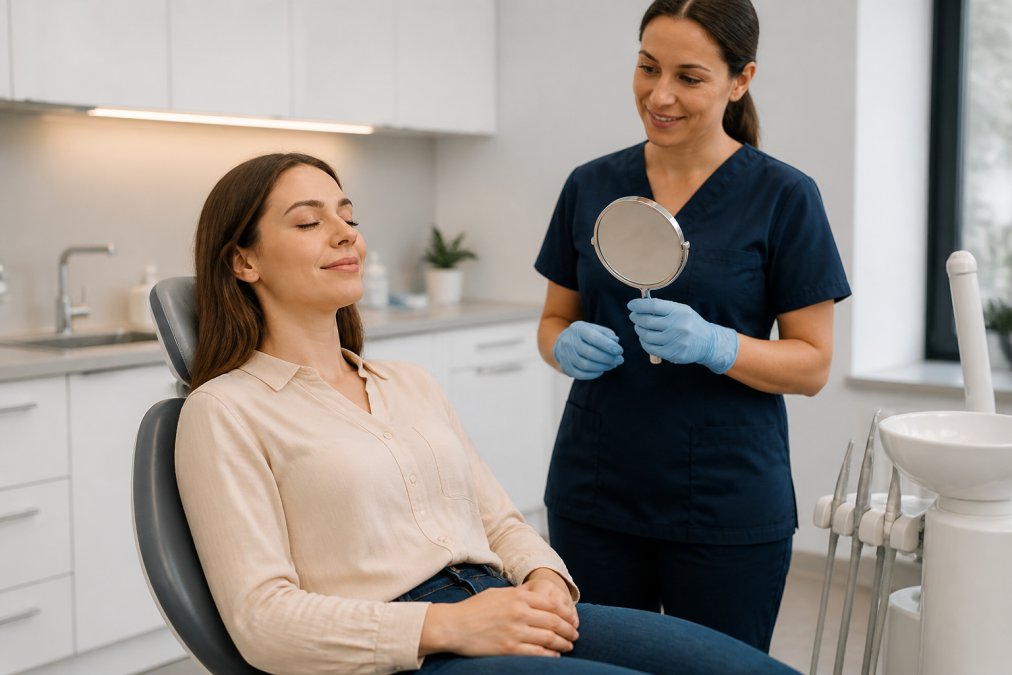
- Asking for a mirror so you can watch the procedure if that helps you feel present.
- Scheduling the first appointment as a "meet and greet" with no dental work performed.
These clinical modifications help shift the power dynamic back to you. A practice that welcomes these requests demonstrates a genuine commitment to whole-person care, recognizing that your comfort is a prerequisite for effective treatment, not an afterthought.
Grounding Techniques to Use After Your Appointment
The period after a visit can be as important as the appointment itself. Numbness or lingering discomfort can trigger a dissociative response or anxiety. Begin by reorienting your senses: notice your feet on the floor, the temperature of the air, and the sounds around you.
Try the 5-4-3-2-1 method: identify five things you can see, four you can touch, three you can hear, two you can smell, and one you can taste. If you received local anesthesia, avoid the mirror until sensation returns. Plan a low-demand rest of your day. Acknowledging that you completed the appointment reinforces positive neural pathways for next time.
Overcoming Financial and Accessibility Barriers to Care
The anxiety of an unknown bill can be as triggering as the procedure itself. This section is a patient-facing guide to navigating dental care costs in Canada, with a focus on reclaiming control.
Understanding Your Coverage: A Step-by-Step Approach
If you have private insurance, do not rely on the summary alone. Call and ask for a detailed breakdown of your annual maximum, coverage percentages for diagnostic, preventive, and restorative care (often 100%, 80%, and 50%), and your deductible. Ask specifically about sedation or nitrous oxide coverage, which is often a separate out-of-pocket cost.
If uninsured, you may be eligible for the Canadian Dental Care Plan (CDCP), which covers residents with household net income below a certain threshold (canada.ca). Apply through Service Canada with your previous year's tax return. Check the official Government of Canada website for current criteria, as these change.
The Power of the Written Treatment Plan
Before any work begins, you have the right to a written, itemized treatment plan listing every procedure, its code, and exact cost, plus what insurance will cover. A practice that hesitates to provide this is not respecting your need for transparency. Take the plan home. Dental fees are not standardized across Canada, and you are allowed a second opinion.
Navigating the Cost of Sedation and Anxiety Management
If you require sedation, it is a medical necessity, not a luxury, but many plans do not fully cover it. Oral sedation is often less expensive than IV sedation. Ask for a clear quote and whether the practice offers a 'global fee' including sedation. If cost is a barrier, discuss it openly, many clinics have discretionary funds or sliding scales, but you will never know unless you ask.
A Script for the Phone Call
Use a script to reduce financial stress: "Before I book, I'd like to understand your financial policies. I'm uninsured and want to know if you offer payment plans or third-party financing. Also, can I get a written estimate before any treatment begins?" Clear, judgment-free answers demonstrate transparency; vagueness is a red flag.
Accessibility is More Than Cost
Financial barriers are only one part of the equation. Physical accessibility is equally critical. Ask about:
- Mobility: Is the building and treatment room wheelchair accessible? Are there grab bars in the washroom?
- Sensory Environment: Is the waiting room quiet, or is there a TV on? Can you wait in a private room if the waiting room is overwhelming?
- Communication: Do they offer interpretation services if English or French is not your first language? Can you communicate with the dentist via written notes if verbal communication is difficult during a flashback or dissociative episode?
Addressing these factors in advance removes a layer of uncertainty, allowing you to focus on the emotional work of showing up. You have the right to full transparency and respect in every interaction.
Finding a Practice That Prioritizes Your Safety
Finding the right dental home requires asking the right questions. Look for a practice that mentions comfort and anxiety management on its website. When you call, ask how they handle anxious patients and whether they allow extra time for new patients. The phone response is a reliable indicator of the clinic's culture.
Pearly Curve Dentistry is designed for patients who need more than just a check-up; we provide a comfortable and personalized experience where your pace is respected. Our team focuses on expert support and clear communication, ensuring you understand each step of your treatment plan before we begin. We are dedicated to your long-term oral health, which means building trust over time rather than rushing through appointments. If you have been avoiding the dentist due to past experiences, we invite you to start with a conversation, not a procedure.
Frequently Asked Questions
How is trauma-informed care different from sedation dentistry?
Sedation dentistry uses medication to help you relax or sleep during a procedure. Trauma-informed care is a broader approach that focuses on psychological safety, consent, and control throughout your visit. It involves clear communication, offering breaks, and adapting the environment to reduce triggers. Many practices offer both, but compassionate dental care for trauma survivors prioritizes your sense of safety and autonomy, not just managing anxiety with drugs.
What specific accommodations can I request for a dental appointment?
You can request a pre-appointment phone call to discuss your needs, a signal to stop the procedure, and a longer appointment time to avoid feeling rushed. Ask to be told exactly what will happen before it occurs. You can also request a lead apron for a feeling of security, or to have the dental light dimmed or angled away. These are reasonable accommodations for dental patients with PTSD and other anxiety disorders.
How can I find a dentist who offers compassionate care for trauma survivors?
Start by looking at practice websites for language about dental anxiety, phobia, or trauma-informed approaches. Call the office, explain your needs, and ask how they handle anxious patients and what accommodations they offer. Ask if the team has training in trauma-informed care. You can also ask your primary care provider or a local support group for a referral to a practice known for its empathetic, patient-centered approach.
What are some effective dental anxiety coping strategies for the waiting room?
Before your appointment, try deep breathing exercises, such as inhaling for four counts and exhaling for six. Listen to calming music or a podcast with headphones to block out clinical sounds. Bring a small object with an interesting texture to focus on. You can also let the front desk know you are anxious; a simple acknowledgment from the team can help you feel less alone and more in control.
Rebuilding trust in dental care is a gradual process, and the right support makes all the difference. You deserve a team that listens without judgment and respects your boundaries at every turn. At Pearly Curve Dentistry, we combine modern treatments with a genuinely supportive environment to help you achieve a healthier smile on your own terms. Book an appointment with Pearly Curve Dentistry and experience care designed around your safety and comfort.