 how-to
Avoiding Unnecessary Dental Procedures: 7 Tips
Table of Contents
- Why Unnecessary Dental Procedures Happen
- Understanding Dental Treatment Plans Before You Commit
- Red Flags That Signal Over-Treatment
- Questions to Ask Before Dental Surgery or Major Work
- How to Get a Second Dental Opinion on Your Treatment Plan
- Build a Preventive Routine to Reduce Future Procedures
- Know Your Dental Insurance and Coverage Limits
- Conclusion
- Frequently Asked Questions
Last Updated: August 31, 2026
Why Unnecessary Dental Procedures Happen
Unnecessary dental procedures happen more often than most patients realize. The gap between what a dentist recommends and what a patient actually needs often comes down to communication, financial incentives, and outdated diagnostic methods.
A dentist might recommend a procedure for legitimate clinical reasons. But the landscape has shifted. Digital imaging, preventive care advances, and patient advocacy have all changed what "necessary" actually means. Some practitioners haven't caught up.
The real problem isn't always malice. It's that treatment recommendations can reflect a practice's financial model, the dentist's training era, or simply different clinical philosophies about when intervention is appropriate. One dentist might recommend a crown at the first sign of decay. Another might suggest monitoring the same tooth for two years.
Understanding why this happens is your first line of defense. Dentists operate within a system where recommending treatment generates revenue. That doesn't make every recommendation wrong, but it does mean you should verify it independently before committing.
Understanding Dental Treatment Plans Before You Commit
A dental treatment plan is a written proposal outlining the procedures your dentist recommends, the sequence in which they'll be performed, and the estimated costs. It's your roadmap, and your contract.
Most patients glance at treatment plans and sign. That's a mistake. A treatment plan should be detailed enough that you understand not just WHAT is being done, but WHY it's necessary and WHAT happens if you don't do it.
Before you accept any treatment plan, verify these elements are clearly documented:
- The specific diagnosis for each procedure (not just "decay" but "small interproximal decay on tooth #14")
- The clinical reason for the recommended treatment (why extraction vs. restoration, why crown vs. filling)
- Alternative options and why one was chosen over others
- The timeline (what's urgent, what can wait)
- The expected lifespan of the treatment (how long a filling should last, when a crown might need replacement)
- Itemized costs for each procedure
A good treatment plan reads like a conversation on paper. A bad one is a list of procedures with prices attached.
Red Flags That Signal Over-Treatment
Certain patterns in a treatment recommendation should trigger deeper questioning. These aren't proof of over-treatment, but they're signals worth investigating.
Multiple major procedures recommended at once. A dentist who suggests you need a root canal, crown, and two bridges in your first appointment is moving fast. Legitimate treatment sometimes requires multiple procedures, but rushing into major work without a relationship or baseline records is uncommon. Ask why each procedure is urgent rather than staged over time.
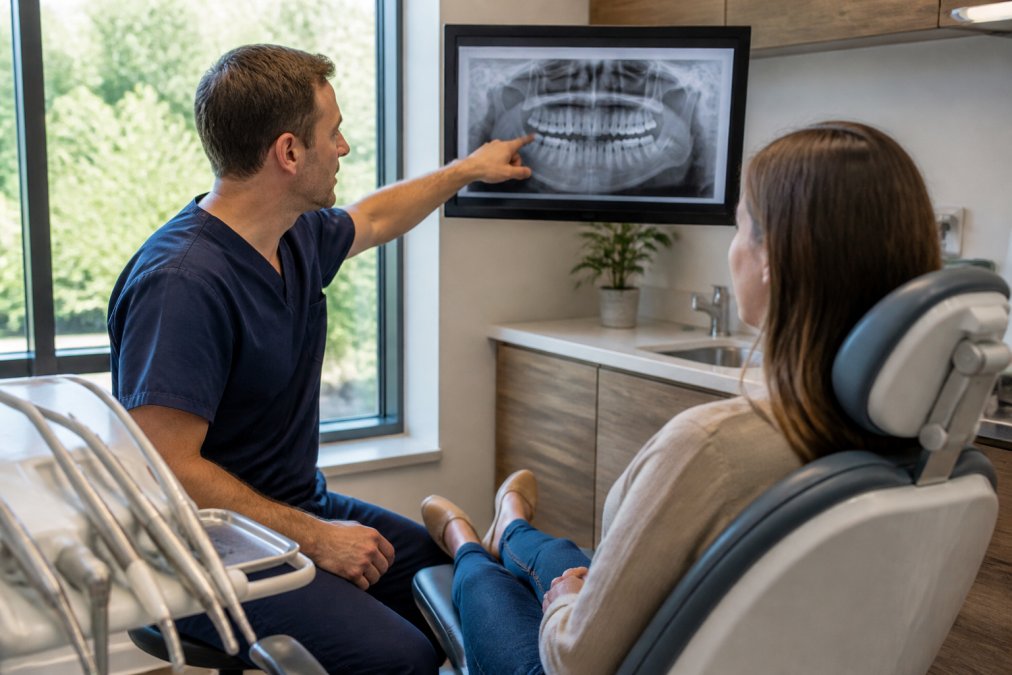
Procedures recommended without diagnostic imaging. X-rays, 3D scans, and visual assessment are standard. If a dentist recommends a root canal or extraction without showing you imaging, that's a red flag. Imaging isn't perfect, but it's the standard of care.
Cosmetic work bundled with clinical treatment. Some dentists recommend veneers, whitening, or bonding when you came in for a cavity. These aren't inherently wrong, but mixing cosmetic and clinical recommendations in the same visit can blur the line between what you need and what you want. Ask them to separate clinical treatment from cosmetic options.
Aggressive timelines for preventive procedures. Cleanings every three months, fluoride treatments, or sealants recommended without clinical justification (like active decay or high-risk factors) may reflect a practice's revenue model rather than your oral health needs. Standard prevention is typically cleanings every six months and fluoride based on risk assessment (the American Dental Association).
Dismissal of your concerns or questions. A dentist who rushes through explanations, seems annoyed by questions, or says "just trust me" is showing you something important about how they practice. You deserve clarity and respect.
Questions to Ask Before Dental Surgery or Major Work
Before committing to any major procedure, extraction, root canal, crown, implant, or periodontal surgery, ask your dentist these specific questions. Write the answers down.
1. What is the diagnosis and how was it confirmed? Ask them to show you the imaging or explain the clinical signs they observed. Don't accept vague answers like "the tooth is cracked." Cracks can be monitored; not all require extraction.
2. What happens if I don't do this procedure? This is crucial. Some procedures are urgent (infected tooth causing systemic symptoms). Others are elective (cosmetic bonding). Understanding the actual consequence of waiting helps you assess urgency.
3. What are the alternatives? For a failing filling, alternatives might be re-filling, bonding, or crown. For a loose tooth, alternatives might include stabilization, extraction, or implant. Ask what each option costs and what the long-term outcomes typically are.
4. How long will this treatment last? A filling might last 5-10 years. A crown might last 10-15 years. An implant might last 20+ years. Understanding the lifespan helps you calculate actual cost over time.
5. What are the risks and complications? Every procedure has risks. Root canals can fail. Implants can develop infection. Crowns can crack. Ask what happens if something goes wrong and whether retreatment is covered.
6. Is this treatment covered by my dental insurance? Ask your dentist to verify coverage before treatment. Some procedures are covered at different percentages, and some aren't covered at all. Knowing this upfront prevents billing surprises.
7. Can I get this in writing, including the diagnosis and alternatives? If your dentist hesitates, that's telling. A clear written treatment plan is standard practice.
How to Get a Second Dental Opinion on Your Treatment Plan
Getting a second dental opinion isn't disloyal. It's informed decision-making.
A second opinion is most valuable when you're facing a major procedure, extraction, root canal, crown, implant, or significant periodontal treatment. For routine cleanings or small fillings, second opinions are less critical.
How to request a second opinion:
Contact the second dentist's office and explain you need an opinion on a recommended treatment plan. Most practices accommodate this. You'll typically need to bring your records: X-rays, treatment plan, and diagnostic notes from your first dentist.
Some dentists charge for a second opinion consultation. Others include it as part of a new patient exam. Ask before scheduling.
What to bring:
- Your original X-rays (ask your first dentist to provide copies)
- The written treatment plan
- Any diagnostic reports or notes
- A list of questions or concerns about the original recommendation
What a good second opinion includes:
The second dentist should examine you, review your imaging, and give you a clear opinion on whether they agree with the original recommendation. They should also explain their reasoning and offer alternatives if they see them.
A second opinion that simply agrees with the first is valuable confirmation. A second opinion that disagrees should prompt a conversation with both dentists to understand where the clinical judgment differs.
Build a Preventive Routine to Reduce Future Procedures
The most effective way to avoid unnecessary procedures is to prevent the need for them in the first place. Prevention reduces both the likelihood of decay and the urgency of treatment decisions.
A preventive routine has three components: daily oral hygiene, professional cleanings, and dietary awareness.
Daily oral hygiene means brushing twice daily and flossing once daily. This removes plaque before it hardens into tartar and damages tooth structure. Most people underestimate how much decay is preventable through consistent hygiene.
Professional cleanings remove tartar buildup that home care can't address. Standard care is a cleaning every six months, though some patients benefit from more frequent cleanings if they have active periodontal disease or high decay risk.
Dietary awareness means understanding which foods and drinks accelerate decay. Sugary foods and acidic beverages (soda, energy drinks, citrus juice) create an environment where decay thrives. Reducing these doesn't mean eliminating them, but being intentional about when and how you consume them.

When you maintain a strong preventive routine, you're not just avoiding procedures. You're also building a relationship with your dentist based on stable health rather than crisis management. That changes how treatment recommendations are framed. Instead of "you need this procedure now," the conversation becomes "we're monitoring this and will intervene if it changes."
Prevention also gives you negotiating power. If your teeth are healthy and your oral hygiene is strong, a dentist recommending aggressive treatment has to justify why prevention isn't working. That's when you know the recommendation is clinically driven rather than revenue-driven.
Know Your Dental Insurance and Coverage Limits
Dental insurance shapes what procedures your dentist recommends and how much you'll pay out of pocket. Understanding your coverage prevents both surprise bills and decisions based on incomplete information.
Most dental plans categorize procedures into three tiers: preventive (cleanings, exams, X-rays), basic (fillings, extractions), and major (crowns, root canals, implants, periodontal treatment) (the CDC). Preventive is typically covered at 100%. Basic is covered at 70-80%. Major is covered at 50%.
Plans also have annual maximums, usually between $1,000 and $2,000 per year (cms.gov). Once you hit that maximum, you pay 100% of remaining treatment costs. This matters when you're facing multiple procedures.
Some plans have waiting periods before covering major work. Some exclude certain procedures entirely. Some require pre-authorization before your dentist can proceed.
Before accepting a treatment plan, verify:
- What percentage of each procedure is covered
- Whether pre-authorization is required
- How much of your annual maximum you've already used
- Whether the procedure falls under your plan's exclusions
- What your out-of-pocket cost will be
Call your insurance company with the treatment plan in hand. Ask them to provide a coverage estimate before you commit to treatment. This takes 10 minutes and prevents thousands in unexpected costs.
If your insurance won't cover a recommended procedure, ask your dentist whether it's truly necessary or whether an alternative exists that your plan does cover. Sometimes the answer is "it's necessary regardless of coverage." Sometimes the answer reveals that the recommendation was influenced by what insurance covers.
Conclusion
Avoiding unnecessary dental procedures starts with understanding why they're recommended, asking specific questions before accepting them, and verifying recommendations through a second opinion when the stakes are high. Prevention and insurance literacy reduce both the likelihood of over-treatment and your vulnerability to it.
At Pearly Curve Dentistry, we believe your long-term oral health is built on trust and transparency. That means explaining our recommendations clearly, respecting your right to seek second opinions, and focusing on preventive care that reduces the need for major procedures. When you understand your treatment options and the reasoning behind each one, you're equipped to make decisions that serve your health, not just our revenue.
| Strategy | When to Use | Expected Outcome |
|---|---|---|
| Ask specific diagnostic questions | Before accepting any major procedure | Clarity on clinical necessity vs. preference |
| Request written treatment plan | At first recommendation | Documentation of diagnosis, alternatives, costs |
| Get a second opinion | Before extraction, implant, or major work | Confirmation or alternative clinical perspective |
| Build preventive routine | Ongoing | Reduced decay, fewer procedures needed |
| Verify insurance coverage | Before treatment commitment | Accurate out-of-pocket cost estimates |
Frequently Asked Questions
What questions should I ask my dentist before agreeing to a procedure?
Ask why the procedure is necessary, what happens if you wait, what the alternatives are, and how the dentist will know if it was successful. Request a written treatment plan that explains the clinical necessity for each step. Ask about the cost breakdown and what your dental insurance will cover. Understanding the reasoning behind each recommendation helps you distinguish between essential care and elective work.
How can I get a second dental opinion on my treatment plan?
Request your dental records and X-rays from your current dentist, they're legally required to provide them. Take these to another dentist for an independent review. A second opinion is especially important for costly procedures like root canals, crowns, or extractions. Many dentists welcome second opinions because it builds patient confidence and ensures recommendations are sound. This step protects you from unnecessary work and gives you peace of mind.
What are common red flags that a dentist is recommending unnecessary procedures?
Watch for recommendations to extract healthy teeth, aggressive timelines for elective work, pressure to do everything at once, or dismissal of your questions. If a dentist recommends extensive cosmetic work without discussing your goals first, or suggests procedures you've never heard of without clear explanation, that's a signal to seek clarification or a second opinion. Trustworthy dentists explain the 'why' and respect your decision-making process.
How does preventive dentistry help me avoid unnecessary procedures later?
Consistent oral hygiene, regular checkups, and professional cleanings catch problems early when they're cheaper and easier to treat. Preventive care like fluoride treatments and periodontal charting identifies decay and gum disease before they require root canals or extractions. Patients who prioritize prevention spend less on restorative procedures overall. Your dentist can recommend a preventive schedule tailored to your risk factors.